
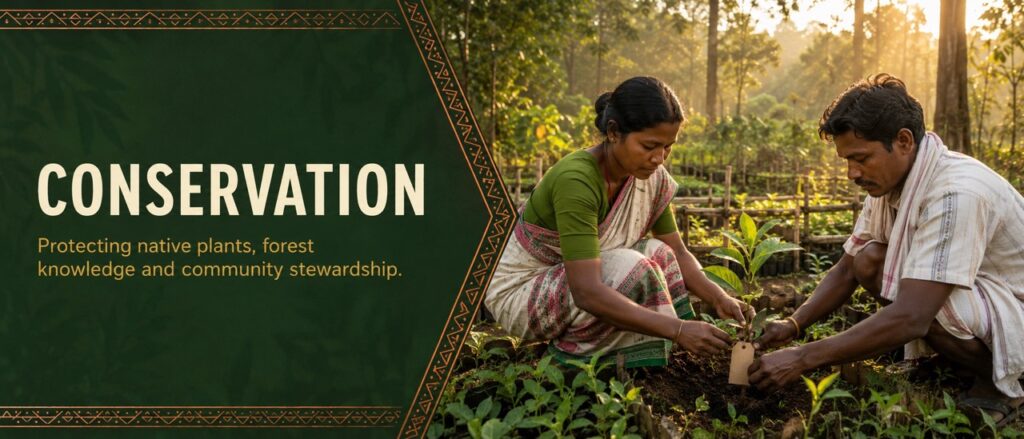
Conservation of Hodopathy can be understood as the systematic preservation, documentation, organization, and responsible development of knowledge, research records, educational resources, traditional information, methodologies, and evidence associated with Hodopathy.
Building on the earlier framework of Research Areas & Projects, Research Methods, Evidence Standards, Publications & Reports, Training, Faculty & Trainers, Courses & Workshops, Training Calendar, Apply for Training, and Student Portal, conservation should not mean simply preserving old information. It should create a living knowledge system in which valuable information is protected while outdated, unsupported, or unreliable claims are clearly identified and evaluated.
The central objective is to ensure that useful knowledge is not lost while maintaining scientific integrity, transparency, ethical responsibility, reproducibility, and evidence-based development.
Core principle: Preserve knowledge carefully, document it transparently, evaluate it critically, protect what is valuable, and allow reliable evidence to guide future development.
1. What Does Conservation of Hodopathy Mean?
Conservation can include the preservation of:
- 📚 Historical and educational records
- 🔬 Research findings and methodologies
- 📊 Research datasets and documentation
- 🌿 Plant and natural-resource knowledge
- 🥗 Nutrition and lifestyle information
- 🧪 Laboratory research records
- 📖 Publications and reports
- 👨🏫 Training materials
- 🎓 Educational curricula
- 👥 Oral and community knowledge
- 💻 Digital resources
- 🗂️ Research archives
- 🧠 Conceptual frameworks and hypotheses
- 🌍 Environmental and community observations
However, conservation should not automatically imply that preserved information is scientifically proven.
A historical claim can be preserved as historical information while its scientific status remains uncertain. This distinction is essential for responsible knowledge management.
2. Why Conservation Is Important
Knowledge can disappear through:
- Loss of historical records
- Disorganized documentation
- Poor data management
- Discontinued research projects
- Loss of experienced researchers
- Unpublished research
- Digital-storage failures
- Inconsistent terminology
- Lack of standardized methodologies
- Loss of traditional knowledge
- Inadequate research archiving
A structured conservation program can help prevent these problems.
It can ensure that future researchers can understand:
What was known → What was studied → How it was studied → What was discovered → What remained uncertain → What should be researched next
3. Conservation of Historical Knowledge
Historical information associated with Hodopathy can be systematically documented.
This may include:
- Historical texts
- Early concepts
- Development timelines
- Educational materials
- Research milestones
- Institutional records
- Important publications
- Historical terminology
- Previous research approaches
- Community documentation
Historical preservation should maintain the original context wherever possible.
At the same time, historical information should not be presented as modern scientific evidence simply because it is old or widely repeated.
4. Conservation of Traditional Knowledge
Traditional and community knowledge can be an important area for responsible documentation.
Conservation may include:
- Traditional practices
- Plant-use knowledge
- Food traditions
- Community wellness practices
- Local environmental knowledge
- Historical preparation methods
- Cultural documentation
- Oral histories
Such information should be documented respectfully and, where appropriate, with community participation.
Traditional knowledge can provide research questions and hypotheses, but additional scientific investigation is required before making strong claims about effectiveness or safety.
5. Plant & Natural Resource Conservation
Where Hodopathy research involves plants or natural resources, conservation can connect knowledge preservation with responsible environmental stewardship.
A future conservation framework could document:
- Plant identification
- Botanical classification
- Geographic distribution
- Traditional uses
- Cultivation information
- Harvesting practices
- Sustainable sourcing
- Chemical research
- Safety information
- Research status
Conservation should avoid encouraging unsustainable harvesting of valuable or vulnerable natural resources.
6. Research Data Conservation
Research data is one of the most valuable resources for future scientific development.
A structured system can preserve:
- Raw research data
- Processed datasets
- Research protocols
- Study plans
- Statistical analysis
- Laboratory records
- Measurement methods
- Research observations
- Metadata
- Research reports
- Negative or null findings
Where ethical and legal requirements permit, appropriately de-identified datasets can be preserved for future analysis and replication.
7. Conservation of Research Methods
The earlier Research Methods of Hodopathy framework should also be preserved and continuously updated.
This can include documentation of:
- Research-question development
- Hypothesis formulation
- Study designs
- Observational methods
- Controlled studies
- Laboratory procedures
- Data-collection methods
- Statistical approaches
- Evidence-evaluation frameworks
- Reproducibility procedures
- Research-quality standards
Maintaining version histories can show how research methodology develops over time.
8. Conservation of Evidence
An important advanced feature would be an Evidence Archive.
The archive could categorize information according to evidence status:
🟢 Strongly Supported
Supported by high-quality, consistent, independently evaluated evidence.
🔵 Moderately Supported
Supported by useful evidence but with remaining limitations or uncertainty.
🟡 Preliminary
Early findings requiring additional investigation.
🟠 Inconclusive
Evidence is insufficient, inconsistent, or unclear.
🔴 Unsupported
Available evidence does not adequately support the claim.
⚪ Unknown
Insufficient information is available to determine the evidence status.
This allows conservation to preserve the history of evidence, rather than only preserving positive claims.
9. Conservation of Negative & Null Findings
A mature research system should preserve findings that do not demonstrate the expected result.
This includes:
- Negative findings
- Null results
- Failed hypotheses
- Methodological limitations
- Unsuccessful experiments
- Unexpected outcomes
These findings are valuable because they can prevent researchers from repeatedly pursuing approaches that have already been tested.
A result that does not support a hypothesis is still valuable research information.
10. Digital Conservation
Modern conservation should include a secure digital archive.
A Hodopathy Digital Knowledge Repository could contain:
- Research papers
- Reports
- Datasets
- Training materials
- Historical documents
- Research protocols
- Videos and educational resources
- Conference presentations
- Evidence assessments
- Research project records
The repository should use appropriate metadata so future researchers can easily locate and understand archived material.
11. Version Control & Knowledge Updates
Scientific knowledge changes over time.
Therefore, conservation should not create a static archive that never changes.
Each major resource can include:
Original Version → Reviewed Version → Updated Evidence → Current Status
For example:
Research Topic: Defined intervention
Initial Evidence: Preliminary
New Research: Additional observational studies
Replication: Pending
Current Evidence Status: Still uncertain
This approach preserves historical information while preventing outdated conclusions from being mistaken for current knowledge.
12. Conservation of Publications & Reports
The previously proposed Publications & Reports of Hodopathy can become a permanent research archive.
The conservation system can preserve:
- Research papers
- Review articles
- Evidence reports
- Safety reports
- Annual reports
- Research bulletins
- Conference proceedings
- Methodology documents
- Training publications
- Research datasets
Every publication should ideally include sufficient information to understand its origin, methodology, date, authorship, and evidence status.
13. Conservation of Educational Resources
Training resources should also be preserved for future learners.
This may include:
- Course materials
- Lecture notes
- Workshop presentations
- Research-methodology guides
- Evidence-evaluation exercises
- Practical manuals
- Faculty resources
- Student projects
- Assessment frameworks
Older educational resources can remain available for historical reference while current curricula are updated according to newer evidence and educational standards.
14. Conservation Through the Student Portal
The previously proposed Student Portal of Hodopathy can become an important part of the conservation ecosystem.
Students could access:
- Digital archives
- Research publications
- Historical resources
- Methodology guides
- Evidence databases
- Training materials
- Research projects
- Previous student research
- Academic presentations
This creates a direct connection between education and knowledge preservation.
15. Faculty & Researcher Knowledge Conservation
Experienced faculty and researchers may possess valuable knowledge that is not fully documented.
A structured Expert Knowledge Archive could preserve:
- Research experiences
- Methodological lessons
- Historical perspectives
- Research challenges
- Educational approaches
- Project histories
- Recommendations for future researchers
Interviews, seminars, recorded lectures, and written reflections can help preserve institutional knowledge.
16. Research Ethics in Conservation
Conservation must respect research ethics.
Important requirements include:
- Protecting personal information
- Respecting informed consent
- De-identifying sensitive datasets where appropriate
- Protecting intellectual property
- Respecting community ownership of traditional knowledge
- Proper attribution
- Maintaining research integrity
- Avoiding unauthorized data sharing
- Following applicable laws and institutional policies
Not everything should be publicly accessible simply because it has been archived.
17. Intellectual Property & Knowledge Rights
Conservation should establish clear policies regarding ownership and use of archived materials.
The framework can define:
- Authorship
- Copyright
- Licensing
- Research-data ownership
- Community knowledge rights
- Attribution requirements
- Institutional records
- Reuse permissions
This is especially important when traditional or community knowledge is involved.
18. Conservation & Biodiversity
If Hodopathy research includes plant-based or natural-resource research, knowledge conservation should also consider biodiversity.
Potential initiatives include:
🌱 Sustainable cultivation
🌿 Responsible harvesting
🌳 Protection of native species
📚 Botanical documentation
🧪 Research on sustainable alternatives
🌍 Environmental monitoring
The objective should be to ensure that research and education do not contribute unnecessarily to environmental degradation.
19. Conservation Research Projects
Future conservation projects could include:
Hodopathy Historical Archive
A structured collection of historical documents and records.
Digital Knowledge Repository
A searchable online research and education archive.
Traditional Knowledge Documentation Project
Responsible recording of community and historical knowledge.
Research Data Archive
Preservation of eligible research datasets and metadata.
Evidence History Project
Tracking how evidence around research questions changes over time.
Methodology Archive
Preservation of research protocols and methodological developments.
Plant & Natural Resource Archive
Documentation of relevant botanical and natural-resource research.
Faculty Knowledge Archive
Preservation of expert educational and research knowledge.
20. AI-Assisted Conservation
Artificial intelligence can support large-scale knowledge management.
Potential applications include:
- Document classification
- Metadata generation
- Research-topic tagging
- Duplicate detection
- Semantic search
- Evidence mapping
- Research-trend analysis
- Historical timeline creation
- Knowledge-gap identification
However, AI-generated classifications should be reviewed by qualified humans where accuracy is important.
AI should assist conservation—not become the sole authority determining the scientific value of archived information.
21. Searchable Knowledge Graph
A future advanced system could develop a Hodopathy Knowledge Graph.
It could connect:
Research Topic
↕
Historical Knowledge
↕
Research Project
↕
Publication
↕
Evidence
↕
Dataset
↕
Faculty
↕
Student Project
↕
Current Research Status
This could allow researchers to understand how ideas, evidence, publications, and research projects relate to each other.
22. Conservation & Research Reproducibility
Proper conservation can strengthen reproducibility.
Researchers should be able to locate, where appropriately available:
- Original protocols
- Research methodology
- Data definitions
- Analysis procedures
- Study documentation
- Version history
- Research limitations
This can make future replication and independent evaluation more practical.
23. Conservation of Uncertainty
One of the most important principles is to preserve uncertainty alongside knowledge.
A responsible archive should not simply say:
“This approach works.”
Instead, it can record:
“Research conducted to date provides preliminary evidence, while important uncertainties remain regarding effectiveness, safety, mechanisms, or generalizability.”
This prevents historical research records from becoming exaggerated claims.
24. Global Knowledge Preservation
As the field develops, a global conservation network could connect:
- Universities
- Research organizations
- Laboratories
- Libraries
- Archives
- Training institutions
- Researchers
- Community knowledge holders
- Environmental organizations
International collaboration could improve preservation standards and reduce duplication of research.
25. Conservation Quality Standards
A high-quality conservation system should evaluate archived material according to:
- Authenticity
- Source
- Date
- Methodology
- Completeness
- Evidence status
- Reproducibility
- Ethical status
- Data quality
- Version history
- Accessibility
- Long-term preservation requirements
This creates an archive that is not only large, but also trustworthy and useful.
26. Five-Year Conservation Roadmap
Year 1 — Document
- Identify important knowledge
- Establish archive standards
- Collect historical resources
- Create metadata guidelines
- Begin digital preservation
Year 2 — Organize
- Develop searchable repositories
- Archive publications
- Preserve research datasets
- Document traditional knowledge responsibly
- Establish evidence classifications
Year 3 — Integrate
- Connect research and education platforms
- Develop knowledge graphs
- Introduce AI-assisted organization
- Connect student and faculty resources
Year 4 — Collaborate
- Establish institutional partnerships
- Develop international archival networks
- Expand community knowledge documentation
- Improve biodiversity and natural-resource conservation
Year 5 — Sustain
- Establish permanent conservation centers
- Continuously update evidence records
- Maintain long-term digital preservation
- Support future research access
- Establish international knowledge-preservation standards
27. Future Conservation Centers
A mature Hodopathy ecosystem could establish specialized centers such as:
Hodopathy Knowledge Conservation Center
Responsible for historical and educational archives.
Research Data Conservation Center
Focused on eligible datasets, metadata, and research records.
Evidence Archive Center
Focused on evidence classification and evidence-history tracking.
Natural Knowledge Conservation Center
Focused on plant, food, and natural-resource documentation.
Digital Research Archive
Focused on long-term digital preservation and accessibility.
Traditional Knowledge Documentation Center
Focused on ethical and respectful preservation of community knowledge.
Conclusion
Conservation of Hodopathy should be much more than storing old documents. It should create a responsible system for preserving knowledge, evidence, research methods, data, educational resources, traditional information, environmental knowledge, and institutional experience while clearly distinguishing established findings from preliminary, uncertain, historical, or unsupported claims.
By connecting conservation with the previously developed Research Methods, Evidence Standards, Publications & Reports, Faculty & Trainers, Training Programs, Student Portal, Research Projects, and Research Collaboration, Hodopathy can develop a continuous knowledge cycle:
Document → Preserve → Organize → Evaluate → Update → Learn → Research → Replicate → Publish → Preserve Again
The long-term objective is to ensure that valuable knowledge is not lost, research history remains transparent, evidence can be revisited, and future generations have a reliable foundation from which to conduct better research.
Preserve the past. Protect knowledge. Evaluate evidence. Learn from uncertainty. Support responsible research. Build the future.