
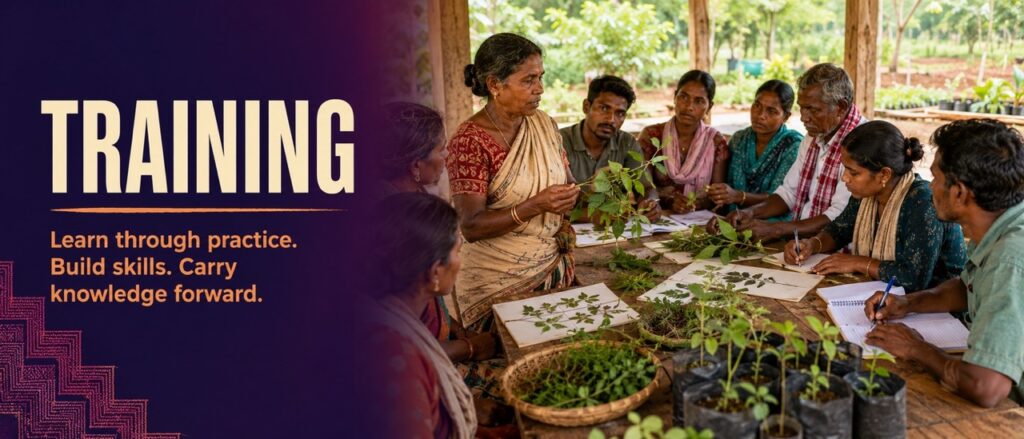
Training of Hodopathy should be designed as a structured, interdisciplinary and evidence-oriented educational framework that develops knowledge, practical skills, research capability and professional responsibility. As Hodopathy evolves, training should move beyond informal learning and focus on standardized curricula, critical thinking, scientific methodology, ethical practice, documentation, safety and continuous professional development.
The long-term objective should be to create a learning ecosystem where students and practitioners can understand the foundations of Hodopathy while also learning how to evaluate claims, conduct responsible research, interpret evidence and work collaboratively with professionals from related disciplines.
Core principle: Learn the tradition, understand the science, question the evidence, practice responsibly and continue learning.
1. Objectives of Hodopathy Training
A comprehensive training program should aim to:
- Introduce the foundational concepts of Hodopathy
- Develop a strong understanding of health and wellness
- Teach evidence-based research methods
- Develop observation and documentation skills
- Introduce nutrition and lifestyle science
- Explain environmental and preventive-health concepts
- Teach research ethics and participant safety
- Develop critical evaluation of scientific literature
- Introduce data analysis and digital research tools
- Encourage interdisciplinary collaboration
- Develop responsible communication skills
- Prepare learners for future research and innovation
Training should clearly distinguish between traditional knowledge, theoretical concepts, preliminary findings and scientifically established evidence.
2. Foundational Training
The first stage should establish a common knowledge base.
Core subjects may include:
- Introduction to Hodopathy
- History and development
- Fundamental terminology
- Principles and concepts
- Health and wellness fundamentals
- Human biology basics
- Nutrition fundamentals
- Lifestyle science
- Environmental health
- Research literacy
- Scientific reasoning
- Professional ethics
The purpose is to ensure that every learner begins with a consistent foundation before progressing to specialized areas.
3. History & Development of Hodopathy
Students should learn how Hodopathy has developed over time.
Training may examine:
- Historical origins
- Development of major concepts
- Traditional knowledge
- Evolution of practices
- Contemporary research
- Current scientific discussions
- Areas of uncertainty
- Emerging research directions
Historical information should be taught as historical information, while scientific conclusions should be based on appropriate evidence.
4. Human Health & Wellness Education
A modern Hodopathy curriculum should provide basic knowledge about human health.
Potential subjects include:
Human Biology
Understanding basic body systems and physiological processes.
Health & Wellness
Understanding factors that influence general wellbeing.
Lifestyle
Exploring relationships among sleep, physical activity, nutrition, stress and daily habits.
Preventive Health
Understanding how healthy behaviors may contribute to maintaining wellbeing.
This foundational knowledge can help students communicate responsibly and recognize when professional medical evaluation is necessary.
5. Nutrition Training
Nutrition can be an important component of Hodopathy education.
Students may learn about:
- Macronutrients
- Micronutrients
- Dietary patterns
- Whole foods
- Plant-based foods
- Food quality
- Hydration
- Food safety
- Traditional foods
- Nutrition assessment
- Basic dietary research
Advanced training can introduce:
- Nutritional epidemiology
- Personalized nutrition
- Dietary data analysis
- Food composition
- Nutritional biomarkers
- Gut microbiome research
Training should avoid turning general nutrition education into unsupported treatment claims.
6. Lifestyle & Wellness Training
Students can learn how everyday behaviors can be studied scientifically.
Topics may include:
- Sleep
- Physical activity
- Stress management
- Daily routines
- Work-rest balance
- Social wellbeing
- Outdoor activity
- Healthy behavioral habits
- Digital behavior
- Environmental exposure
Practical training could teach students how to document lifestyle patterns and use validated questionnaires appropriately.
7. Research Methodology Training
Research methodology should be a core part of advanced Hodopathy education.
Students should learn:
- How to formulate research questions
- Literature-search techniques
- Hypothesis development
- Study design
- Participant selection
- Data collection
- Research documentation
- Statistical concepts
- Research ethics
- Scientific writing
- Evidence evaluation
A typical research pathway can be taught as:
Question → Hypothesis → Protocol → Data → Analysis → Results → Interpretation → Publication
8. Scientific Literature & Evidence Literacy
Students should learn how to critically evaluate research rather than accepting every published claim as equally reliable.
Training can cover:
- Peer-reviewed literature
- Research databases
- Systematic reviews
- Meta-analyses
- Observational studies
- Controlled studies
- Randomized trials
- Research bias
- Confounding
- Statistical significance
- Effect size
- Confidence intervals
- Evidence quality
Students should also learn to distinguish between:
Evidence of association → Evidence of causation → Replicated evidence → Established conclusion
9. Practical Research Training
Hands-on training can help students understand how research is actually conducted.
Practical modules could include:
Research Protocol Development
Students create a structured research plan.
Data Collection
Learn standardized methods for collecting information.
Survey Design
Develop clear and unbiased questionnaires.
Literature Review
Search and organize relevant publications.
Data Analysis
Use basic statistical tools.
Research Presentation
Present findings clearly and responsibly.
Research Report Writing
Prepare structured scientific reports.
10. Laboratory Research Training
Where appropriate, advanced students may receive introductory laboratory training.
Possible areas include:
- Sample handling
- Laboratory safety
- Basic analytical techniques
- Nutritional analysis
- Botanical characterization
- Microbiological testing
- Chemical analysis
- Quality-control procedures
Laboratory work should be performed in appropriately equipped facilities under qualified supervision.
11. Safety Training
Safety should be integrated throughout the curriculum.
Students should understand:
- Potential risks
- Adverse effects
- Product quality
- Contamination
- Interactions
- Contraindications
- Safe handling
- Documentation of adverse events
- Appropriate referral procedures
A responsible practitioner should understand the limits of their training and avoid presenting unverified interventions as substitutes for necessary medical care.
12. Ethics & Professional Responsibility
Professional ethics should be a mandatory part of Hodopathy training.
Key principles include:
- Respect for individuals
- Informed consent
- Confidentiality
- Privacy
- Accurate documentation
- Honest communication
- Avoidance of exaggerated claims
- Disclosure of conflicts of interest
- Appropriate professional boundaries
- Respect for established medical care
- Responsible research conduct
Students should understand that trust is built through honesty, competence and transparency.
13. Communication Skills
Effective training should include professional communication.
Students can learn how to:
- Explain concepts clearly
- Communicate uncertainty
- Discuss evidence
- Avoid misleading claims
- Present research findings
- Communicate with researchers
- Communicate with health professionals
- Explain research limitations
- Create educational materials
A particularly important skill is learning to say:
“Current evidence is insufficient to establish this claim.”
That is a scientifically responsible conclusion, not a failure of research.
14. Digital Skills
Future Hodopathy professionals should become comfortable with digital research tools.
Training can include:
- Digital literature databases
- Reference-management software
- Spreadsheet-based data analysis
- Statistical software
- Digital survey platforms
- Electronic research records
- Research dashboards
- Data visualization
These skills can make research more efficient and reproducible.
15. AI & Machine Learning Training
AI can become an important component of advanced Hodopathy education.
Students could learn to use AI for:
Literature Discovery
Finding research topics and identifying knowledge gaps.
Data Organization
Structuring large research datasets.
Pattern Analysis
Exploring relationships within datasets.
Research Assistance
Supporting literature summaries and research planning.
Personalized Research
Exploring potential relationships between lifestyle variables and outcomes.
However, students should also learn AI limitations, bias, hallucination, privacy, data quality and validation.
AI should support scientific reasoning rather than replace it.
16. Environmental Health Training
Environmental factors can be incorporated into advanced coursework.
Topics may include:
- Air quality
- Indoor environments
- Noise
- Light exposure
- Green spaces
- Nature exposure
- Workplace environments
- Sustainable living
- Environmental behavior
Students could learn how environmental variables can be measured and compared with validated wellbeing indicators.
17. Traditional Knowledge Documentation
Training can teach responsible documentation of traditional knowledge.
Students may learn:
- Interview techniques
- Historical research
- Ethnographic documentation
- Cultural context
- Archiving
- Source verification
- Intellectual-property considerations
- Ethical community engagement
Traditional knowledge should be documented respectfully without automatically treating traditional claims as scientifically proven.
18. Practical Training & Fieldwork
Advanced students can participate in supervised field projects.
Possible activities include:
🌱 Community wellness surveys
🥗 Nutrition documentation
🌍 Environmental assessments
📊 Lifestyle data collection
📚 Traditional-knowledge documentation
🔬 Research-data collection
💻 Digital wellness studies
Fieldwork should follow appropriate ethical and safety procedures.
19. Training Levels
A future Hodopathy education system could be structured into progressive levels.
Level 1 — Foundation
Introduction to:
- Hodopathy
- Health and wellness
- Nutrition
- Lifestyle
- Research literacy
- Ethics
Level 2 — Intermediate
Focus on:
- Research methodology
- Evidence evaluation
- Practical documentation
- Data collection
- Communication
- Safety
Level 3 — Advanced
Focus on:
- Research design
- Statistics
- Laboratory methods
- Digital health
- AI and data science
- Interdisciplinary research
Level 4 — Research Specialist
Focus on:
- Independent research
- Clinical or observational study design where appropriate
- Scientific publication
- Evidence synthesis
- Research leadership
- Innovation
20. Proposed Hodopathy Training Programs
A future educational ecosystem could offer specialized programs such as:
📘 Certificate in Hodopathy Foundations
For introductory learners.
📗 Diploma in Hodopathy Research
Focused on research methodology and evidence evaluation.
📙 Advanced Program in Hodopathy & Wellness Research
Combining health, lifestyle, nutrition and research.
📕 Certificate in Hodopathy Scientific Writing
Focused on publications, reports and research communication.
📒 Hodopathy Data & AI Program
Focused on data analysis, digital tools and responsible AI.
📓 Hodopathy Research Fellowship
For advanced research projects and interdisciplinary collaboration.
21. Training Through Research Projects
Instead of relying entirely on classroom learning, advanced programs should include real research projects.
Example:
Project 1: Literature review
↓
Project 2: Research-question development
↓
Project 3: Pilot data collection
↓
Project 4: Statistical analysis
↓
Project 5: Research report
↓
Project 6: Scientific presentation
↓
Project 7: Publication preparation
This approach allows students to develop practical research skills progressively.
22. Assessment & Certification
Training programs should evaluate actual knowledge and skills rather than simply attendance.
Assessment methods could include:
- Written examinations
- Research assignments
- Literature reviews
- Practical assessments
- Data-analysis exercises
- Research presentations
- Case-based learning
- Ethics assessments
- Research projects
- Final dissertation or report
Certification should clearly state the level, curriculum and competencies completed.
It should not imply medical qualifications unless the learner has completed an appropriately recognized medical or professional qualification.
23. Continuing Professional Development
Hodopathy training should not end after certification.
A continuing education system could provide:
- Annual research updates
- Scientific-literature reviews
- New methodology workshops
- AI and technology training
- Safety updates
- Ethics training
- Research-writing workshops
- Interdisciplinary seminars
Professionals should regularly update their knowledge as evidence changes.
24. Faculty & Expert Development
A strong training ecosystem requires qualified educators from multiple disciplines.
Potential faculty expertise includes:
- Biology
- Nutrition
- Public health
- Psychology
- Environmental science
- Statistics
- Epidemiology
- Data science
- Research methodology
- Ethics
- Laboratory sciences
Interdisciplinary faculty can help students understand where Hodopathy overlaps with established scientific disciplines.
25. Hodopathy Training & Research Centers
Future training centers could combine education and research.
A modern center might include:
🔬 Research laboratory
📚 Digital research library
💻 Computer and data-science laboratory
📊 Statistics unit
🌱 Botanical and nutrition research facilities
🧪 Safety and quality-control facilities
🎓 Training classrooms
🤖 AI research infrastructure
🌍 Field-research facilities
This model would allow students to move from learning → experimentation → analysis → publication within one research environment.
26. International Collaboration & Exchange
Advanced training programs could create opportunities for:
- Research internships
- Academic exchanges
- Joint workshops
- International conferences
- Collaborative studies
- Visiting researchers
- Interdisciplinary seminars
- Shared research projects
International collaboration can expose students to different methodologies and research standards.
27. Future Hodopathy Training Platform
A digital learning platform could make training accessible to a wider audience.
Potential features include:
🎓 Online Courses
Structured modules from foundation to advanced research.
📚 Research Library
Access to publications, reviews and educational resources.
🧪 Virtual Research Training
Simulated study-design and data-analysis exercises.
📊 Data Labs
Practical statistical and research exercises.
🤖 AI Learning Assistant
Support for literature discovery and research education.
📝 Assessments
Online examinations and research assignments.
🏆 Certification
Competency-based educational certificates.
28. Advanced Training Roadmap
The future development of Hodopathy training can follow this progression:
Foundation → Knowledge → Practical Skills → Research Skills → Evidence Evaluation → Specialization → Independent Research → Publication → Continuous Development
This ensures that training grows alongside the research ecosystem.
29. Proposed Future Training Projects
A comprehensive Hodopathy education initiative could develop:
- Hodopathy Foundation Curriculum Project
- Hodopathy Research Training Program
- Scientific Methodology Workshop Series
- Evidence Evaluation Training Program
- Nutrition & Lifestyle Education Program
- Research Ethics & Safety Program
- Scientific Writing & Publication Course
- AI & Data Science for Hodopathy Research
- Traditional Knowledge Documentation Program
- Laboratory Research Skills Program
- Environmental Wellness Research Training
- Hodopathy Research Fellowship
- International Research Exchange Program
- Continuing Professional Development Platform
- Digital Hodopathy Learning Academy
30. Vision for the Future of Hodopathy Training
The future of Hodopathy training should focus on producing critical thinkers, responsible researchers and scientifically literate practitioners, rather than simply teaching a fixed collection of claims or practices.
An advanced training philosophy can be represented as:
Learn → Question → Investigate → Measure → Evaluate → Communicate → Improve
Students should learn not only what Hodopathy proposes, but also:
- How to investigate those proposals
- How to identify reliable evidence
- How to recognize uncertainty
- How to protect research participants
- How to interpret data
- How to communicate responsibly
- How to collaborate with other disciplines
- How to use emerging technologies appropriately
The ultimate goal is to establish a future-ready Hodopathy education and research ecosystem that combines foundational knowledge with modern scientific methodology, digital innovation, ethical responsibility and lifelong learning.
Core Training Principle
“Train to understand, research to discover, measure to evaluate, communicate with honesty, and improve continuously.”