
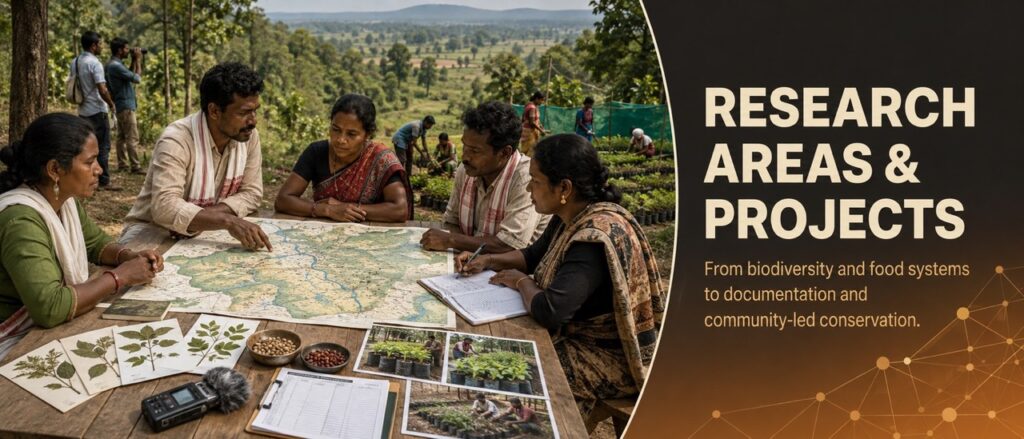
Hodopathy can be developed as an emerging, research-oriented field focused on understanding the relationship between human health, lifestyle, environment, nutrition, natural resources, and holistic wellness. Future research should move beyond traditional concepts and emphasize scientific observation, measurable outcomes, evidence-based methods, reproducible studies, and responsible innovation.
The goal of advanced Hodopathy research should be to explore potentially useful approaches while maintaining clear scientific standards and distinguishing established evidence from hypotheses that still require investigation.
1. Fundamental Research in Hodopathy
Fundamental research can establish the theoretical and scientific foundation of Hodopathy.
Key areas may include:
- Defining the principles, terminology, and scope of Hodopathy
- Developing standardized research methodologies
- Studying proposed mechanisms behind Hodopathic practices
- Identifying measurable physiological and behavioral outcomes
- Establishing reproducible experimental protocols
- Comparing traditional concepts with contemporary biomedical knowledge
- Developing frameworks for evaluating safety, effectiveness, and limitations
Future objective: Build a coherent research framework that allows Hodopathy-related hypotheses to be investigated systematically rather than relying only on anecdotal observations.
2. Human Health & Wellness Research
One important research direction is understanding whether Hodopathic approaches can contribute to general health and wellbeing.
Research projects could investigate:
- Physical wellbeing
- Mental and emotional wellbeing
- Sleep quality
- Energy and fatigue
- Stress management
- Lifestyle-related health outcomes
- Quality of life
- Healthy aging
- General resilience and wellbeing
Studies should use validated assessment tools and objective measurements wherever possible.
Potential project
“Evaluation of a Holistic Hodopathic Wellness Program on Quality-of-Life Indicators in Adults.”
The project could compare baseline measurements with outcomes after a defined intervention period while using appropriate control groups.
3. Nutrition & Dietary Research
Nutrition is another promising area for structured research.
Potential research topics include:
- Relationship between dietary patterns and wellbeing
- Traditional food practices
- Whole-food nutrition
- Micronutrient adequacy
- Plant-based dietary patterns
- Gut-health-related dietary factors
- Personalized nutrition
- Food preparation methods
- Nutritional education and behavior change
Advanced project
“Development of a Personalized Nutrition Framework for Preventive Wellness.”
Such research could combine dietary records, lifestyle information, anthropometric measurements, and validated health indicators.
4. Lifestyle & Preventive Health
Modern research increasingly recognizes the importance of everyday behaviors in long-term health.
Hodopathy research could examine:
- Physical activity
- Sleep routines
- Stress-management practices
- Work-rest balance
- Screen exposure
- Daily routines
- Social connection
- Outdoor activity
- Hydration and dietary habits
Research project
“Integrated Lifestyle Intervention for Improving Sleep, Stress and Daily Wellbeing.”
Researchers could evaluate whether combining several healthy lifestyle practices produces measurable improvements compared with standard health education.
5. Environmental Health Research
The interaction between humans and their environment deserves greater attention.
Potential research areas include:
- Indoor air quality
- Outdoor environmental exposure
- Green spaces
- Noise pollution
- Light exposure
- Workplace environments
- Household environmental factors
- Nature exposure and wellbeing
Future project
“Relationship Between Green-Space Exposure and Psychological Wellbeing.”
This could combine environmental measurements with validated psychological and behavioral assessments.
6. Plant-Based & Natural Resource Research
Research involving plants and naturally derived materials should be approached scientifically, particularly when claims about health benefits are made.
Potential areas include:
- Identification of bioactive compounds
- Nutritional properties of plants
- Traditional plant uses
- Phytochemical analysis
- Food-grade natural products
- Safety evaluation
- Standardization of plant materials
- Laboratory characterization
Advanced research project
“Phytochemical Characterization and Safety Assessment of Traditionally Used Plants.”
Laboratory analysis could identify compounds and establish standardized quality parameters before any health-related claims are evaluated.
7. Traditional Knowledge & Modern Science
An important future direction is documenting traditional knowledge while testing relevant hypotheses using contemporary scientific methods.
Research could focus on:
- Traditional wellness practices
- Historical health traditions
- Indigenous knowledge systems
- Traditional dietary practices
- Herbal knowledge
- Cultural approaches to wellbeing
- Historical documentation and preservation
The objective should not be to assume that a traditional practice is effective simply because it is traditional. Instead, researchers can identify promising hypotheses and subject them to appropriate scientific evaluation.
8. Personalized & Precision Wellness
Future Hodopathy research could explore how wellness strategies may differ between individuals.
Potential variables include:
- Age
- Lifestyle
- Dietary habits
- Physical activity
- Sleep patterns
- Environmental exposure
- Personal preferences
- Baseline health indicators
Future project
“AI-Assisted Personalized Wellness Recommendations Based on Lifestyle and Behavioral Data.”
Artificial intelligence could potentially help organize large datasets and identify patterns, while final health recommendations should remain subject to appropriate professional and scientific oversight.
9. Digital Health & Hodopathy
Digital technology creates opportunities for continuous data collection.
Research projects could investigate:
- Smartphone-based wellness tracking
- Wearable devices
- Sleep monitoring
- Activity monitoring
- Digital questionnaires
- Remote wellness programs
- Longitudinal health-data analysis
- Digital behavior-change interventions
For example, researchers could study whether personalized digital feedback helps people maintain healthier lifestyle routines over several months.
10. AI, Data Science & Hodopathy Research
Advanced data science could become an important part of future research.
Potential applications include:
- Pattern recognition
- Predictive modeling
- Personalized wellness planning
- Population-level analysis
- Research-data management
- Natural-language analysis of historical literature
- Identification of research gaps
- Automated hypothesis generation
However, AI-generated hypotheses should always be treated as research proposals rather than established medical facts until independently validated.
11. Laboratory & Biomarker Research
Where scientifically appropriate, laboratory research can provide objective measurements.
Potential areas include:
- Blood-based biomarkers
- Nutritional biomarkers
- Inflammatory markers
- Metabolic indicators
- Hormonal measurements
- Microbiome-related research
- Oxidative-stress markers
Such studies should use validated laboratory methods and appropriate ethical safeguards.
12. Gut Microbiome Research
The human microbiome represents a rapidly developing research field.
Hodopathy-related projects could explore associations between:
- Dietary patterns
- Fiber consumption
- Fermented foods
- Lifestyle
- Microbiome composition
- Metabolic health
- General wellbeing
Research project
“Dietary Patterns, Gut Microbiome Diversity and Lifestyle-Related Wellness Indicators.”
This could involve dietary assessment, microbiome sequencing and statistical analysis.
13. Mental Wellbeing & Stress Research
Mental wellbeing can be investigated through scientifically validated measures without making unsupported claims about treating psychiatric disorders.
Research could examine:
- Perceived stress
- Sleep quality
- Relaxation
- Mindfulness-related practices
- Social wellbeing
- Work-related stress
- Lifestyle interventions
Potential project
“A Controlled Study of Lifestyle-Based Stress-Management Practices and Perceived Stress Scores.”
14. Healthy Aging Research
With increasing life expectancy, healthy aging is an important research opportunity.
Potential areas include:
- Mobility
- Strength and physical activity
- Nutrition
- Sleep
- Cognitive wellbeing
- Social engagement
- Independence
- Quality of life
Long-term observational studies could identify lifestyle patterns associated with healthier aging.
15. Evidence-Based Hodopathy Research Model
Future research should follow a structured pathway:
Traditional/Conceptual Idea → Research Question → Laboratory/Observational Study → Pilot Study → Controlled Clinical Study → Independent Replication → Systematic Review → Evidence Assessment
This approach can help separate:
Traditional belief → hypothesis → preliminary evidence → validated evidence
rather than presenting every traditional claim as scientifically established.
16. Clinical Research & Controlled Studies
When a Hodopathic intervention is intended to influence a health outcome, appropriately designed clinical research is essential.
Important components include:
- Clearly defined research questions
- Predefined outcomes
- Appropriate comparison groups
- Adequate sample sizes
- Randomization where appropriate
- Blinding where feasible
- Statistical analysis plans
- Transparent reporting
- Adverse-event monitoring
- Independent replication
Example project
“Randomized Controlled Evaluation of a Defined Hodopathic Wellness Intervention on Selected Quality-of-Life Outcomes.”
The study should specify exactly what is being tested rather than evaluating a broad collection of practices simultaneously.
17. Safety & Quality-Control Research
Safety should be a central component of future Hodopathy research.
Projects may examine:
- Product quality
- Contamination
- Dosage consistency
- Ingredient identification
- Interactions with conventional medicines
- Adverse effects
- Long-term safety
- Manufacturing standards
- Storage stability
No health intervention should be promoted as safe or effective merely because it is described as natural or traditional.
18. Comparative Research
Comparative research can help determine where a Hodopathic approach may or may not provide additional value.
Studies could compare:
- Hodopathic intervention vs. standard lifestyle advice
- Hodopathic intervention vs. placebo/sham intervention where appropriate
- Combined approach vs. usual care
- Different Hodopathic approaches
- Short-term vs. long-term outcomes
This can produce more meaningful evidence than uncontrolled testimonials.
19. Community & Public-Health Projects
Hodopathy research can also investigate population-level wellness initiatives.
Potential projects include:
- Community nutrition education
- School wellness programs
- Workplace wellness
- Rural health education
- Preventive lifestyle programs
- Women’s wellness initiatives
- Elderly wellness programs
- Digital health education
Researchers could measure participation, adherence, knowledge improvement and validated health outcomes.
20. Agricultural, Food & Ecological Connections
A broader Hodopathy research framework could examine the connection between food systems, agriculture, environment and human wellbeing.
Potential topics include:
- Sustainable food production
- Soil health and food quality
- Traditional crops
- Millets and other nutrient-dense foods
- Local food systems
- Biodiversity
- Sustainable agriculture
- Food security
- Environmentally responsible nutrition
This creates an interdisciplinary research bridge between agriculture, nutrition, environmental science and human wellbeing.
21. Research Infrastructure & Innovation
To advance Hodopathy as a serious research field, dedicated infrastructure could include:
🔬 Research Laboratories
For nutritional, phytochemical, environmental and biological investigations.
🧪 Standardization Facilities
For quality testing and reproducibility.
📊 Data & Analytics Centers
For clinical, observational and population-level datasets.
🤖 AI Research Units
For data analysis, pattern recognition and personalized wellness research.
🌱 Botanical Research Units
For scientifically documenting and analyzing plant-based resources.
🧑🔬 Multidisciplinary Research Teams
Bringing together researchers from nutrition, biology, medicine, agriculture, psychology, environmental science, statistics and data science.
22. Proposed Future Research Projects
A forward-looking Hodopathy research program could include projects such as:
- Hodopathy Evidence Mapping Project
- Hodopathy Terminology & Standardization Project
- Personalized Wellness Research Program
- Nutrition & Lifestyle Intervention Study
- Plant-Based Resource Characterization Project
- Gut Microbiome & Dietary Pattern Study
- Environmental Wellness Research Project
- Digital Hodopathy Monitoring Platform
- AI-Based Wellness Data Analysis Project
- Healthy Aging & Quality-of-Life Study
- Community Preventive Wellness Program
- Safety & Quality-Control Research Program
- Traditional Knowledge Documentation Project
- Long-Term Lifestyle Cohort Study
- Randomized Controlled Hodopathy Intervention Trials
23. Long-Term Vision
The future of Hodopathy research should be built around scientific curiosity, measurable outcomes, transparency and continuous improvement.
The long-term vision can be represented as:
Discover → Document → Test → Measure → Validate → Replicate → Improve → Apply
Rather than limiting Hodopathy to a fixed set of traditional concepts, advanced research can investigate new questions using modern technologies such as AI, genomics, microbiome analysis, wearable sensors, digital health platforms, laboratory analytics and large-scale longitudinal datasets.
The ultimate objective should be to develop a credible, evidence-oriented and interdisciplinary research ecosystemin which promising ideas are investigated rigorously, ineffective approaches are identified honestly, safety is prioritized, and useful findings are independently reproducible.
Research Philosophy
“Respect traditional knowledge, formulate testable hypotheses, apply modern scientific methods, measure meaningful outcomes, and accept conclusions only when supported by reliable evidence.”