
Preserving, Understanding and Sharing Indigenous Knowledge
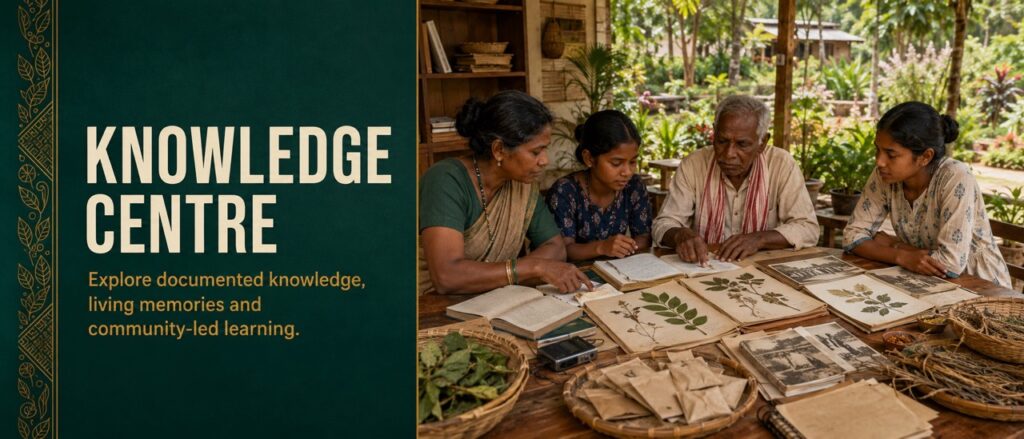
The Hodopathy Knowledge Centre is envisioned as a dedicated platform for the documentation, preservation, study and responsible sharing of the indigenous knowledge traditions associated with the Ho community and the wider Adivasi heritage of Jharkhand.
It brings together knowledge relating to people, plants, forests, food, biodiversity, culture, traditional practices, language, oral histories and community life in one organised knowledge ecosystem.
The Knowledge Centre is not intended to be simply a database of plants or traditional remedies. Its purpose is to preserve the broader relationships through which knowledge has been developed and transmitted across generations.
Knowledge is meaningful when its people, culture and ecological context are preserved alongside it.
What Is the Hodopathy Knowledge Centre?
The Hodopathy Knowledge Centre is a developing repository of permitted traditional knowledge, community histories, plant information, educational resources, research materials and biodiversity documentation.
It aims to make responsibly documented information easier to discover while respecting the rights and cultural boundaries of knowledge holders.
The Centre may bring together:
- Traditional plant knowledge
- Indigenous ecological knowledge
- Local plant names and terminology
- Oral histories
- Traditional food knowledge
- Seasonal knowledge
- Forest and biodiversity information
- Cultural practices
- Community experiences
- Ethnobotanical records
- Educational resources
- Research publications
- Conservation information
- Historical documentation
The Knowledge Centre will distinguish between community knowledge, documented traditional use, research findings and established scientific evidence.
Why a Knowledge Centre Is Important
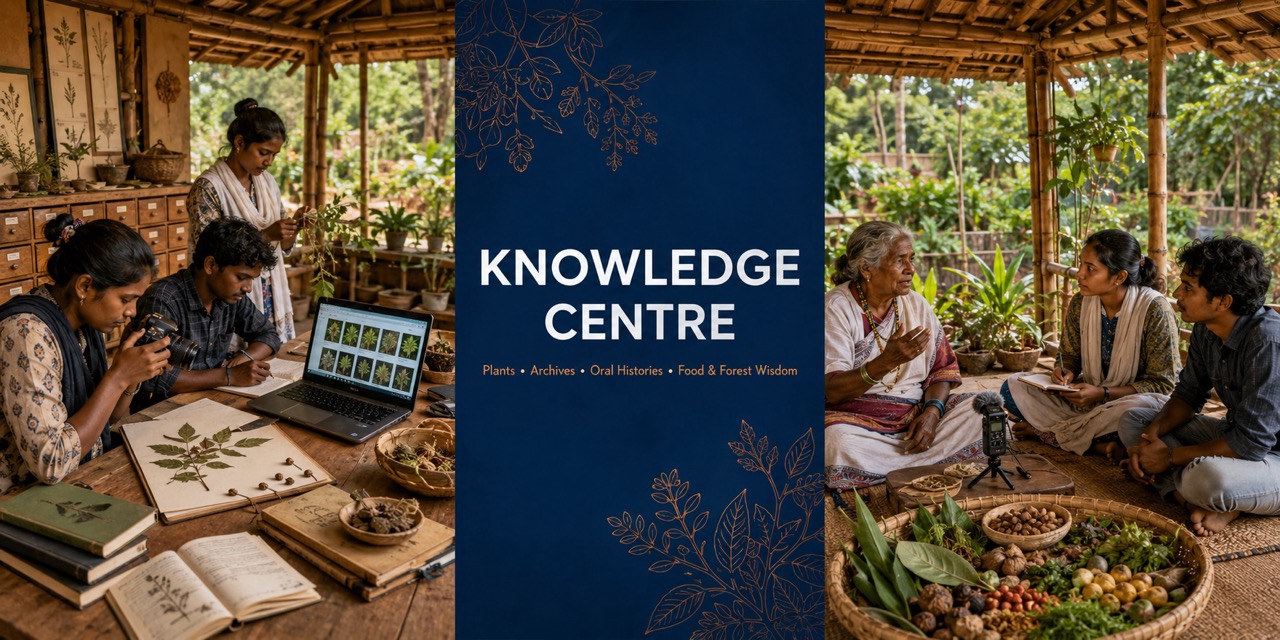
A significant amount of indigenous knowledge has traditionally been transmitted through oral teaching, observation and practical experience.
Elders, traditional practitioners, families and experienced community members have carried knowledge from one generation to another.
However, this knowledge can become vulnerable as:
- Knowledge holders grow older
- Younger generations migrate
- Traditional lifestyles change
- Local languages decline
- Forest environments change
- Native plants become less common
- Traditional practices are practiced less frequently
- Community knowledge remains undocumented
A carefully designed knowledge centre can help create a long-term record of knowledge that communities are willing to preserve and share.
The objective is not to replace oral traditions but to create an additional means of preservation for future generations.
A Community-Centred Knowledge Model
The Hodopathy Knowledge Centre places communities and knowledge holders at the centre.
Traditional knowledge should not be collected as though it were an unrestricted resource.
Where information is contributed, the Centre seeks to recognise:
- The knowledge holder
- The relevant community
- The cultural context
- The source of information
- Appropriate permissions
- Any access restrictions
- The nature of the documented knowledge
Where communities prefer information to remain private or restricted, such preferences should be respected.
Major Sections of the Knowledge Centre
1. Traditional Plant Knowledge
This section may document permitted information about plants known and used within local communities.
Records may include:
- Local name
- Traditional terminology
- Botanical name where verified
- Plant description
- Habitat
- Seasonal availability
- Traditional context
- Documented traditional use
- Preparation information where appropriate
- Cultural significance
- Conservation status where available
- Research references
Traditional information should remain distinguishable from scientific conclusions.
2. Ethnobotanical Knowledge
Ethnobotany explores relationships between people, plants and culture.
The Knowledge Centre can provide a space for documenting how communities interact with local plant resources, including traditional uses, food plants, forest resources and cultural relationships.
Ethnobotanical documentation can help researchers and learners understand plants not only as biological species but also as part of community life and cultural heritage.
3. Indigenous Ecological Knowledge
Hodopathy is connected with generations of observation of the natural environment.
This may include knowledge of:
- Seasonal changes
- Local ecosystems
- Forest resources
- Plant behaviour
- Agricultural cycles
- Water resources
- Wildlife relationships
- Sustainable resource use
- Changes in local environments
Such observations can contribute to a broader understanding of local ecological knowledge.
4. Traditional Food & Nutrition Knowledge
Food is an important part of cultural heritage.
The Knowledge Centre may document permitted information about:
- Traditional foods
- Wild edible plants
- Seasonal foods
- Local grains and crops
- Traditional ingredients
- Food preparation practices
- Food preservation
- Community food traditions
- Cultural significance of foods
Traditional food knowledge should be understood within its cultural and ecological setting.
Where nutritional or health claims are made, appropriate scientific evidence should be distinguished from traditional observation.
5. Oral Histories
Oral history provides an opportunity to preserve the voices and experiences of community members.
With appropriate consent, the Knowledge Centre may include:
- Interviews with elders
- Experiences of traditional practitioners
- Community narratives
- Stories about plants and forests
- Historical memories
- Changes in local environments
- Traditional terminology
- Intergenerational knowledge
Oral histories should be presented respectfully and, where appropriate, in the words and language of the knowledge holder.
6. Language & Traditional Terminology
Language is an important carrier of indigenous knowledge.
Local names for plants, foods, places and natural resources can preserve distinctions and meanings that may not be captured by scientific terminology.
Where communities permit documentation, the Knowledge Centre may record:
- Local names
- Traditional terminology
- Alternative names
- Pronunciation
- Meanings
- Cultural context
- Corresponding scientific terminology where verified
The objective is not to replace indigenous terminology with scientific names but to preserve both forms of knowledge where appropriate.
7. Cultural Heritage
Hodopathy exists within a wider cultural environment.
The Knowledge Centre may document permitted information relating to:
- Community traditions
- Relationships with nature
- Seasonal practices
- Cultural practices
- Traditional knowledge transmission
- Community history
- Local narratives
- Cultural relationships with plants and forests
Sensitive, sacred or restricted cultural information should not be published without appropriate permission.
8. Biodiversity Knowledge
Biodiversity preservation is an important part of the Hodopathy knowledge ecosystem.
The Centre may document information about:
- Native plants
- Traditionally important species
- Local biodiversity
- Community conservation practices
- Seed resources
- Traditional plant habitats
- Threats to native species
- Conservation initiatives
- Sustainable harvesting
The purpose is to strengthen understanding of the relationship between cultural heritage and ecological conservation.
9. Research & Scientific Resources
The Knowledge Centre can serve as a resource for responsible researchers.
Potential resources may include:
- Ethnobotanical publications
- Botanical references
- Research papers
- Field documentation
- Biodiversity studies
- Historical records
- Conservation research
- Educational materials
Research resources should be presented with appropriate citations and context.
The Centre does not treat every traditional claim as scientific evidence.
10. Knowledge Classification
To improve clarity, information within the Knowledge Centre may be classified according to its evidence and source.
For example:
Community Knowledge
Information transmitted or maintained within a community.
Traditional Use
A documented account of how a plant, food, resource or practice has traditionally been used.
Historical Documentation
Information recorded in historical or ethnographic sources.
Research Evidence
Findings generated through scientific or academic investigation.
Established Evidence
Information supported by appropriate and credible scientific evidence.
This classification helps visitors understand what is known, what is traditionally reported and what has been scientifically investigated.
Responsible Knowledge Documentation
The Knowledge Centre follows an ethical approach to documentation.
Before documenting community knowledge, appropriate consideration should be given to:
- Prior informed consent
- Community participation
- Cultural protocols
- Privacy
- Attribution
- Confidentiality
- Intended use
- Future access
- Potential risks
Documentation should be undertaken with communities and knowledge holders, not simply about them.
Knowledge Protection & Access
Not all information should be freely available online.
The Knowledge Centre may use different levels of access depending on the nature of the material.
Public Knowledge
Information that is appropriate for general educational access.
Community-Restricted Knowledge
Information available only to authorised community members or approved participants.
Research-Restricted Knowledge
Information that may be accessible to approved researchers under defined conditions.
Confidential or Protected Knowledge
Information that should not be publicly disclosed.
This approach recognises that privacy and restricted access can themselves be important forms of cultural preservation.
Plant Identification & Accuracy
Plant identification is an important consideration when documenting traditional plant knowledge.
Local names can differ between communities and regions, and the same name may sometimes refer to different species.
Where appropriate, the Knowledge Centre may work with qualified botanists or researchers to support accurate identification.
A record may distinguish between:
Traditional Name → Community Description → Botanical Identification → Research Status
Where identification has not been verified, the record should clearly communicate that uncertainty.
Accuracy is important both for research and for responsible public education.
Knowledge From the Field
Field documentation can help connect written records with the environments in which knowledge is practiced.
Where appropriate and permitted, field records may include:
- Plant photographs
- Habitat observations
- Seasonal observations
- Community interviews
- Local terminology
- Geographic information at an appropriate level
- Ecological observations
- Traditional practices
Sensitive locations should be handled carefully, particularly where disclosure could increase pressure on rare or vulnerable species.
Digital Preservation
Digital technology creates new opportunities to preserve knowledge for future generations.
The Knowledge Centre may develop digital resources including:
- Searchable plant records
- Audio archives
- Video documentation
- Photographic collections
- Oral-history recordings
- Digital manuscripts
- Research references
- Community archives
Digital preservation should be accompanied by appropriate metadata, permissions, source information and access controls.
Education Through the Knowledge Centre
The Knowledge Centre is intended to serve learners as well as researchers.
Educational resources may help students and visitors learn about:
- Ho and Adivasi knowledge traditions
- Indigenous ecological knowledge
- Native plants
- Biodiversity
- Ethnobotany
- Traditional foods
- Forest relationships
- Cultural heritage
- Ethical research
- Knowledge preservation
The objective is to encourage curiosity, respect and responsible learning.
Supporting the Next Generation
One of the most important goals of knowledge preservation is intergenerational transmission.
The Knowledge Centre can provide resources that help younger generations reconnect with:
- Local plants
- Community history
- Traditional terminology
- Forest knowledge
- Food traditions
- Cultural heritage
- Biodiversity
Digital resources can complement—not replace—the direct learning that takes place between elders, families and communities.
Research Without Extraction
The Knowledge Centre aims to encourage research while protecting communities from inappropriate extraction.
Researchers interested in Hodopathy should consider:
- Why the research is being conducted
- What information is required
- Who owns or controls the knowledge
- Whether consent has been obtained
- How information will be stored
- Who will access the research
- How contributors will be acknowledged
- Whether benefit sharing is appropriate
- How research findings will be communicated
Research should create opportunities for partnership, learning and preservation, rather than simply collecting information.
Biodiversity & Knowledge Conservation Together
The Knowledge Centre recognises that cultural and ecological preservation are closely connected.
If native plants disappear, associated knowledge may also become harder to transmit.
Therefore, knowledge preservation can be strengthened through:
- Native plant gardens
- Community nurseries
- Seed conservation
- Biodiversity documentation
- Sustainable harvesting education
- Habitat restoration
- Conservation awareness
Protecting the knowledge also means protecting the living environments in which it developed.
Quality, Transparency & Verification
Hodopathy.org aims to maintain high standards of documentation.
Where possible, information should identify:
- Source
- Knowledge holder or community
- Date of documentation
- Location at an appropriate level
- Botanical identification status
- Research references
- Documentation method
- Access conditions
Information that has not been independently verified should not be presented as established fact.
This commitment to transparency helps build a Knowledge Centre that can be useful to communities, students and researchers alike.
A Knowledge Centre for Communities and Future Generations
The Hodopathy Knowledge Centre is ultimately intended to become more than an online collection.
It is envisioned as a living knowledge ecosystem connecting:
Community Knowledge
↓
Cultural Heritage
↓
Plants & Ethnobotany
↓
Forests & Biodiversity
↓
Education
↓
Responsible Research
↓
Future Generations
Its success should not be measured only by the amount of information collected, but by how responsibly that information is preserved and how effectively it supports community recognition, cultural continuity, education and conservation.
Our Commitment
Hodopathy.org is committed to developing the Knowledge Centre according to the principles of:
Respect — Consent — Participation — Attribution — Accuracy — Confidentiality — Transparency — Conservation — Responsibility
We believe that indigenous knowledge deserves to be preserved with the same care given to the cultural and ecological heritage surrounding it.
The Knowledge Centre therefore seeks to ensure that Hodopathy is documented responsibly, protected appropriately, studied honestly and shared respectfully.
Preserving Knowledge for the Future
The Hodopathy Knowledge Centre is a bridge between generations, communities, culture, nature and responsible research.
It seeks to honour the people who have carried knowledge forward, preserve what communities choose to share, protect what should remain protected and create meaningful opportunities for future generations to learn.
Our goal is not simply to collect knowledge. Our goal is to preserve the living relationships that give that knowledge meaning.
Hodopathy Knowledge Centre
Preserving Indigenous Knowledge • Respecting Communities • Protecting Biodiversity • Supporting Responsible Research