
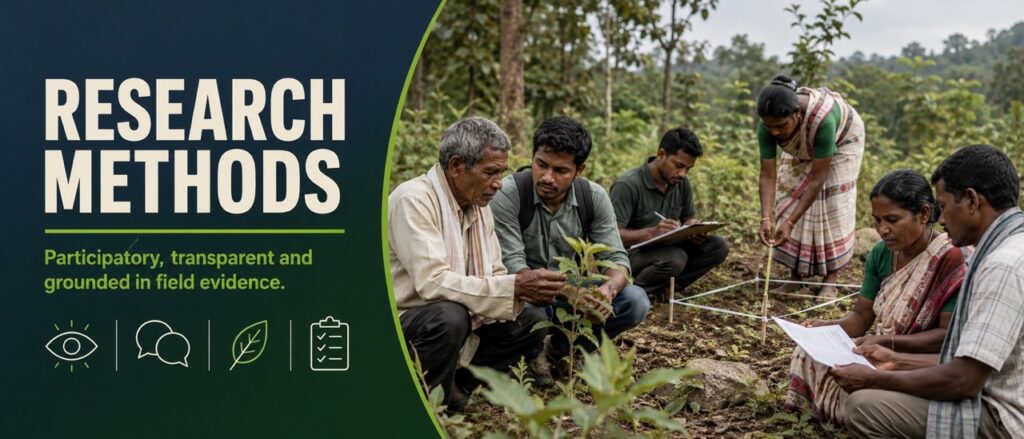
Research Methods of Hodopathy should provide a structured, transparent and evidence-oriented framework for investigating the concepts, practices, interventions and proposed benefits associated with Hodopathy. As the field develops, research should move from descriptive observations and traditional knowledge toward testable hypotheses, measurable outcomes, reproducible methods and independent validation.
A modern research framework should not assume that a Hodopathic concept is effective simply because it is traditional or widely used. Instead, each claim should be treated according to the level of evidence available and investigated using the most appropriate scientific method.
Core principle: A promising idea becomes research evidence only when it can be systematically tested, measured, analyzed and independently evaluated.
1. Objectives of Hodopathy Research
The primary objectives of research should be to:
- Define Hodopathy concepts clearly
- Document traditional and contemporary practices
- Develop standardized terminology
- Identify researchable hypotheses
- Evaluate potential benefits and limitations
- Investigate safety
- Measure objective and subjective outcomes
- Compare interventions appropriately
- Identify mechanisms where scientifically possible
- Reproduce promising findings
- Build reliable evidence for future research
Research should distinguish between hypothesis, observation, preliminary evidence and established evidence.
2. Research Framework
A comprehensive Hodopathy research process can follow this pathway:
Research Question → Literature Review → Hypothesis → Study Design → Ethical Review → Data Collection → Statistical Analysis → Results → Peer Review → Replication → Evidence Synthesis
This approach creates a continuous research cycle:
Observe → Question → Test → Measure → Analyze → Validate → Improve
3. Literature Review
Before beginning a new project, researchers should examine existing scientific literature.
A literature review can identify:
- Previous studies
- Existing theories
- Research gaps
- Similar interventions
- Potential mechanisms
- Known safety concerns
- Appropriate measurement tools
- Conflicting findings
- Areas requiring further investigation
Researchers should search relevant scientific databases and distinguish peer-reviewed evidence from promotional material, testimonials and unsupported claims.
4. Developing a Research Question
A strong research project begins with a clearly defined question.
Instead of asking:
“Is Hodopathy beneficial?”
a more researchable question would be:
“Does a defined Hodopathic wellness intervention improve a specified quality-of-life measure compared with a predefined comparison condition over a specified period?”
A good research question should specify:
- Population
- Intervention or exposure
- Comparison
- Outcome
- Time period
This makes the research measurable and reproducible.
5. Hypothesis Development
A hypothesis is a testable proposition rather than a conclusion.
For example:
Hypothesis:
A defined lifestyle-based Hodopathic intervention may be associated with measurable changes in selected wellbeing indicators.
Researchers can then test whether the collected data support or fail to support the hypothesis.
Both positive and negative findings should be reported.
6. Observational Research
Observational studies are useful during the early stages of research.
Researchers observe participants without necessarily assigning an intervention.
Possible designs
- Cross-sectional studies
- Cohort studies
- Case-control studies
- Longitudinal studies
- Community surveys
Potential applications
Researchers could investigate relationships between:
- Lifestyle and wellbeing
- Dietary patterns and health indicators
- Environmental exposure and wellbeing
- Traditional practices and health behaviors
- Sleep and quality of life
Observational research can identify associations, but association does not automatically establish causation.
7. Descriptive Research
Descriptive research can document how Hodopathy-related practices are used.
It may examine:
- Who uses a practice
- How frequently it is used
- How it is prepared or administered
- Duration of use
- User-reported experiences
- Reasons for adoption
- Reported difficulties
- Safety observations
This type of research is particularly useful for documenting practices before designing more advanced studies.
8. Qualitative Research
Not every research question can be answered through numerical measurements.
Qualitative research can explore human experiences and perspectives.
Methods may include:
- Structured interviews
- Semi-structured interviews
- Focus groups
- Field observations
- Thematic analysis
- Content analysis
Potential topics include:
- Perceptions of wellness
- Experiences with lifestyle interventions
- Cultural practices
- Barriers to healthy behavior
- Traditional knowledge
- User expectations
Qualitative findings can help researchers design better quantitative studies.
9. Quantitative Research
Quantitative research uses measurable variables and statistical analysis.
Possible measurements include:
- Weight
- Blood pressure
- Physical activity
- Sleep duration
- Validated wellbeing scores
- Dietary intake
- Laboratory biomarkers
- Environmental measurements
Quantitative research allows researchers to estimate the magnitude of an effect or association and assess uncertainty around the findings.
10. Pilot Studies
Pilot studies can be conducted before large-scale research.
Their purpose is to determine whether:
- The research protocol is practical
- Participants can follow the intervention
- Measurements are feasible
- Data collection works properly
- Recruitment is achievable
- Potential safety concerns arise
- The study design needs modification
Pilot studies should generally be viewed as exploratory, not definitive proof of effectiveness.
11. Controlled Studies
Controlled research provides stronger evidence when evaluating an intervention.
Participants can be divided into appropriate groups, such as:
Intervention Group → Defined Hodopathic Intervention
Comparison Group → Control or Standard Condition
Researchers then compare predefined outcomes between groups.
Important considerations include:
- Appropriate sample size
- Clearly defined intervention
- Pre-specified outcomes
- Consistent measurement
- Appropriate statistical methods
- Transparent reporting
12. Randomized Controlled Trials
Where appropriate, randomized controlled trials can provide strong evidence about causal effects.
A simplified structure is:
Eligible Participants → Random Allocation → Intervention / Control → Outcome Measurement → Statistical Analysis
Randomization helps reduce systematic differences between groups.
Depending on the intervention, blinding may also be possible.
However, randomized trials must be carefully designed because poor methodology can produce misleading results even when randomization is used.
13. Comparative Effectiveness Research
Research can compare different approaches rather than simply comparing an intervention with no intervention.
Examples include:
- Hodopathic wellness program vs. standard lifestyle education
- One wellness strategy vs. another
- Combined intervention vs. usual care
- Different durations of intervention
This can help determine whether an approach provides meaningful additional value.
14. Laboratory Research
Laboratory research can investigate measurable biological or chemical characteristics associated with Hodopathy-related materials or hypotheses.
Possible areas include:
- Chemical characterization
- Nutritional composition
- Phytochemical analysis
- Microbiological testing
- Contamination testing
- Stability testing
- Biomarker analysis
- Mechanistic studies
Laboratory findings should not automatically be interpreted as evidence of clinical effectiveness.
For example, finding a biological compound in a plant does not by itself prove that consuming the plant will produce a particular health outcome.
15. Nutrition Research Methods
For Hodopathy research involving food and nutrition, researchers can use:
- Dietary recall
- Food-frequency questionnaires
- Food diaries
- Nutritional composition analysis
- Anthropometric measurements
- Biomarker testing
- Controlled dietary interventions
Advanced studies may combine dietary information with microbiome, metabolic or behavioral measurements.
16. Environmental Research Methods
Environmental factors can be studied through direct measurement and participant-level outcomes.
Potential measurements include:
- Air quality
- Noise
- Temperature
- Light exposure
- Green-space exposure
- Indoor environmental conditions
Researchers can then compare environmental measurements with validated wellbeing or health indicators.
17. Biomarker & Physiological Research
Where scientifically justified, researchers may investigate objective physiological indicators.
Potential categories include:
- Metabolic biomarkers
- Nutritional biomarkers
- Inflammatory markers
- Hormonal indicators
- Cardiovascular measurements
- Physical-performance measurements
Biomarkers should be selected according to the specific research question rather than collected simply because they are available.
18. Gut Microbiome Research
Future Hodopathy research may explore relationships between diet, lifestyle and the gut microbiome.
A research pathway could involve:
Dietary Assessment → Biological Sample Collection → Microbiome Analysis → Statistical Comparison → Interpretation
Potential questions include whether particular dietary or lifestyle patterns are associated with measurable differences in microbiome composition.
Such findings should be interpreted cautiously because microbiome research is complex and associations do not necessarily demonstrate causation.
19. Digital Health Research
Modern technology can improve data collection.
Researchers may use:
- Mobile applications
- Wearable activity trackers
- Sleep-monitoring devices
- Digital questionnaires
- Remote assessments
- Electronic research diaries
Digital tools can support longitudinal research by collecting repeated measurements over time.
20. AI & Data Science Methods
Artificial intelligence and machine learning can support future Hodopathy research.
Possible applications include:
Literature Analysis
Identifying research trends and knowledge gaps.
Data Analysis
Finding patterns in large datasets.
Personalized Research
Exploring relationships between lifestyle variables and individual outcomes.
Predictive Modeling
Testing whether combinations of variables are associated with future outcomes.
Research Discovery
Generating hypotheses for future investigation.
AI outputs should always be independently validated. AI-generated correlations or predictions should not be treated as scientific evidence without appropriate testing.
21. Longitudinal Research
Long-term studies can provide information that short studies cannot.
Participants can be followed for months or years to investigate changes in:
- Lifestyle
- Nutrition
- Physical activity
- Sleep
- Environmental exposure
- Quality of life
- Health-related outcomes
Longitudinal research is particularly useful for understanding patterns over time.
22. Safety Research
Safety should be integrated into every relevant research project.
Researchers should monitor:
- Adverse events
- Allergic reactions
- Interactions
- Dosage-related problems
- Product contamination
- Quality variation
- Long-term exposure
- Participant withdrawals
A research program should never focus only on potential benefits while ignoring potential risks.
23. Research Ethics
Human research should follow applicable ethical and regulatory requirements.
Important principles include:
- Informed consent
- Participant privacy
- Confidentiality
- Risk minimization
- Independent ethical review where required
- Voluntary participation
- Right to withdraw
- Appropriate safety monitoring
- Responsible data handling
Research involving vulnerable populations requires additional safeguards.
24. Statistical Methods
Statistical analysis should be planned before examining results whenever possible.
Depending on the research design, researchers may use:
- Descriptive statistics
- Confidence intervals
- Hypothesis testing
- Regression analysis
- Correlation analysis
- Survival analysis
- Multivariable modeling
- Effect-size estimation
- Meta-analysis
Researchers should report uncertainty rather than relying solely on whether a result is statistically significant.
A scientifically meaningful result should consider both effect size and practical relevance.
25. Reproducibility & Replication
One of the most important improvements for future Hodopathy research is reproducibility.
Researchers should document:
- Exact intervention
- Materials
- Procedures
- Participant selection
- Measurement methods
- Data-processing methods
- Statistical methods
Other researchers should be able to repeat the study using the published methodology.
Independent replication can determine whether an interesting finding is robust or occurred because of chance, bias or methodological limitations.
26. Evidence Grading
Not all research provides the same level of evidence.
A future Hodopathy evidence framework could categorize findings as:
Level 1 — Conceptual
A theoretical idea or hypothesis.
Level 2 — Traditional/Descriptive
Documented historical or observational information.
Level 3 — Preliminary
Pilot, laboratory or early observational evidence.
Level 4 — Controlled Evidence
Well-designed controlled studies.
Level 5 — Replicated Evidence
Findings independently reproduced.
Level 6 — Synthesized Evidence
Consistent findings supported by high-quality systematic reviews or meta-analyses.
This framework helps prevent preliminary observations from being presented as established scientific facts.
27. Research Quality-Control System
A mature research program could introduce quality-control checkpoints:
Before Study
→ Protocol review
During Study
→ Data and safety monitoring
After Study
→ Statistical validation
Before Publication
→ Peer review
After Publication
→ Independent replication
Long Term
→ Evidence updating
This creates a continuous quality-improvement system.
28. Research Documentation Standards
Each Hodopathy study should ideally maintain a complete research record containing:
- Research title
- Research question
- Background
- Hypothesis
- Study design
- Participants
- Intervention/exposure
- Comparison
- Outcomes
- Methodology
- Data-management plan
- Statistical plan
- Safety monitoring
- Results
- Limitations
- Funding information
- Conflicts of interest
- References
This documentation improves transparency and credibility.
29. Future Hodopathy Research Laboratory
An advanced research ecosystem could bring together multiple capabilities:
🔬 Laboratory Research
Biological and chemical analysis.
🧪 Safety & Quality Testing
Standardization and contamination assessment.
📊 Biostatistics Unit
Study design and statistical analysis.
🧬 Biological Research Unit
Biomarker and microbiome investigations.
🌱 Plant & Nutrition Research Unit
Food, botanical and nutritional studies.
🤖 AI & Data Science Unit
Large-scale data analysis and modeling.
🌍 Environmental Research Unit
Environmental exposure and wellbeing research.
30. Proposed Research Projects
A future Hodopathy research program could develop projects such as:
- Hodopathy Research Methodology & Standardization Project
- Hodopathy Evidence Mapping Project
- Personalized Wellness Research Study
- Nutrition & Lifestyle Intervention Study
- Hodopathy and Sleep Research Project
- Environmental Wellness Research Program
- Traditional Knowledge Documentation Project
- Plant-Based Resource Characterization Study
- Gut Microbiome & Dietary Pattern Study
- AI-Assisted Hodopathy Research Database
- Digital Wellness Monitoring Project
- Healthy Aging Research Program
- Safety & Quality-Control Research Program
- Longitudinal Hodopathy Lifestyle Study
- Independent Replication Research Program
31. Advanced Research Roadmap
Phase 1 — Define
Establish terminology, concepts and research questions.
Phase 2 — Document
Collect traditional knowledge, existing publications and observational information.
Phase 3 — Standardize
Develop consistent research protocols and measurement systems.
Phase 4 — Explore
Conduct laboratory, qualitative, observational and pilot research.
Phase 5 — Test
Conduct appropriately designed controlled studies.
Phase 6 — Validate
Replicate promising findings independently.
Phase 7 — Synthesize
Conduct systematic reviews and evidence assessments.
Phase 8 — Improve
Update methods based on new evidence and technologies.
Phase 9 — Translate
Where evidence supports it, develop responsible applications while maintaining appropriate safety and regulatory standards.
32. Future Vision for Hodopathy Research Methods
The future of Hodopathy research should be interdisciplinary, data-driven, transparent and scientifically testable.
Emerging technologies such as AI, wearable sensors, digital health platforms, microbiome analysis, advanced laboratory testing and longitudinal data systems can expand research possibilities. At the same time, traditional knowledge can serve as a source of hypotheses without being treated automatically as scientific proof.
The strongest research model is therefore:
Traditional Knowledge + Scientific Question + Modern Technology + Rigorous Methodology + Objective Measurement + Independent Validation
The purpose is not simply to prove an existing belief. The purpose of research is to discover what is supported by evidence, identify what remains uncertain, reject unsupported conclusions, and continuously improve understanding.
Core Research Principle
“Every claim should become a question, every question should be tested with an appropriate method, every result should be measured transparently, and every conclusion should remain proportional to the evidence.”