
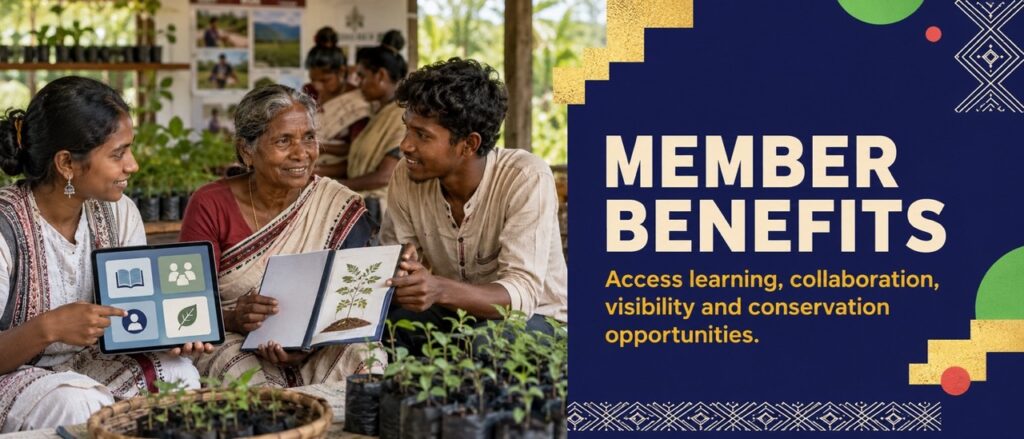
Membership in Hodopathy is more than joining an organisation—it is an opportunity to participate in the documentation, preservation, ethical development, research, and responsible transmission of indigenous knowledge. Members become part of a growing community committed to recognising the value of traditional knowledge while respecting the rights, dignity, consent, and cultural ownership of knowledge-holding communities.
The Member Benefits programme is designed to support different kinds of members, including traditional knowledge holders, community representatives, practitioners, researchers, students, educators, conservationists, cultural workers, and individuals who genuinely support the mission of Hodopathy.
1. Become Part of the Hodopathy Knowledge Community
Members gain a recognised place within a community working to preserve and strengthen indigenous knowledge systems.
Membership can provide opportunities to:
- Connect with people interested in Hodopathy and indigenous knowledge.
- Participate in knowledge-sharing activities.
- Contribute perspectives, observations, research, or community experience.
- Support responsible documentation of traditional practices.
- Engage with discussions on biodiversity, culture, food, plants, forests, and community knowledge.
- Build relationships across communities, researchers, educators, and practitioners.
The objective is to create a respectful knowledge network rather than simply a membership list.
2. Access to the Hodopathy Knowledge Centre
Members may receive enhanced access to selected resources within the Hodopathy Knowledge Centre, subject to community rights, consent, and appropriate access controls.
Resources may include:
- Plant and biodiversity information.
- Traditional food knowledge.
- Forest and ecological knowledge.
- Oral histories and community narratives.
- Ethnobotanical documentation.
- Historical and cultural records.
- Educational materials.
- Research publications and reports.
- Curated knowledge resources.
Some knowledge may remain restricted where disclosure could compromise community rights, cultural sensitivity, privacy, sacred knowledge, or biodiversity protection.
3. Member Profile and Professional Recognition
Eligible members may have the opportunity to create a profile within the Hodopathy member network.
Depending on membership category and verification requirements, a profile may highlight:
- Name and professional/community role.
- Area of interest or expertise.
- Research or documentation interests.
- Community involvement.
- Educational background.
- Publications or projects.
- Relevant skills and experience.
- Contributions to Hodopathy activities.
This can help members build a credible professional and knowledge-sharing identity within the Hodopathy ecosystem.
4. Practitioner and Knowledge-Holder Visibility
Traditional knowledge holders and practitioners can benefit from appropriate visibility while maintaining control over what information is publicly shared.
Where appropriate and with consent, Hodopathy may help members present:
- Areas of knowledge.
- Traditional practices.
- Community-based expertise.
- Plant and forest knowledge.
- Food and agricultural knowledge.
- Cultural practices.
- Educational or community activities.
Recognition should never require a knowledge holder to disclose confidential, sacred, commercially sensitive, or community-restricted knowledge.
5. Research and Collaboration Opportunities
Membership can create opportunities to participate in responsible research and collaborative projects.
Members may be able to connect with:
- Researchers.
- Universities and academic institutions.
- Ethnobotanists.
- Environmental researchers.
- Biodiversity organisations.
- Cultural documentation teams.
- Community organisations.
- Students and educators.
Potential collaboration areas include:
Ethnobotany • Biodiversity • Traditional Food Systems • Indigenous Knowledge • Forest Ecology • Cultural Heritage • Community Documentation • Sustainable Practices
All research involving community knowledge should follow appropriate consent, attribution, ethical review, data protection, and benefit-sharing principles.
6. Opportunities to Contribute to the Hodopathy Archive
Members may contribute suitable material to the Hodopathy Knowledge Archive.
Possible contributions include:
- Historical photographs.
- Community stories.
- Oral-history recordings.
- Traditional food documentation.
- Plant knowledge.
- Agricultural practices.
- Forest-use knowledge.
- Cultural descriptions.
- Research documents.
- Field observations.
- Educational materials.
Contributions can be reviewed and classified according to their sensitivity and intended access level.
A key principle:
Documentation does not mean unrestricted publication.
Knowledge should be documented in a way that protects its context, ownership, integrity, and community rights.
7. Participation in Oral History Projects
Members may participate in or support oral-history initiatives designed to preserve knowledge that is traditionally transmitted through storytelling and direct learning.
These initiatives may document:
- Stories of elders and knowledge holders.
- Traditional ecological observations.
- Historical experiences.
- Plant and forest knowledge.
- Food traditions.
- Community practices.
- Changes in landscapes and biodiversity.
- Cultural memories and local histories.
With informed consent, oral histories can become valuable resources for future generations while retaining the identity and context of the knowledge holders.
8. Learning and Educational Opportunities
Members can benefit from educational programmes developed around Hodopathy and related knowledge systems.
Possible activities include:
- Webinars.
- Workshops.
- Knowledge-sharing sessions.
- Training programmes.
- Field-learning activities.
- Community learning programmes.
- Student projects.
- Educational publications.
- Expert discussions.
These programmes can help members understand how indigenous knowledge is created, transmitted, documented, interpreted, and protected.
9. Early Access to New Research and Publications
Members may receive early access to selected Hodopathy materials, including:
- New research reports.
- Knowledge Centre updates.
- Educational resources.
- New plant documentation.
- Archive additions.
- Project announcements.
- Research opportunities.
- Community initiatives.
This helps members remain connected with the continuing development of the Hodopathy knowledge ecosystem.
10. Networking Across Disciplines
Hodopathy can bring together people from different backgrounds.
A member may connect with individuals working in:
🌿 Traditional Knowledge
🔬 Research
🌳 Biodiversity Conservation
🌾 Agriculture
🍃 Ethnobotany
📚 Education
🏞️ Forest Ecology
🧑🤝🧑 Community Development
🏛️ Cultural Heritage
🎓 Student Research
Such cross-disciplinary interaction can encourage new ideas and responsible collaborations.
11. Opportunities for Students and Emerging Researchers
Student members can benefit from an environment that encourages responsible learning and research.
Potential opportunities include:
- Research guidance.
- Access to selected educational resources.
- Participation in knowledge projects.
- Interaction with experienced researchers.
- Community documentation opportunities.
- Academic networking.
- Opportunities to develop research ideas.
- Participation in seminars and workshops.
Students are encouraged to approach indigenous knowledge with humility, cultural sensitivity, proper attribution, and ethical research practices.
12. Recognition of Meaningful Contributions
Members who make substantial contributions may be recognised through appropriate Hodopathy programmes.
Recognition may include:
- Contributor acknowledgements.
- Research participation recognition.
- Knowledge documentation recognition.
- Community contribution recognition.
- Certificates for eligible programmes.
- Featured contributor profiles.
- Invitations to selected knowledge-sharing events.
Recognition should reflect actual contribution rather than simply membership status.
13. Community-Led Knowledge Protection
One of the most important benefits of membership is participation in a system that treats indigenous knowledge as more than publicly available information.
Members support principles such as:
- Prior informed consent.
- Community participation.
- Proper attribution.
- Cultural context.
- Responsible data management.
- Knowledge-holder recognition.
- Protection of sensitive information.
- Respect for collective ownership.
- Fair and transparent benefit sharing.
This creates a stronger foundation for preserving knowledge without encouraging its inappropriate commercialisation or exploitation.
14. Opportunities to Support Biodiversity Conservation
Hodopathy connects knowledge preservation with the protection of the natural environments in which that knowledge developed.
Members can participate in initiatives related to:
- Native plants.
- Traditional food plants.
- Forest biodiversity.
- Sustainable harvesting.
- Community conservation.
- Ecological awareness.
- Traditional agricultural practices.
- Habitat preservation.
Traditional ecological knowledge can provide valuable insights into relationships between people, plants, forests, food systems, seasons, and landscapes.
15. Member-Only Discussions and Knowledge Exchange
Depending on membership level, members may be invited to participate in selected discussions and knowledge-exchange activities.
These may include:
- Expert discussions.
- Research roundtables.
- Community conversations.
- Thematic knowledge sessions.
- Project consultations.
- Member forums.
- Collaborative planning sessions.
The goal is to encourage dialogue and shared learning rather than one-way information consumption.
16. Opportunities to Participate in Future Projects
As Hodopathy develops, members may be invited to participate in new initiatives.
Future projects may include:
- Digital knowledge documentation.
- Plant database development.
- Oral-history programmes.
- Traditional food documentation.
- Biodiversity mapping.
- Educational programmes.
- Community research.
- Knowledge preservation projects.
- Research collaborations.
- Cultural heritage initiatives.
Membership therefore provides an opportunity to contribute to the long-term development of a living knowledge network.
A Membership Built on Responsibility
Hodopathy membership comes with responsibilities as well as benefits.
Members are expected to support:
Respect • Consent • Integrity • Attribution • Confidentiality • Community Rights • Cultural Sensitivity • Biodiversity Protection
Members should not use Hodopathy resources or community knowledge for unauthorised commercial exploitation, misleading claims, misrepresentation, or disclosure of restricted knowledge.
Where knowledge originates from a particular community or knowledge holder, recognition and appropriate attribution are essential.
Why Become a Member?
Joining Hodopathy means becoming part of a wider effort to ensure that indigenous knowledge is:
Documented responsibly.
Preserved respectfully.
Research-enabled ethically.
Shared appropriately.
Protected for future generations.
Whether you are a knowledge holder, practitioner, researcher, student, educator, conservationist, cultural worker, community member, or supporter, your participation can help strengthen a knowledge system that connects culture, people, plants, food, forests, biodiversity, and community heritage.
Our Vision for Membership
Membership is not simply access to information. It is participation in a responsible knowledge ecosystem.
Hodopathy seeks to build a membership community where knowledge is valued not only for what it can teach us, but also for who holds it, where it comes from, how it is transmitted, and how it should be protected.