
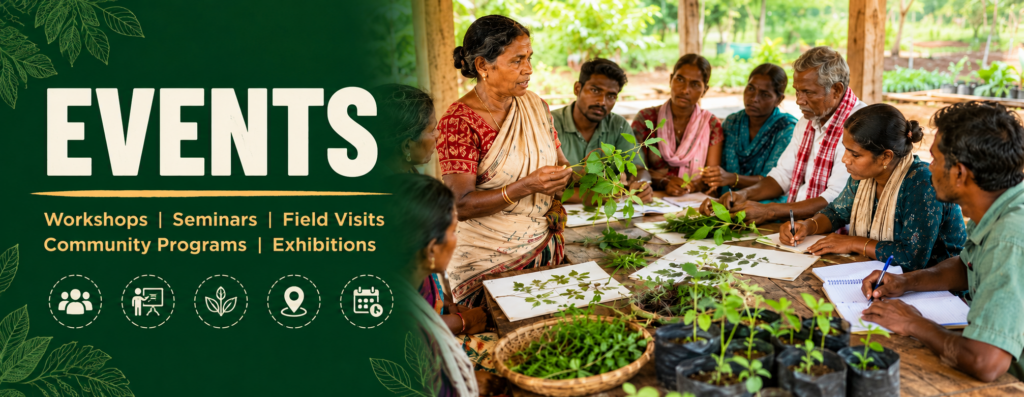
The Events of Hodopathy section is a dedicated space for discovering, organising, and documenting activities related to indigenous knowledge, community participation, research, biodiversity, traditional food, forest knowledge, cultural heritage, education, and responsible knowledge preservation.
Hodopathy events are intended to bring people together for learning, dialogue, documentation, research, collaboration, and community participation. They can connect traditional knowledge holders with researchers, students, educators, practitioners, conservationists, cultural workers, and others who share an interest in understanding and preserving living indigenous knowledge.
Rather than functioning only as an event calendar, this section can become a living record of participation and knowledge exchange across the Hodopathy ecosystem.
🌿 What Are Hodopathy Events?
Hodopathy Events may include educational programmes, community gatherings, research discussions, workshops, field activities, conferences, knowledge-sharing sessions, cultural programmes, and collaborative initiatives.
Events can focus on:
- Indigenous and traditional knowledge.
- Plant and ethnobotanical knowledge.
- Forest and ecological knowledge.
- Traditional food systems.
- Biodiversity and conservation.
- Oral histories.
- Cultural heritage.
- Community-based research.
- Knowledge documentation.
- Research collaboration.
- Student and educational programmes.
- Ethical knowledge preservation.
Each event should have a clear purpose and should be organised in a way that respects community participation, cultural context, consent, privacy, and knowledge rights.
📅 Upcoming Events
The Upcoming Events area can provide visitors and members with information about forthcoming Hodopathy programmes.
Each listing can include:
Event Title
Date & Time
Location / Online Format
Theme
Organiser
Description
Who Can Participate
Registration Information
Participation Requirements
Contact Information
A clear event structure allows visitors to quickly understand whether an event is relevant to them and how they can participate.
🎓 Workshops & Training Programmes
Workshops can provide practical opportunities for members, students, researchers, educators, and community participants to learn together.
Possible workshop themes include:
Indigenous Knowledge Documentation
Understanding ethical approaches to recording, organising, preserving, and sharing traditional knowledge.
Ethnobotany & Plant Knowledge
Learning about relationships between communities and plants, including responsible plant documentation.
Biodiversity & Conservation
Exploring local biodiversity, native species, ecological relationships, and community conservation.
Oral History
Learning responsible approaches to recording community memories, stories, and intergenerational knowledge.
Traditional Food Knowledge
Exploring indigenous crops, wild foods, food heritage, preparation practices, and food biodiversity.
Research Ethics
Understanding consent, attribution, community participation, privacy, evidence, and responsible research.
🔬 Research Events
Hodopathy can organise events that create opportunities for researchers and knowledge holders to exchange ideas.
Research-focused events may include:
- Research seminars.
- Academic discussions.
- Research presentations.
- Field-study briefings.
- Research methodology workshops.
- Interdisciplinary meetings.
- Research roundtables.
- Publication discussions.
- Community–researcher dialogues.
These events can help encourage research that combines community knowledge with appropriate contemporary research methods without treating indigenous knowledge as an unrestricted source of data.
🧑🤝🧑 Community Knowledge Events
Community participation should remain an important part of the Hodopathy event programme.
Community events may provide space for:
- Knowledge holders.
- Elders.
- Community representatives.
- Young people.
- Local educators.
- Researchers.
- Cultural practitioners.
Possible activities include:
- Knowledge-sharing gatherings.
- Intergenerational learning.
- Community discussions.
- Local history sessions.
- Traditional practice documentation.
- Biodiversity discussions.
- Food knowledge sessions.
- Cultural heritage activities.
The format and content of community events should be adapted to the preferences and cultural context of participating communities.
🎙️ Oral History & Storytelling Events
Oral traditions are an important pathway through which knowledge can move between generations.
Hodopathy events may support respectful storytelling and oral-history programmes involving:
- Elders.
- Traditional knowledge holders.
- Community storytellers.
- Researchers.
- Students.
- Younger generations.
Themes may include:
Community Memories • Traditional Practices • Forest Knowledge • Food Traditions • Local History • Environmental Change • Intergenerational Learning
Any recording or publication should be undertaken only with appropriate consent and should respect requests concerning privacy, ownership, access, and future use.
🌳 Biodiversity & Conservation Events
Hodopathy can organise events that explore the relationship between indigenous knowledge and biodiversity conservation.
Activities may include:
- Biodiversity awareness programmes.
- Native plant learning sessions.
- Community conservation discussions.
- Traditional ecological knowledge workshops.
- Forest knowledge programmes.
- Plant documentation activities.
- Environmental education.
- Sustainable resource-use discussions.
These programmes can help build awareness of the connection between cultural diversity and biological diversity.
🍚 Traditional Food & Food Heritage Events
Traditional food knowledge provides opportunities for cultural, ecological, agricultural, and educational learning.
Events may explore:
- Indigenous crops.
- Traditional grains.
- Millets.
- Wild edible plants.
- Seasonal foods.
- Traditional recipes.
- Food preservation.
- Local agricultural practices.
- Food biodiversity.
- Cultural food traditions.
Where food-related health or nutrition claims are discussed, they should be presented responsibly and supported by appropriate evidence rather than relying solely on traditional claims.
🌱 Field Learning & Knowledge Walks
Where appropriate and with community participation, Hodopathy may organise field-based learning activities.
These could involve:
- Plant observation.
- Biodiversity walks.
- Forest knowledge sessions.
- Agricultural learning.
- Traditional food plant identification.
- Ecological observation.
- Community landscape interpretation.
Field activities should be planned carefully to protect participants, habitats, culturally sensitive locations, and potentially vulnerable biological resources.
Sensitive locations or precise information about valuable or vulnerable resources should not be publicly disclosed when doing so could create risks.
📚 Knowledge-Sharing Sessions
Knowledge-sharing events can create a space where different forms of knowledge meet.
A session may bring together:
Knowledge Holders + Community Members + Researchers + Students + Educators + Conservationists
Topics may include:
- Traditional ecological knowledge.
- Indigenous food systems.
- Plant knowledge.
- Cultural heritage.
- Biodiversity.
- Knowledge transmission.
- Community research.
- Documentation practices.
The goal is dialogue rather than one-directional extraction of information.
🤝 Research & Collaboration Events
Hodopathy can facilitate events intended to develop responsible collaborations.
These may connect:
- Universities.
- Researchers.
- Community organisations.
- Traditional knowledge holders.
- Cultural institutions.
- Biodiversity organisations.
- Students.
- Independent scholars.
- Conservation practitioners.
Collaboration events may focus on identifying shared research interests, developing projects, discussing methodologies, or exploring opportunities for community-led research.
🎓 Student & Youth Programmes
Young people have an important role in the future transmission of indigenous knowledge.
Hodopathy can develop events for students and younger participants around:
- Indigenous knowledge awareness.
- Biodiversity education.
- Traditional food systems.
- Plant identification.
- Oral-history learning.
- Research methodology.
- Cultural heritage.
- Environmental education.
- Documentation skills.
Such programmes can encourage younger generations to see indigenous knowledge as a living body of knowledge worthy of careful study, respect, and responsible preservation.
🌍 Conferences & Knowledge Summits
Larger Hodopathy gatherings can provide a platform for broader discussion.
Potential conference themes include:
Indigenous Knowledge & Research
Bringing together researchers and knowledge holders.
Biodiversity & Traditional Ecological Knowledge
Exploring connections between local knowledge and conservation.
Food Heritage & Agrobiodiversity
Examining traditional food systems and biological diversity.
Cultural Heritage & Digital Documentation
Discussing responsible approaches to digital preservation.
Community-Based Research
Exploring participatory research models and community rights.
Conferences can include keynote sessions, panel discussions, research presentations, workshops, exhibitions, and community dialogues.
🧑🏫 Expert Talks & Public Lectures
Hodopathy may invite experienced researchers, knowledge holders, educators, environmental specialists, and cultural practitioners to conduct public talks.
Topics can include:
- Indigenous knowledge systems.
- Ethnobotany.
- Biodiversity.
- Forest ecology.
- Traditional food.
- Cultural heritage.
- Research ethics.
- Knowledge protection.
- Community participation.
Public lectures can help make complex subjects accessible to a wider audience.
📰 Event Highlights
After an event, Hodopathy can publish an Event Highlight describing what took place.
A responsible event report may include:
- Event objective.
- Date and location.
- Participants.
- Main themes.
- Key discussions.
- Learning outcomes.
- Research or community contributions.
- Future activities.
Photographs, recordings, quotations, and participant information should only be published with appropriate permissions.
🗓️ Past Events Archive
Completed events can remain available in a searchable Past Events Archive.
This creates a historical record of Hodopathy activities and allows visitors to explore the development of:
- Research programmes.
- Community initiatives.
- Educational activities.
- Biodiversity projects.
- Knowledge documentation.
- Collaborations.
- Workshops.
- Conferences.
Over time, the archive can become an important part of the broader Hodopathy Knowledge Centre.
🔎 Explore Events by Category
As the platform grows, visitors can filter events by:
Research
Community
Biodiversity
Plant Knowledge
Forest Knowledge
Traditional Food
Oral Histories
Education
Workshops
Conferences
Cultural Heritage
Research Collaboration
This makes it easier for different audiences to find activities relevant to their interests.
🔐 Ethical & Responsible Event Practices
Hodopathy events involving indigenous knowledge should follow strong ethical principles.
Informed Participation
Participants should understand the purpose and nature of the event.
Community Consent
Community participation and permissions should be respected where required.
Knowledge Protection
Sensitive, confidential, sacred, or community-restricted knowledge should not be publicly recorded or distributed without appropriate authorisation.
Proper Attribution
Knowledge holders and contributors should receive appropriate recognition.
Privacy
Personal information, photographs, recordings, and stories should be handled responsibly.
Cultural Respect
Event organisers should consider cultural protocols, local practices, and community-defined boundaries.
Responsible Documentation
Event materials should be preserved and shared according to the permissions under which they were created.
📸 Event Documentation
Where appropriate, Hodopathy events may be documented through:
- Photographs.
- Videos.
- Audio recordings.
- Written reports.
- Presentations.
- Research summaries.
- Participant reflections.
- Educational materials.
Documentation should never become an automatic right to publish everything that happens at an event.
Consent should guide recording, publication, storage, and future use.
🌱 Events as a Pathway for Intergenerational Knowledge
One of the most valuable functions of Hodopathy Events can be creating opportunities for knowledge to move between generations.
An elder or traditional knowledge holder may share knowledge with younger community members. A researcher may contribute scientific perspectives. A student may document learning under appropriate guidance. An educator may transform approved material into educational resources.
This creates a multi-directional knowledge exchange rather than a one-way flow of information.
🔗 Connecting Events with the Hodopathy Platform
Events can be connected with other sections of the Hodopathy website, including:
Knowledge Articles
→ Provide background information before or after an event.
Research Updates
→ Share developments from research-focused programmes.
Knowledge Archive
→ Preserve approved event documentation.
Oral Histories
→ Connect appropriate storytelling and interview activities.
Plant Database
→ Link relevant plant-learning programmes.
Traditional Food & Forest Knowledge
→ Provide deeper context for food and ecological events.
Membership
→ Provide participation opportunities for members.
Research Collaboration
→ Help develop future collaborative projects.
This creates a connected ecosystem where events generate learning, learning supports research, research informs documentation, and responsible documentation contributes to long-term preservation.
🌐 Building a Living Event Network
The long-term vision for Hodopathy Events is to create an active network where people can:
Learn → Discuss → Participate → Research → Document → Collaborate → Preserve
Events should not be viewed as isolated dates on a calendar. Each programme can contribute to the continuing development of a knowledge community.
Our Event Philosophy
Hodopathy believes that meaningful events begin with respect and participation.
The objective is not simply to organise more programmes, but to create spaces where:
- Knowledge holders are respected.
- Communities have meaningful participation.
- Researchers work ethically.
- Students learn responsibly.
- Biodiversity is valued.
- Cultural heritage is protected.
- Knowledge is shared appropriately.
- Different generations can learn from one another.
An event is successful when it creates meaningful knowledge exchange while respecting the people, communities, culture, and environment connected to that knowledge.
Through its Events programme, Hodopathy aims to build opportunities for learning, research, dialogue, community participation, cultural preservation, biodiversity awareness, and responsible knowledge sharing—helping strengthen a living knowledge network for present and future generations.