
Introduction
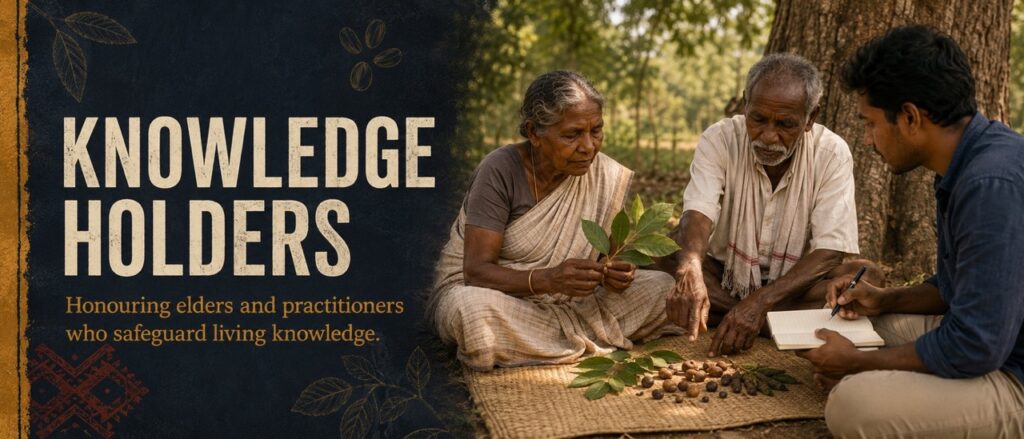
Knowledge Holders of Hodopathy are individuals, families, communities, practitioners, elders, farmers, cultivators, educators, researchers, and other contributors who possess, preserve, practice, transmit, or document knowledge relevant to Hodopathy.
Knowledge may exist in many forms. It may be preserved through oral traditions, practical experience, observation, cultivation, food practices, environmental understanding, plant knowledge, community history, research, education, or written and digital records.
A modern approach to knowledge holders should recognize the value of these different knowledge sources while maintaining an important distinction:
Having knowledge of a traditional or community practice does not automatically mean that every associated claim has been scientifically established.
The role of a knowledge-holder programme is therefore not simply to collect information. It is to identify, respect, document, protect, contextualize, preserve, evaluate, and responsibly transmit knowledge for present and future generations.
The long-term vision is to connect:
Knowledge Holders → Communities → Students → Educators → Researchers → Scientists → Conservationists → Institutions → Digital Knowledge Systems
This creates a bridge between lived knowledge and responsible research without unnecessarily replacing one with the other.
1. Who Are Knowledge Holders?
Knowledge holders can come from many backgrounds.
They may include:
- Community elders
- Traditional knowledge contributors
- Farmers
- Forest-resource users
- Herbal-plant cultivators
- Gardeners
- Nursery practitioners
- Food practitioners
- Local ecological observers
- Community educators
- Experienced field workers
- Plant specialists
- Botanists
- Researchers
- Laboratory scientists
- Teachers
- Historians
- Archivists
- Environmental practitioners
- Data and documentation specialists
A person does not need a formal academic qualification to hold valuable community or traditional knowledge.
Likewise, academic qualifications alone do not automatically establish the scientific validity of a claim.
The community should therefore recognize different types of expertise separately and respectfully.
2. Why Knowledge Holders Matter
Knowledge can disappear when it is not transmitted or documented.
This may happen because:
- Older generations pass away without documentation.
- Traditional practices are gradually abandoned.
- Local plant names and uses are forgotten.
- Biodiversity declines.
- Agricultural practices change.
- Young people move away from communities.
- Oral knowledge is not recorded.
- Research records are poorly preserved.
- Historical documents become inaccessible.
- Digital information is lost.
- Knowledge becomes separated from its original context.
Knowledge holders can help preserve information before it is lost.
However, preservation should include context and provenance, not simply isolated statements.
3. Types of Knowledge Held
Knowledge associated with Hodopathy may be organized into several broad categories.
🌿 Plant Knowledge
Includes information about:
- Native plants
- Traditionally used plants
- Local plant names
- Plant identification
- Plant habitats
- Seasonal availability
- Cultivation
- Propagation
- Harvesting
- Conservation
🌾 Agricultural Knowledge
May include:
- Local crops
- Seed selection
- Cultivation practices
- Soil observations
- Seasonal patterns
- Traditional agricultural methods
- Crop biodiversity
- Sustainable resource management
🍲 Food Knowledge
May include:
- Traditional foods
- Local ingredients
- Food preparation
- Preservation
- Seasonal foods
- Indigenous crops
- Food biodiversity
- Cultural food practices
🌳 Ecological Knowledge
May include:
- Forest observations
- Local biodiversity
- Seasonal ecological changes
- Wildlife interactions
- Water resources
- Soil conditions
- Plant habitats
- Environmental indicators
📚 Historical Knowledge
May include:
- Historical practices
- Community records
- Changes in local environments
- Historical plant use
- Development of local practices
- Previous educational or research activities
🔬 Research Knowledge
Researchers and scientific professionals may contribute:
- Research methods
- Experimental findings
- Data
- Laboratory protocols
- Publications
- Evidence reviews
- Statistical analyses
- Replication studies
These categories can coexist without being treated as identical forms of evidence.
4. Traditional Knowledge Holders
Traditional knowledge holders may preserve information developed and transmitted across generations.
Such knowledge may concern:
- Plants
- Food
- Agriculture
- Forest resources
- Seasonal cycles
- Environmental conditions
- Community practices
- Preparation methods
- Local biodiversity
Traditional knowledge should be treated as a valuable cultural and informational resource.
At the same time, scientific claims arising from traditional practices should be evaluated through appropriate research methods.
The responsible pathway is:
Traditional Knowledge → Ethical Documentation → Contextual Understanding → Research Question → Scientific Investigation → Evidence Evaluation
This approach protects the value of traditional knowledge while avoiding unsupported conclusions.
5. Community Elders as Knowledge Holders
Elders may possess detailed knowledge that is not available in written sources.
They may remember:
- Historical plant availability
- Traditional food practices
- Changes in biodiversity
- Seasonal patterns
- Traditional cultivation methods
- Community conservation practices
- Local terminology
- Historical environmental changes
Oral-history programmes can record such information with appropriate consent and attribution.
The recordings should preserve the speaker’s perspective and context rather than rewriting their account as an objective scientific conclusion.
6. Farmers as Knowledge Holders
Farmers can contribute valuable practical observations concerning:
- Crop growth
- Soil conditions
- Seasonal changes
- Seed selection
- Planting practices
- Water management
- Pest observations
- Local biodiversity
- Traditional cultivation
- Sustainable agricultural practices
Farmer observations can also generate research questions.
For example:
Farmer Observation → Documented Pattern → Research Question → Controlled Investigation → Evidence Evaluation
This creates a productive connection between practical experience and scientific research.
7. Plant and Herbal Knowledge Holders
People experienced in identifying, growing, preparing, or conserving plants may hold specialized knowledge.
Their contributions can include:
- Local plant names
- Identification characteristics
- Seasonal patterns
- Cultivation practices
- Propagation
- Traditional uses
- Harvesting practices
- Storage methods
- Conservation concerns
Where plant identity matters, appropriate botanical verification should be encouraged.
A local name alone should not be treated as sufficient evidence of botanical identity because the same name may refer to different species in different regions.
8. Knowledge Holders and Medicinal Plants
Medicinal-plant knowledge requires particularly careful documentation.
A knowledge record can distinguish between:
Traditional Use
What communities historically or currently use a plant for.
Preparation
How the plant or plant part is traditionally prepared.
Exposure
How much, how often, and for how long it is traditionally used, where this information is appropriate and safely documented.
Laboratory Evidence
Whether specific properties have been investigated experimentally.
Human Evidence
Whether there are appropriate human studies.
Safety Evidence
What is known about toxicity, interactions, contamination, incorrect identification, and other risks.
This prevents traditional use from automatically being interpreted as proven medical effectiveness.
9. Knowledge Holders and Native Plants
Native-plant knowledge can support biodiversity conservation.
Knowledge holders may help identify:
- Historically common species
- Rare or declining plants
- Local habitats
- Seasonal flowering
- Fruiting periods
- Traditional cultivation
- Seed sources
- Regeneration patterns
Such information can be combined with botanical surveys and ecological research.
The result can be a stronger community-based plant conservation system.
10. Knowledge Holders and Sustainable Harvesting
Knowledge holders may possess detailed understanding of local harvesting practices.
Documentation may include:
- Appropriate harvesting seasons
- Plant parts traditionally collected
- Collection methods
- Regeneration practices
- Areas where collection occurs
- Local conservation rules
- Changes in resource availability
However, traditional harvesting practices should not automatically be assumed to be ecologically sustainable.
Scientific monitoring can help determine whether harvesting levels are compatible with population regeneration.
The improved model is:
Traditional Practice + Ecological Monitoring + Scientific Assessment → Sustainable Management
11. Knowledge Holders and Herbal Gardens
Knowledge holders can contribute to community herbal gardens by helping document:
- Local plant names
- Cultivation practices
- Traditional plant knowledge
- Seasonal observations
- Propagation methods
- Garden management
- Conservation practices
Gardens can become living classrooms where knowledge holders, students, botanists, and researchers learn from one another.
12. Knowledge Holders and Nurseries
Community nurseries can preserve plant knowledge alongside living plant collections.
A nursery knowledge record could contain:
Plant Identity → Source → Propagation Method → Cultivation Conditions → Traditional Information → Conservation Status → Research Information
This can help prevent the loss of local planting knowledge while improving botanical traceability.
13. Knowledge Holders and Food Heritage
Traditional food knowledge is an important part of community heritage.
Knowledge holders may document:
- Traditional recipes
- Seasonal foods
- Local grains
- Wild edible plants
- Food preservation
- Fermentation practices
- Cooking methods
- Food preparation traditions
- Agricultural biodiversity
Food knowledge can then connect with nutrition research without assuming that traditional foods automatically have specific health effects.
Where nutritional claims are made, appropriate nutritional analysis and scientific evidence should be used.
14. Knowledge Holders and Biodiversity
Local communities often observe environmental changes over long periods.
Knowledge holders can contribute information about:
- Changes in plant abundance
- Changes in flowering seasons
- Loss or appearance of species
- Water availability
- Soil changes
- Climate-related observations
- Changes in agricultural biodiversity
Such observations can complement formal ecological monitoring.
Combining:
Local Observation + Field Survey + Scientific Measurement + Long-Term Data
can produce a richer understanding of environmental change.
15. Ethical Documentation of Knowledge
Knowledge documentation should follow strong ethical standards.
Before documenting sensitive knowledge, participants should consider:
Consent
Obtain appropriate permission from the knowledge holder or relevant community.
Attribution
Record who contributed the information, unless anonymity is specifically requested or required.
Context
Preserve the circumstances in which the knowledge is used.
Confidentiality
Do not publish sensitive information without appropriate authorization.
Ownership and Rights
Respect applicable community, intellectual-property, cultural, and biological-resource frameworks.
Benefit Sharing
Where appropriate, consider mechanisms through which communities can benefit from research or responsible development arising from their knowledge.
16. Protecting Sensitive Knowledge
Not all knowledge should automatically become publicly searchable.
A future Hodopathy knowledge system can use access levels such as:
🟢 Open
Information approved for public access.
🔵 Community Access
Information available to approved community members.
🟡 Research Access
Information available for approved research purposes.
🟠 Restricted
Sensitive information requiring additional authorization.
🔴 Protected
Information that should not be publicly disclosed.
This allows conservation without requiring unrestricted publication.
17. Knowledge Holder Rights
A responsible system should recognize that knowledge holders may have rights and interests concerning their contributions.
These may involve:
- Recognition
- Attribution
- Consent
- Privacy
- Data governance
- Cultural rights
- Intellectual-property considerations
- Benefit sharing
- Control over sensitive information
Knowledge should not be extracted from communities without considering the consequences of publication, research, commercialization, or redistribution.
18. Knowledge Holder Profiles
A digital knowledge platform could create structured profiles for participating knowledge holders.
A profile might include:
- Name or preferred identifier
- Community or organization where appropriate
- Area of expertise
- Knowledge categories
- Projects
- Contributions
- Publications
- Training
- Conservation activities
- Consent and access preferences
Sensitive personal information should not be collected unnecessarily.
19. Knowledge Provenance
Every important knowledge record should ideally answer:
Who provided it?
When was it recorded?
Where did it originate?
What is the context?
Has it been independently verified?
What type of knowledge is it?
What evidence exists?
What limitations apply?
This is known as maintaining provenance.
Provenance makes the knowledge system more transparent and reduces the risk of information being separated from its original context.
20. Knowledge Validation
Validation should depend on the type of information.
For plant identification:
Botanical verification
For historical information:
Source and archival verification
For community observations:
Independent observation or field verification where appropriate
For scientific claims:
Appropriate research evidence
For traditional practices:
Accurate contextual documentation
Validation does not mean forcing every form of knowledge into one scientific category.
It means determining what kind of information it is and how it should responsibly be interpreted.
21. Knowledge Holders and Evidence Standards
The evidence framework developed for Hodopathy can help organize knowledge responsibly.
A record can distinguish:
- Traditional knowledge
- Historical record
- Anecdotal observation
- Laboratory evidence
- Observational evidence
- Controlled research
- Randomized evidence where appropriate
- Replicated evidence
- Evidence synthesis
This creates a transparent connection between knowledge preservation and evidence evaluation.
22. Knowledge Holders as Research Partners
Knowledge holders should not be treated only as sources from whom researchers extract information.
Where appropriate, they can become active research partners.
They may contribute to:
- Research-question development
- Study design discussions
- Field observations
- Plant identification
- Interpretation of local context
- Community communication
- Conservation planning
- Research dissemination
This creates a more collaborative model:
Researcher + Knowledge Holder + Community + Evidence
23. Community-Based Research
Community-based research can address questions that are locally important.
Potential areas include:
- Native plant conservation
- Sustainable harvesting
- Agricultural biodiversity
- Traditional food systems
- Environmental change
- Plant cultivation
- Community gardens
- Seed conservation
- Local ecological monitoring
Research should be designed according to the question rather than assuming beforehand what the results will show.
24. Knowledge Holders and Students
Students can learn directly from knowledge holders through supervised educational programmes.
Possible activities include:
- Oral-history projects
- Plant documentation
- Biodiversity surveys
- Garden projects
- Food heritage documentation
- Literature reviews
- Digital archive projects
- Community research
Students should receive training in:
- Ethical interviewing
- Consent
- Documentation
- Data management
- Evidence evaluation
- Research methodology
- Scientific communication
25. Knowledge Holders and Educators
Educators can help translate community knowledge into structured learning resources.
However, educational materials should preserve distinctions between:
What a community reports → What research has investigated → What evidence currently supports → What remains uncertain
This makes education both respectful and scientifically responsible.
26. Knowledge Holders and Researchers
Researchers can build collaborations with knowledge holders through:
- Community consultations
- Co-designed research
- Field studies
- Ethnobotanical documentation
- Plant research
- Biodiversity research
- Nutrition research
- Environmental research
- Conservation science
Research findings should be communicated back to participating communities in an accessible form wherever appropriate.
27. Knowledge Holders and Digital Archives
A Hodopathy Knowledge Archive can preserve:
- Oral histories
- Interview recordings
- Transcripts
- Plant records
- Photographs
- Historical documents
- Research reports
- Field notes
- Educational resources
- Community observations
Each record can include metadata and access permissions.
Digital preservation should also include backup systems, version control, data security, and long-term migration strategies.
28. Knowledge Holders and AI
AI can help organize large collections of knowledge.
Potential applications include:
- Transcription
- Translation
- Search
- Metadata generation
- Topic classification
- Knowledge linking
- Duplicate detection
- Evidence mapping
- Research discovery
But AI should not independently determine whether a knowledge claim is true.
Human review should remain essential for:
- Sensitive cultural information
- Scientific interpretation
- Plant identification
- Health-related claims
- Evidence classification
- Intellectual-property concerns
AI should be treated as an assistive system, not a replacement for knowledge holders or qualified experts.
29. Knowledge Holder Training
Knowledge holders who wish to participate in formal documentation or research programmes can receive training in:
- Ethical documentation
- Digital recording
- Data management
- Plant identification
- Research basics
- Evidence literacy
- Biodiversity monitoring
- Sustainable harvesting
- Intellectual-property awareness
- Community research methods
Training should be accessible and adapted to different levels of prior education.
30. Knowledge Holder Recognition
Recognition should reflect genuine contribution.
Possible mechanisms include:
- Contributor profiles
- Community acknowledgements
- Research acknowledgements
- Co-authorship where contribution meets relevant publication criteria
- Certificates of participation
- Conservation awards
- Community heritage recognition
- Educational programme recognition
Recognition should never imply a medical or scientific qualification that the individual does not hold.
31. Knowledge Holder Fellowship Programme
A future Hodopathy Knowledge Holder Fellowship could support experienced contributors.
Fellows could participate in:
- Knowledge documentation
- Mentorship
- Plant conservation
- Community research
- Student education
- Oral-history projects
- Traditional food documentation
- Biodiversity programmes
The fellowship could create a bridge between generational knowledge and future researchers.
32. Intergenerational Knowledge Programme
One of the most valuable future initiatives could be an intergenerational programme connecting:
Elders → Adults → Students → Young Researchers
Activities could include:
- Oral-history sessions
- Plant walks
- Community garden projects
- Food heritage programmes
- Seed conservation
- Traditional ecological knowledge documentation
The objective is to prevent knowledge from disappearing between generations.
33. Knowledge Holder–Researcher Forums
Regular forums can bring knowledge holders and researchers together.
Topics may include:
- Native plants
- Biodiversity
- Sustainable harvesting
- Food knowledge
- Agricultural practices
- Environmental change
- Research questions
- Evidence standards
Such forums should encourage respectful dialogue rather than treating either traditional knowledge or scientific research as automatically superior in every context.
34. Knowledge Protection and Commercialization
Knowledge can sometimes attract commercial interest.
Therefore, before commercialization, programmes should consider:
- Ownership and rights
- Prior consent
- Benefit sharing
- Legal requirements
- Community participation
- Intellectual-property protections
- Environmental sustainability
- Scientific validation
- Safety and quality standards
Commercial interest should never become a reason to bypass community rights or scientific evaluation.
35. Knowledge Holders and Conservation Programmes
Knowledge holders can participate across the wider Hodopathy conservation framework.
They may contribute to:
- Historical Conservation Programme
- Traditional Knowledge Conservation Programme
- Plant & Natural Knowledge Conservation Programme
- Biodiversity Conservation Programme
- Research Data Conservation Programme
- Evidence Conservation Programme
- Community Knowledge Programme
- Sustainable Harvesting Programme
- Educational Resource Conservation Programme
This integrates knowledge holders into the wider conservation ecosystem.
36. Knowledge Holders and Publications
Knowledge-holder contributions can support:
- Oral-history publications
- Ethnobotanical studies
- Plant conservation reports
- Community research reports
- Biodiversity reports
- Traditional food documentation
- Research papers
- Educational materials
Publications should accurately describe the contribution and avoid transforming community statements into unsupported scientific conclusions.
37. Knowledge Quality and Continuous Review
Knowledge should not be treated as permanently fixed.
As new evidence becomes available:
Document → Review → Verify → Update → Preserve Previous Version → Communicate Change
This creates a living knowledge system.
For example, a plant record may initially contain traditional-use information. Later, botanical verification may clarify the species. Additional laboratory research may add new information. Human research may subsequently provide stronger or weaker evidence.
The record should evolve while preserving its history.
38. Knowledge Holders and Uncertainty
An advanced knowledge system should preserve uncertainty.
A knowledge record can clearly indicate:
- What is known
- What is reported
- What has been studied
- What remains uncertain
- What evidence is missing
- What research is needed
This is particularly important when dealing with health-related, medicinal, nutritional, or biological claims.
Uncertainty is not a weakness of knowledge conservation. It is information that future researchers need.
39. Future Knowledge Holder Network
A future network could connect:
Local Knowledge Holders
↓
Community Knowledge Centres
↓
Plant & Biodiversity Centres
↓
Research Institutions
↓
Laboratories
↓
Universities
↓
Digital Knowledge Platform
↓
International Research Network
This network can facilitate responsible knowledge exchange while maintaining appropriate access controls.
40. Five-Year Development Roadmap
Year 1 — Identify
Map knowledge holders, knowledge categories, community priorities, and documentation needs.
Year 2 — Document
Develop ethical oral-history, plant, food, agricultural, ecological, and research documentation programmes.
Year 3 — Integrate
Connect knowledge-holder records with education, conservation, research, plant databases, and evidence systems.
Year 4 — Collaborate
Develop structured partnerships between communities, universities, researchers, conservation organizations, and technology teams.
Year 5 — Sustain
Establish long-term governance, digital preservation, intergenerational programmes, research fellowships, benefit-sharing frameworks, and international collaboration.
41. Future Knowledge Holder Centres
A mature Hodopathy ecosystem could establish specialized centres such as:
🌿 Traditional Plant Knowledge Centre
Documentation and conservation of plant-related knowledge.
🌱 Native Plant & Biodiversity Centre
Community-based plant and biodiversity conservation.
📚 Oral History & Heritage Centre
Preservation of community histories and knowledge narratives.
🌾 Agricultural Knowledge Centre
Documentation of traditional and contemporary agricultural practices.
🍲 Traditional Food Knowledge Centre
Preservation and research of food heritage and biodiversity.
🔬 Community Research Centre
Support for ethical community-based research.
💻 Digital Knowledge Conservation Centre
Long-term digital preservation and data governance.
🤝 Knowledge Holder Collaboration Centre
Connect knowledge holders with students, educators, and researchers.
42. Measuring Knowledge Holder Programme Impact
Success should be measured by quality as well as quantity.
Potential indicators include:
- Number of participating knowledge holders
- Number of documented knowledge records
- Number of plant records
- Number of oral histories
- Number of community research projects
- Number of intergenerational programmes
- Number of conservation initiatives
- Number of students involved
- Number of research collaborations
- Number of verified records
- Number of protected knowledge records
- Number of publications
- Number of knowledge records updated
- Community satisfaction and participation
The most important outcome is not simply the number of records collected, but whether knowledge has been preserved accurately, ethically, and usefully.
43. Core Principles for Working With Knowledge Holders
The Community of Hodopathy should follow these principles:
🤝 Respect People
Treat knowledge holders as contributors and partners rather than merely information sources.
📚 Preserve Context
Never separate information from its cultural, environmental, historical, or practical context.
🔐 Protect Sensitive Knowledge
Not every piece of knowledge should be publicly disclosed.
🧭 Obtain Appropriate Consent
Document and share knowledge responsibly.
🌱 Protect Biodiversity
Knowledge conservation should support—not harm—natural ecosystems.
🔬 Separate Knowledge From Evidence
Traditional knowledge can generate research questions but does not automatically establish scientific efficacy.
📊 Communicate Uncertainty
Clearly state what is known, unknown, preliminary, or disputed.
🤖 Use Technology Responsibly
AI and digital systems should assist documentation and discovery while maintaining human oversight.
⚖️ Respect Rights
Consider attribution, intellectual property, cultural rights, privacy, and benefit sharing.
🔄 Keep Learning
Update knowledge when new information or better evidence becomes available.
Conclusion
Knowledge Holders of Hodopathy can form one of the most important foundations of a responsible knowledge and conservation ecosystem.
They can preserve information that may otherwise disappear, contribute local and practical perspectives, support plant and biodiversity conservation, guide research questions, mentor younger generations, and help connect lived experience with structured education and scientific investigation.
The future should not be about choosing between traditional knowledge and modern research. Instead, it should create a respectful framework in which different forms of knowledge can be documented according to their nature, protected according to their rights, evaluated according to appropriate standards, and connected to research when suitable.
The long-term pathway is:
Identify → Respect → Obtain Consent → Document → Preserve → Contextualize → Protect → Verify → Research → Evaluate → Share Responsibly → Update → Transfer to Future Generations
A successful Knowledge Holder programme will therefore preserve more than information. It will preserve memory, experience, ecological understanding, cultural context, research opportunities, biodiversity knowledge, and intergenerational learning while ensuring that scientific conclusions remain proportional to the evidence available.
The ultimate goal is to build a living knowledge ecosystem where:
Knowledge Holders are respected → Communities are empowered → Students learn → Researchers collaborate → Evidence is evaluated → Biodiversity is protected → Knowledge is preserved → Future generations continue the work.