
Introduction
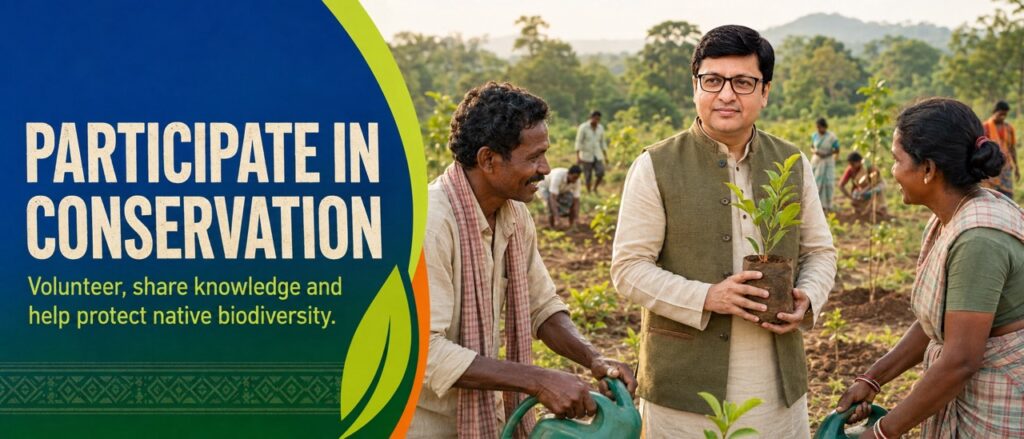
Participate in Conservation of Hodopathy represents an open and responsible approach to preserving, documenting, researching, organizing, and continuously improving the knowledge, resources, research records, traditional information, educational materials, plant resources, biodiversity, and scientific evidence associated with Hodopathy.
Conservation is not simply about storing old information. A modern conservation system should ensure that valuable knowledge remains accessible, traceable, scientifically assessable, ethically protected, and useful for future research and education.
Participation can take many forms. A student may document a local plant, a researcher may preserve research data, an educator may contribute teaching resources, a community may help document traditional knowledge, a botanical expert may authenticate plant species, and a technology team may develop digital systems for preserving and organizing knowledge.
The central principle is:
Document carefully, preserve responsibly, evaluate critically, protect biodiversity and knowledge rights, support research, communicate uncertainty honestly, and improve continuously.
1. Why Participate in Conservation of Hodopathy?
Knowledge can disappear when it is not properly documented, organized, preserved, or transferred to future generations.
Important information may be lost because of:
- Unrecorded traditional knowledge
- Disappearance of local plant species
- Loss of research records
- Poorly organized datasets
- Unpublished studies
- Inconsistent terminology
- Loss of experienced researchers or educators
- Damage to physical documents
- Digital storage failures
- Lack of research documentation
- Unverified information being mixed with reliable evidence
- Unsustainable harvesting of natural resources
- Loss of seeds and planting material
- Climate and environmental changes
- Insufficient collaboration between disciplines
Participation creates a distributed conservation ecosystem in which many contributors can help protect valuable information and resources.
2. What Does Participation Mean?
Participation means contributing time, knowledge, skills, resources, research, documentation, technology, education, or community experience to a responsible conservation system.
Participation may include:
Knowledge Participation
- Documenting historical information
- Organizing educational resources
- Recording terminology
- Preserving research methods
- Creating structured knowledge records
Research Participation
- Conducting literature reviews
- Developing research questions
- Preserving datasets
- Supporting evidence mapping
- Replicating research
- Recording negative or inconclusive findings
Plant Conservation Participation
- Growing native plants
- Supporting medicinal-plant gardens
- Conserving seeds
- Maintaining nurseries
- Supporting botanical identification
- Monitoring plant populations
Community Participation
- Recording local knowledge
- Supporting biodiversity conservation
- Participating in field surveys
- Sharing non-sensitive cultural and ecological information
- Supporting sustainable harvesting
Educational Participation
- Creating learning materials
- Organizing workshops
- Mentoring students
- Conducting conservation projects
- Developing practical training programmes
Technology Participation
- Building digital archives
- Developing searchable databases
- Creating knowledge graphs
- Applying GIS
- Developing data-management systems
- Supporting AI-assisted classification and discovery with human verification
3. Participate According to Your Skills
A strong conservation programme should not require everyone to become a researcher.
Different participants can contribute according to their knowledge and capabilities.
| Participant | Possible Contribution |
|---|---|
| Students | Documentation, surveys, plant observations, research projects |
| Teachers | Educational resources, mentoring, training |
| Researchers | Studies, datasets, protocols, publications |
| Botanists | Plant identification and authentication |
| Laboratory Scientists | Experimental records and analytical research |
| Data Scientists | Databases, analytics and evidence mapping |
| Technology Teams | Digital archives, AI and knowledge platforms |
| Farmers | Cultivation knowledge and biodiversity observations |
| Gardeners | Plant conservation and nursery activities |
| Communities | Traditional and ecological knowledge documentation |
| Institutions | Infrastructure, funding and research support |
| Writers | Documentation and scientific communication |
| Environmental Groups | Biodiversity and ecosystem conservation |
| International Researchers | Comparative research and collaboration |
This creates a multi-level participation model rather than a single pathway.
4. Participate in Knowledge Conservation
Knowledge conservation should begin with careful documentation.
Participants can help identify:
- Important historical records
- Educational materials
- Research reports
- Traditional plant knowledge
- Local ecological observations
- Research methodologies
- Previous experimental findings
- Published and unpublished research
- Safety information
- Plant identification records
- Cultivation practices
- Sustainable harvesting practices
Every record should ideally include information about its source, date, context, contributor, location where appropriate, methodology, evidence status, and limitations.
The objective is not to declare every recorded statement true.
Instead, conservation should preserve the information while clearly distinguishing between:
Historical knowledge → Traditional knowledge → Anecdotal observations → Hypotheses → Preliminary research → Experimental evidence → Human research → Replicated evidence → Synthesized evidence
This prevents the archive from becoming a collection of unverified claims presented as established facts.
5. Participate in Traditional Knowledge Conservation
Traditional and community knowledge can provide valuable research questions and cultural information.
Participation may involve documenting:
- Local plant names
- Traditional uses
- Preparation practices
- Cultivation methods
- Seasonal observations
- Harvesting practices
- Food uses
- Cultural context
- Environmental observations
- Historical practices
However, documentation should be conducted ethically.
Important principles include:
- Obtain appropriate permission.
- Respect community ownership and knowledge rights.
- Avoid unauthorized commercialization.
- Protect confidential or restricted knowledge.
- Record the source and context accurately.
- Do not convert traditional use directly into a medical claim.
- Distinguish cultural knowledge from scientific evidence.
- Support appropriate benefit-sharing mechanisms.
Traditional knowledge can help generate hypotheses, while scientific research can investigate specific questions arising from those observations.
6. Participate in Native & Medicinal Plant Conservation
Plant conservation can become one of the most practical ways to participate.
Participants can support:
Native Plant Conservation
- Grow locally appropriate native species.
- Establish demonstration gardens.
- Maintain living collections.
- Record plant distribution.
- Monitor population changes.
Medicinal Plant Conservation
- Maintain authenticated plant collections.
- Preserve planting material.
- Document traditional uses responsibly.
- Study cultivation requirements.
- Monitor sustainability.
Seed Conservation
- Collect seeds responsibly.
- Maintain seed records.
- Store viable seeds under appropriate conditions.
- Document provenance.
- Support regeneration programmes.
Nursery Conservation
- Propagate threatened or valuable species where appropriate.
- Maintain accurate plant labels.
- Record propagation methods.
- Avoid accidental species misidentification.
- Maintain traceability from source to nursery.
7. Participate Through Herbal Gardens
Herbal and botanical gardens can function as living conservation laboratories.
Participants can help create:
- Native plant gardens
- Medicinal plant demonstration gardens
- Ethnobotanical gardens
- Aromatic plant gardens
- Nutritional plant gardens
- Biodiversity gardens
- Research demonstration plots
- Educational gardens
Each plant can have a structured record containing:
Common Name → Botanical Name → Family → Plant Part → Origin → Habitat → Cultivation Information → Traditional Use → Research Status → Safety Information → Conservation Status
This transforms a garden from a simple collection of plants into a living knowledge resource.
8. Participate in Sustainable Harvesting
Conservation cannot succeed if natural resources are continuously depleted.
Participants involved in plant collection should follow responsible harvesting principles.
The basic framework is:
Identify → Assess → Plan → Harvest Responsibly → Record → Monitor → Regenerate → Evaluate → Improve
Participants can help by:
- Correctly identifying species.
- Avoiding threatened populations.
- Harvesting only appropriate quantities.
- Protecting parent plants.
- Following appropriate seasons.
- Avoiding destructive collection methods.
- Supporting regeneration.
- Recording harvesting activities.
- Reducing post-harvest waste.
- Supporting cultivation as an alternative to excessive wild collection.
The objective should be resource regeneration rather than maximum extraction.
9. Participate in Research Data Conservation
Research data is an important part of scientific heritage.
Participants can help preserve:
- Raw observations
- Processed datasets
- Experimental records
- Study protocols
- Statistical analyses
- Laboratory records
- Research photographs
- Field observations
- Survey results
- Negative results
- Null findings
- Research reports
- Replication results
Where ethically and legally appropriate, data should be organized with sufficient metadata to allow future researchers to understand what was measured, how it was measured, when it was collected, and what limitations apply.
Data should never be altered merely to produce a preferred conclusion.
10. Participate in Evidence Conservation
A future-ready conservation system should preserve not only positive findings but also the history of evidence.
Participants can help classify information into categories such as:
🟢 Strongly Supported
Consistent evidence from well-designed research and appropriate independent validation.
🔵 Moderately Supported
Reasonable evidence exists, but important limitations or uncertainties remain.
🟡 Preliminary
Early findings require additional research.
🟠 Inconclusive
Available evidence is insufficient or inconsistent.
🔴 Unsupported
Available evidence does not adequately support the claim.
⚪ Unknown
Insufficient reliable information is currently available.
These classifications should be reviewable and updateable as new research becomes available.
11. Participate in Conservation of Negative Research
An advanced conservation programme should preserve research that did not produce the expected result.
This includes:
- Negative findings
- Null results
- Failed replication
- Unexpected results
- Methodological problems
- Inconclusive studies
- Abandoned hypotheses
Negative research can prevent researchers from unnecessarily repeating unsuccessful approaches and helps reduce publication bias.
A responsible archive should therefore preserve what was learned—not only what appeared successful.
12. Participate in Conservation of Research Methods
Research methods themselves are valuable scientific resources.
Participants can document:
- Study designs
- Sampling procedures
- Measurement methods
- Laboratory protocols
- Survey instruments
- Statistical approaches
- Data-management procedures
- Quality-control procedures
- Research ethics processes
- Reproducibility procedures
Methods should include version information where appropriate so future researchers can determine how procedures changed over time.
13. Participate in Biodiversity Conservation
Hodopathy conservation can be connected with broader biodiversity protection.
Participants can contribute to:
- Native species monitoring
- Habitat documentation
- Pollinator gardens
- Seed conservation
- Ecological surveys
- Sustainable cultivation
- Invasive-species monitoring
- Water conservation
- Soil conservation
- Climate-resilient planting
- Community biodiversity programmes
This creates a connection between knowledge conservation and ecological conservation.
14. Participate Through Student Projects
Students can become important contributors to conservation.
Possible projects include:
Project 1: Local Plant Documentation
Document selected native plants using verified botanical references.
Project 2: Traditional Knowledge Mapping
Record publicly shareable traditional plant information with appropriate consent.
Project 3: Herbal Garden Documentation
Create a structured digital catalogue of plants in a demonstration garden.
Project 4: Evidence Mapping
Review published literature surrounding a clearly defined research question.
Project 5: Seed Conservation
Develop a documented seed collection and viability-monitoring project.
Project 6: Biodiversity Survey
Record plant diversity within a defined study area.
Project 7: Research Archive
Organize historical research papers, reports, protocols, and datasets.
Project 8: Digital Knowledge Graph
Connect plants, research topics, evidence categories, publications, and conservation information.
15. Participate as a Researcher
Researchers can make higher-level contributions through:
- Literature reviews
- Evidence synthesis
- Observational studies
- Laboratory research
- Experimental studies
- Human research where ethically appropriate
- Safety research
- Botanical research
- Phytochemical studies
- Nutrition research
- Environmental research
- Data science
- Replication studies
- Systematic reviews
- Research methodology development
Researchers should follow appropriate ethical, scientific, regulatory, and reporting requirements for the type of work being conducted.
16. Participate Through Scientific Publication
Conservation becomes more useful when findings are communicated clearly.
Participants can contribute:
- Research papers
- Review articles
- Evidence reports
- Safety reports
- Technical reports
- Methodology papers
- Conservation reports
- Botanical documentation
- Research datasets
- Student research
- Replication studies
Publication should include appropriate information about:
- Research question
- Methods
- Participants or samples where applicable
- Data
- Statistical analysis
- Results
- Limitations
- Conflicts of interest
- Funding
- Safety considerations
- Evidence strength
17. Participate in Digital Conservation
A modern Hodopathy conservation system can use digital technologies to protect and organize information.
Potential infrastructure includes:
Digital Knowledge Archive
Central repository for documents, research, educational resources, and historical records.
Plant Database
Structured database of native and traditionally used plants.
Evidence Database
Searchable system linking claims with research evidence.
Research Registry
Record of ongoing and completed research projects.
Knowledge Graph
Connections between plants, studies, researchers, methods, evidence, publications, and conservation programmes.
Digital Plant Passport
Traceable record for authenticated plants and planting materials.
GIS Mapping
Geographic visualization of plant populations, gardens, conservation areas, and research locations where appropriate.
18. Participate in AI-Assisted Conservation
Artificial intelligence can support conservation by helping with:
- Document classification
- Search
- Metadata generation
- Duplicate detection
- Research discovery
- Literature organization
- Plant-image classification assistance
- Evidence mapping
- Knowledge-graph construction
- Translation and accessibility
- Data-quality checks
However, AI should remain an assistive technology rather than the final authority.
Human experts should verify important classifications, plant identities, scientific interpretations, sensitive traditional knowledge, and research conclusions.
AI-generated information should not automatically become part of the verified knowledge base.
19. Participate in Conservation Through Education
Educators can help create a culture of responsible conservation.
Training may include:
- Documentation methods
- Evidence literacy
- Research methodology
- Plant identification
- Biodiversity conservation
- Data management
- Scientific writing
- Research ethics
- Traditional knowledge ethics
- Digital preservation
- Sustainable harvesting
- Reproducibility
Workshops can encourage participants to ask:
What is known?
How do we know it?
What is uncertain?
What evidence supports it?
What evidence contradicts it?
What additional research is needed?
20. Participate Through Community Programmes
Community participation can make conservation practical and sustainable.
Possible programmes include:
- Community herbal gardens
- Native plant drives
- Seed conservation groups
- Biodiversity observation programmes
- Local plant documentation
- Sustainable harvesting education
- Farmer knowledge documentation
- Community nurseries
- Environmental monitoring
- Student-community research projects
Community knowledge should be treated with respect and appropriate consent, attribution, privacy, and benefit-sharing considerations.
21. Participate Through Institutions
Universities, research organizations, laboratories, NGOs, schools, botanical gardens, nurseries, and other institutions can contribute infrastructure.
Institutional participation may include:
- Research facilities
- Libraries
- Digital archives
- Laboratories
- Botanical gardens
- Seed banks
- Training centres
- Research fellowships
- Scholarships
- Data repositories
- Research funding
- Publication support
- Expert networks
- International collaboration
Institutions can also establish formal conservation policies and data-governance procedures.
22. Conservation Volunteer Programme
A structured Hodopathy Conservation Volunteer Programme could provide different participation levels.
Level 1 — Conservation Supporter
Basic awareness and participation in educational or community activities.
Level 2 — Conservation Volunteer
Participates in documentation, plant conservation, garden activities, or data organization.
Level 3 — Conservation Research Assistant
Supports structured research, evidence mapping, field observations, or database projects.
Level 4 — Conservation Specialist
Contributes professional expertise in botany, research, data science, ecology, laboratory science, education, or technology.
Level 5 — Conservation Research Leader
Leads multidisciplinary conservation and research programmes.
Participation should be based on demonstrated skills and training rather than titles alone.
23. Conservation Training Before Participation
Not every activity requires the same level of training.
A responsible system can provide short courses covering:
- Conservation principles
- Research ethics
- Documentation standards
- Plant identification
- Field safety
- Data quality
- Traditional knowledge ethics
- Biodiversity protection
- Digital preservation
- Evidence evaluation
Advanced activities should require appropriate supervision and competency assessment.
24. Ethical Participation
Conservation must protect both knowledge and people.
Important ethical principles include:
Respect
Treat contributors, communities, researchers, and knowledge sources respectfully.
Consent
Obtain appropriate permission before collecting or documenting information.
Attribution
Give appropriate credit to contributors and sources.
Privacy
Protect personal, confidential, or sensitive information.
Intellectual Property
Respect applicable intellectual-property and knowledge-rights frameworks.
Benefit Sharing
Where knowledge or biological resources contribute to research or commercialization, appropriate legal and ethical benefit-sharing principles should be considered.
Scientific Integrity
Never manipulate, fabricate, or selectively report research information.
Environmental Responsibility
Do not damage ecosystems in the name of conservation.
25. Conservation Quality Control
A professional conservation system should have quality checks.
Before information becomes part of a verified archive, it can be assessed for:
- Source reliability
- Botanical accuracy
- Research methodology
- Data completeness
- Evidence strength
- Reproducibility
- Ethical compliance
- Safety considerations
- Version history
- Citation quality
- Contributor information
Records that cannot yet be verified can remain in a clearly marked unverified or preliminary collection rather than being discarded.
26. Conservation of Uncertainty
One of the most important advanced principles is the conservation of uncertainty.
Scientific knowledge changes.
Therefore, an archive should preserve not only conclusions but also:
- What was uncertain at the time
- What evidence was missing
- Which hypotheses were being tested
- What limitations researchers identified
- Why a conclusion changed
- What new evidence changed the evidence classification
This creates a transparent history of knowledge development.
27. Recognition of Contributors
Participation can be recognized through appropriate mechanisms such as:
- Certificates
- Research acknowledgements
- Contributor profiles
- Project credits
- Volunteer records
- Student portfolios
- Research participation records
- Publications
- Community recognition
- Conservation awards
Recognition should reflect the actual contribution and should not imply professional qualifications or scientific validation that the participant does not possess.
28. Participate in the Hodopathy Knowledge Network
A future-oriented model could connect:
Students → Teachers → Researchers → Botanists → Laboratories → Communities → Institutions → Technology Teams → Conservation Centres → International Collaborators
This network can support:
- Shared research
- Data exchange
- Expert mentoring
- Plant conservation
- Evidence evaluation
- Educational programmes
- Publications
- Research replication
- Digital knowledge preservation
The goal is to create an ecosystem where knowledge can move responsibly between observation, documentation, research, education, evidence evaluation, and conservation.
29. Five-Year Participation Roadmap
Year 1 — Document
Build participation programmes and begin collecting structured records.
Year 2 — Organize
Create databases, archives, plant collections, research repositories, and documentation standards.
Year 3 — Integrate
Connect conservation with education, research, evidence evaluation, gardens, nurseries, and digital platforms.
Year 4 — Collaborate
Develop national and international research and conservation partnerships.
Year 5 — Sustain
Establish long-term funding, governance, technology, training, quality control, and continuous improvement systems.
30. Future Participation Projects
Future programmes could include:
🌱 Global Native Plant Conservation Network
Connect native-plant conservation initiatives across regions.
🌿 Living Knowledge Gardens
Combine plant conservation, education, research, and community participation.
🌾 Community Seed Heritage Programme
Support responsible preservation of locally important planting material.
🔬 Conservation Research Fellowship
Support researchers working on documentation, biodiversity, evidence, safety, and methodology.
📚 Open Knowledge Archive
Create a searchable repository of responsibly shareable conservation and research materials.
🧬 Plant Research Evidence Map
Connect botanical identity, traditional use, laboratory evidence, human research, safety information, and evidence status.
🤖 AI Conservation Assistant
Provide AI-assisted search and organization while maintaining expert verification.
🌍 Climate & Plant Resilience Programme
Study how changing environmental conditions affect native and traditionally important plants.
🎓 Student Conservation Research Hub
Connect students with supervised documentation and research projects.
🌐 International Hodopathy Conservation Network
Facilitate responsible exchange of research methods, educational resources, conservation practices, and evidence.
31. How to Start Participating
A simple participation pathway can be:
1. Learn
Understand conservation principles and evidence standards.
2. Choose
Select a conservation area that matches your interests and skills.
3. Train
Complete appropriate orientation or technical training.
4. Document
Collect information systematically and ethically.
5. Verify
Check sources, identities, methods, and evidence.
6. Preserve
Store information using appropriate digital or physical systems.
7. Research
Develop responsible research questions where appropriate.
8. Collaborate
Work with qualified researchers, educators, communities, and institutions.
9. Publish or Share Responsibly
Communicate findings with appropriate evidence levels and limitations.
10. Improve
Update records as new evidence becomes available.
32. Measuring the Impact of Participation
A mature conservation programme should measure its impact.
Possible indicators include:
- Number of documented resources
- Number of authenticated plant species
- Number of conserved seed collections
- Number of research datasets preserved
- Number of publications archived
- Number of student projects completed
- Number of trained participants
- Number of community projects
- Number of biodiversity sites monitored
- Number of research collaborations
- Number of replicated studies
- Number of records independently verified
- Number of conservation programmes established
- Number of resources updated with new evidence
Quality should matter as much as quantity.
A large archive containing unreliable information is less valuable than a smaller archive with accurate provenance, transparent evidence status, strong documentation, and responsible governance.
33. The Advanced Vision
The future of Hodopathy conservation can move beyond a static archive toward a living, evidence-aware knowledge ecosystem.
Such a system could continuously connect:
Knowledge → Documentation → Conservation → Research → Evidence → Education → Collaboration → Publication → Innovation → Updated Knowledge
Digital technologies can make information easier to discover, while scientific methodology can help determine how much confidence should be placed in different claims.
Plant conservation can connect with biodiversity.
Traditional knowledge can connect with ethical documentation.
Research data can connect with reproducibility.
Education can connect with practical conservation projects.
AI can connect information while human experts remain responsible for important verification.
This creates a dynamic system where conservation is not simply about preserving the past—it becomes a foundation for responsible future discovery.
34. Core Principles of Participation
Every participant should be encouraged to follow these principles:
🌱 Conserve responsibly — Protect knowledge, plants, biodiversity, and resources.
📚 Document accurately — Record information with context and provenance.
🔬 Research systematically — Use appropriate scientific methods.
📊 Evaluate evidence critically — Do not confuse claims with established facts.
🧭 Preserve uncertainty — Clearly record what remains unknown.
🤝 Collaborate respectfully — Value different forms of expertise.
🛡️ Protect people and ecosystems — Ethics and sustainability come first.
💻 Use technology responsibly — AI and digital systems should support, not replace, appropriate human judgment.
🔄 Update continuously — Revise knowledge when better evidence becomes available.
🌍 Think globally and act responsibly locally — Build knowledge networks without ignoring local ecological and cultural contexts.
Conclusion
Participate in Conservation of Hodopathy provides a pathway for students, researchers, educators, communities, institutions, environmental groups, technology professionals, and other contributors to help build a responsible conservation ecosystem.
Participation can begin with something simple—documenting a plant, preserving a research record, maintaining a garden, recording an observation, organizing a dataset, supporting a student project, or teaching evidence literacy—and develop into advanced research and international collaboration.
The ultimate objective should not be to preserve every claim as truth. It should be to preserve knowledge, evidence, uncertainty, methods, resources, experiences, and research history in a form that future generations can examine, test, improve, and responsibly build upon.
The long-term pathway is:
Participate → Document → Preserve → Verify → Evaluate → Research → Collaborate → Educate → Publish → Update → Conserve Again
A successful conservation movement therefore does more than protect information. It creates the foundation for a transparent, ethical, scientifically responsible, biodiversity-conscious, and future-ready knowledge ecosystem for Hodopathy.