
Introduction
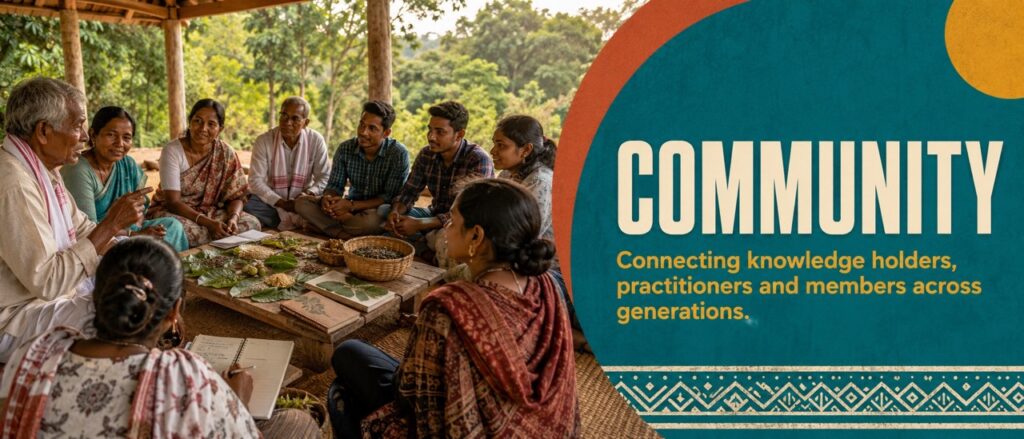
The Community of Hodopathy is a collaborative knowledge ecosystem designed to bring together learners, researchers, educators, traditional-knowledge contributors, plant experts, environmental practitioners, technology professionals, institutions, and interested participants around the responsible documentation, conservation, research, education, and development of Hodopathy.
A strong community is more than a group of people connected through a common interest. It is a system through which knowledge can be shared, documented, questioned, researched, preserved, evaluated, and improved.
The Community of Hodopathy should therefore encourage participation while maintaining clear distinctions between:
- Traditional knowledge and scientific evidence
- Personal experience and research findings
- Hypotheses and established conclusions
- Historical records and current evidence
- Preliminary research and replicated research
- Educational information and professional advice
- Community observations and scientifically validated findings
Its foundation should be respect, transparency, scientific responsibility, ethical participation, biodiversity protection, knowledge rights, inclusion, and continuous learning.
Connect people, respect knowledge, document responsibly, research systematically, evaluate evidence critically, protect communities and biodiversity, and build knowledge together.
1. Vision of the Community of Hodopathy
The long-term vision is to create a community where people with different forms of knowledge and expertise can work together responsibly.
The community can connect:
Communities → Students → Educators → Researchers → Botanists → Scientists → Environmental Experts → Technology Professionals → Institutions → Conservation Organisations → International Collaborators
This network can support:
- Knowledge conservation
- Plant documentation
- Biodiversity protection
- Traditional knowledge documentation
- Research
- Education
- Training
- Evidence evaluation
- Sustainable resource management
- Publications
- Innovation
- Interdisciplinary collaboration
The objective is not to create a closed community. It is to create a transparent and responsible knowledge networkthat can continuously learn from new evidence.
2. Purpose of the Community
The Community of Hodopathy can serve several interconnected purposes.
Knowledge Sharing
Provide appropriate spaces for sharing educational resources, observations, research information, and conservation experiences.
Research Collaboration
Connect researchers, students, experts, institutions, and communities around clearly defined research questions.
Conservation
Support the preservation of knowledge, plants, biodiversity, research records, educational resources, and cultural information.
Education
Create opportunities for structured learning, workshops, seminars, field activities, and research training.
Evidence Literacy
Help participants understand how evidence is generated, evaluated, replicated, and communicated.
Community Participation
Provide meaningful opportunities for individuals and communities to contribute according to their knowledge, interests, skills, and capacity.
Innovation
Encourage responsible use of digital technology, data science, AI, and other emerging tools.
3. Who Can Join the Community?
The community can include people from different backgrounds.
Students
Students can participate through:
- Research projects
- Plant documentation
- Biodiversity surveys
- Literature reviews
- Conservation activities
- Data projects
- Educational programmes
- Workshops
Researchers
Researchers can contribute through:
- Scientific studies
- Evidence reviews
- Replication projects
- Methodology development
- Data analysis
- Publications
- Research mentoring
Educators
Teachers and trainers can support:
- Courses
- Workshops
- Evidence-literacy programmes
- Student mentoring
- Educational resources
- Faculty development
Traditional-Knowledge Contributors
Community knowledge holders can contribute appropriate information about:
- Plants
- Food
- Agriculture
- Ecology
- Seasonal patterns
- Traditional practices
- Local environmental observations
Such contributions should follow appropriate consent, attribution, privacy, intellectual-property, and benefit-sharing principles.
Botanists and Plant Experts
Plant specialists can contribute to:
- Species identification
- Botanical authentication
- Plant databases
- Herbarium documentation
- Conservation programmes
- Nursery standards
Environmental Professionals
They can contribute to:
- Biodiversity
- Habitat conservation
- Sustainable harvesting
- Climate resilience
- Ecological monitoring
- Environmental education
Scientists and Laboratory Professionals
Their contributions may include:
- Experimental research
- Analytical methods
- Laboratory protocols
- Safety evaluation
- Data interpretation
- Research quality control
Technology and Data Professionals
They can develop:
- Digital archives
- Databases
- Knowledge graphs
- Evidence platforms
- GIS systems
- AI-assisted tools
- Data-management systems
Institutions
Universities, research centres, schools, laboratories, botanical gardens, conservation organisations, NGOs, and other institutions can provide infrastructure, expertise, training, research support, and collaboration opportunities.
4. Community Principles
The Community of Hodopathy should operate according to clear principles.
🌱 Respect
Respect people, communities, knowledge systems, biodiversity, and different perspectives.
🔬 Scientific Responsibility
Research claims using appropriate methods rather than assuming that every traditional or community observation is scientifically established.
📚 Transparency
Clearly identify sources, methods, limitations, and evidence status.
🤝 Inclusion
Encourage participation from different educational, professional, geographic, and cultural backgrounds.
🛡️ Ethics
Protect people, communities, participants, sensitive information, and biological resources.
🌿 Sustainability
Ensure that community activities do not damage ecosystems or encourage unsustainable resource extraction.
📊 Evidence Awareness
Teach participants to distinguish correlation from causation and preliminary findings from established evidence.
🔄 Continuous Learning
Allow knowledge to change as better evidence becomes available.
5. Community Knowledge and Traditional Knowledge
Traditional knowledge can be an important component of the community.
However, responsible documentation requires context.
A traditional practice may represent:
- Historical knowledge
- Cultural practice
- Local ecological knowledge
- Food knowledge
- Plant-use knowledge
- Community experience
- A hypothesis for future research
It should not automatically be presented as scientifically proven therapeutic effectiveness.
The community can therefore use a framework such as:
Traditional Observation → Documentation → Botanical/Contextual Verification → Research Question → Scientific Investigation → Evidence Evaluation → Appropriate Communication
This approach respects traditional knowledge while maintaining scientific integrity.
6. Community Plant Knowledge
Plants can become a major bridge between community participation, conservation, education, and research.
Participants can help document:
- Local plant names
- Botanical names
- Plant families
- Habitat
- Distribution
- Seasonal availability
- Food uses
- Traditional uses
- Cultivation methods
- Propagation
- Harvesting practices
- Conservation status
- Research evidence
- Safety information
Where appropriate, information can be connected to the Hodopathy Plant Database.
Plant identification should be verified by qualified personnel where scientific accuracy is important.
7. Community Herbal Gardens
Community herbal gardens can function as practical learning and conservation spaces.
Possible community gardens include:
- Native plant gardens
- Medicinal plant demonstration gardens
- Nutritional plant gardens
- Ethnobotanical gardens
- Pollinator gardens
- Biodiversity gardens
- Educational research gardens
Participants can learn about:
Identification → Cultivation → Propagation → Observation → Documentation → Conservation → Research
These gardens can also support student projects, community workshops, biodiversity monitoring, and plant-conservation activities.
8. Community Nurseries
Community nurseries can contribute to the conservation of appropriate native and useful plant species.
Activities may include:
- Seed collection
- Propagation
- Plant identification
- Nursery record keeping
- Seedling distribution
- Community planting
- Conservation planting
- Sustainable cultivation
Each plant batch can have traceability information such as:
Species → Source → Collection Date → Propagation Method → Nursery Location → Health Status → Distribution Record
This improves both conservation quality and research usefulness.
9. Community Participation in Sustainable Harvesting
Communities involved in harvesting natural resources can contribute directly to conservation.
The recommended framework is:
Identify → Assess → Plan → Harvest Responsibly → Record → Monitor → Regenerate → Evaluate → Improve
Community programmes can document:
- Harvesting seasons
- Plant parts collected
- Collection methods
- Approximate quantities
- Regeneration patterns
- Local ecological observations
- Conservation concerns
Traditional harvesting knowledge can be valuable, but practices should be assessed for ecological sustainability and adapted when evidence indicates a risk to populations or ecosystems.
10. Community Biodiversity Monitoring
Community members can become citizen conservation observers.
With appropriate training, they can record:
- Plant species
- Flowering periods
- Fruiting periods
- Pollinators
- Habitat changes
- Invasive species
- Water conditions
- Soil observations
- Seasonal changes
- Local biodiversity patterns
Digital tools can allow observations to be timestamped and geographically organized where appropriate.
Expert review can then help distinguish reliable observations from records requiring further verification.
11. Community Research Programme
A structured community research programme can turn observations into research questions.
A typical pathway can be:
Community Observation
↓
Research Question
↓
Literature Review
↓
Hypothesis
↓
Appropriate Study Design
↓
Ethical Review Where Required
↓
Data Collection
↓
Analysis
↓
Results
↓
Independent Review
↓
Publication or Responsible Reporting
This approach prevents community observations from being dismissed while also preventing them from being treated as scientific proof without appropriate testing.
12. Student–Community Research
One of the strongest future opportunities is collaboration between students and communities.
Students can work under appropriate supervision on:
- Plant documentation
- Biodiversity surveys
- Literature reviews
- Community knowledge mapping
- Garden monitoring
- Seed conservation
- Sustainable harvesting studies
- Environmental observations
- Digital archiving
The community contributes local context, while students contribute structured documentation and research skills.
This creates a two-way learning model:
Community Knowledge ↔ Academic Learning ↔ Scientific Research
13. Researcher–Community Collaboration
Researchers should work with communities as partners rather than treating communities merely as sources of information.
Good collaboration can include:
- Clear research objectives
- Appropriate informed consent
- Transparent methods
- Community communication
- Appropriate attribution
- Data governance
- Protection of sensitive knowledge
- Benefit-sharing considerations
- Feedback of relevant findings
Where research involves human participants, researchers must follow applicable ethical and regulatory requirements.
14. Community Evidence Literacy
A future-ready community should understand how evidence works.
Participants can learn to ask:
What is the claim?
Clearly define what is being stated.
What is the source?
Determine whether the information comes from experience, tradition, observation, research, or another source.
What evidence exists?
Identify the type and quality of evidence.
Could there be alternative explanations?
Consider confounding factors, bias, placebo effects, selection effects, measurement problems, and other explanations where relevant.
Has the finding been replicated?
A single observation is different from consistent independent evidence.
How certain is the conclusion?
Communicate uncertainty rather than overstating confidence.
15. Community Evidence Categories
The community knowledge platform can use transparent evidence labels:
🟢 Strongly Supported
Evidence is consistent and reasonably robust.
🔵 Moderately Supported
Evidence is meaningful but limitations remain.
🟡 Preliminary
Early evidence requires further investigation.
🟠 Inconclusive
Evidence is insufficient or inconsistent.
🔴 Unsupported
Available evidence does not adequately support the claim.
⚪ Unknown
There is currently insufficient reliable information to classify the claim.
These labels should be periodically reviewed as new research emerges.
16. Community Health and Wellness Information
Because Hodopathy may involve health, wellness, nutrition, plants, lifestyle, and related topics, community communication should be particularly careful.
Community discussions should not automatically convert:
Traditional Use → Medical Treatment Claim
or:
Laboratory Finding → Proven Human Benefit
or:
Personal Experience → Clinical Evidence
Health-related information should be presented according to the strength and limitations of available evidence.
Where appropriate, participants should be encouraged to seek qualified healthcare professionals for diagnosis, treatment, medication decisions, or urgent health concerns.
17. Community Nutrition Knowledge
Food knowledge can form another important community research area.
Participants can document:
- Traditional foods
- Native crops
- Seasonal foods
- Food preparation methods
- Preservation techniques
- Local agricultural practices
- Nutritional composition where scientifically assessed
- Food biodiversity
This can connect with:
Traditional Food Knowledge → Nutrition Research → Biodiversity → Sustainable Agriculture → Community Education
Food traditions can be preserved while nutritional claims are independently evaluated when scientific evidence is needed.
18. Community Digital Platform
A future Community of Hodopathy could include a digital platform with:
Community Dashboard
- Events
- Workshops
- Research opportunities
- Conservation programmes
- Announcements
Knowledge Hub
- Articles
- Research reports
- Plant records
- Educational resources
Research Hub
- Research projects
- Student projects
- Collaboration opportunities
- Research questions
Plant Database
- Botanical records
- Images
- Distribution
- Conservation information
Evidence Centre
- Claims
- Research evidence
- Evidence status
- Reviews
Community Forum
- Questions
- Discussions
- Ideas
- Project collaboration
Learning Centre
- Courses
- Workshops
- Training materials
- Assessments
19. Community Knowledge Graph
An advanced platform could use a Hodopathy Community Knowledge Graph.
It could connect:
Person → Expertise → Project → Plant → Location → Knowledge Record → Research Question → Study → Evidence → Publication → Conservation Programme
For example:
A community observation about a plant could lead to a documented plant record, which could connect to botanical verification, existing research, a student project, a conservation programme, and eventually a research publication.
This creates a traceable history of knowledge development.
20. Community AI Tools
AI can support community activities through:
- Multilingual search
- Document organization
- Research discovery
- Knowledge classification
- Plant-image assistance
- Duplicate detection
- Translation
- Metadata generation
- Evidence mapping
- Educational recommendations
However, AI should not independently decide whether traditional knowledge is scientifically valid.
Important information should undergo appropriate human verification.
Sensitive community knowledge should also receive stronger access controls where required.
21. Community Moderation
A growing knowledge community needs responsible moderation.
Community guidelines should address:
- Misinformation
- Harassment
- Discrimination
- Unverified medical claims
- Plagiarism
- Fabricated research
- Unauthorized commercialization
- Misuse of traditional knowledge
- Environmental harm
- Privacy violations
Moderation should focus on protecting people, knowledge quality, scientific integrity, and community trust.
22. Community Code of Conduct
Members can agree to:
- Respect other participants.
- Share information honestly.
- Identify personal experience as personal experience.
- Avoid presenting unverified claims as established facts.
- Credit original contributors.
- Respect community knowledge rights.
- Protect confidential information.
- Avoid plagiarism.
- Report research honestly.
- Respect biodiversity and environmental limits.
- Disclose relevant conflicts of interest.
- Correct errors when identified.
23. Community Mentorship
A mentorship system can connect participants according to their interests.
Student → Research Mentor
Support in methodology and research design.
Community Contributor → Documentation Specialist
Support in ethical and accurate knowledge documentation.
Volunteer → Conservation Coordinator
Support in biodiversity and plant-conservation activities.
Researcher → Junior Researcher
Support in advanced research development.
Technology Volunteer → Digital Platform Team
Support in databases, GIS, AI, and digital conservation.
Mentorship can help convert informal interest into meaningful long-term participation.
24. Community Events
Regular events can maintain engagement.
Monthly
- Community knowledge sessions
- Plant identification sessions
- Research discussions
- Digital learning events
Quarterly
- Conservation workshops
- Biodiversity surveys
- Research methodology workshops
- Community research meetings
Annually
- Hodopathy Community Conference
- Conservation Week
- Student Research Exhibition
- Native Plant Festival
- Research & Innovation Forum
Events should prioritize learning, documentation, evidence evaluation, and responsible collaboration.
25. Community Volunteer Programme
A structured volunteer system could provide different pathways.
🌱 Conservation Volunteer
Supports plant and biodiversity activities.
📚 Knowledge Volunteer
Supports documentation and archive organization.
🔬 Research Volunteer
Supports literature reviews, data organization, and supervised research.
🎓 Student Volunteer
Participates in academic and conservation projects.
💻 Digital Volunteer
Supports databases, websites, GIS, and digital resources.
🤝 Community Coordinator
Supports communication between local participants and programme teams.
🌍 International Volunteer
Supports translation, comparative research, education, and global collaboration.
26. Community Leadership
A healthy community should avoid excessive concentration of authority.
A possible governance model includes:
Community Members
↓
Working Groups
↓
Programme Coordinators
↓
Expert Advisors
↓
Research & Ethics Committee
↓
Community Governance Council
Different committees can focus on:
- Research
- Ethics
- Conservation
- Plant resources
- Education
- Data governance
- Technology
- Community relations
Clear responsibilities and transparent decision-making can strengthen trust.
27. Community Knowledge Rights
Knowledge conservation should not mean unrestricted public disclosure.
Some information may require:
- Restricted access
- Community approval
- Attribution
- Consent
- Data-use agreements
- Benefit-sharing mechanisms
- Legal protection
The platform should distinguish between:
Open Knowledge → Community-Restricted Knowledge → Sensitive Knowledge → Protected Research Data
Access should be determined according to ethical, legal, scientific, and community requirements.
28. Community and Intellectual Property
Traditional knowledge and biological resources can have significant cultural, scientific, and economic value.
Therefore, responsible community programmes should consider:
- Prior informed consent where applicable
- Appropriate attribution
- Intellectual-property considerations
- Data ownership and governance
- Benefit-sharing
- Commercialization safeguards
- Protection against unauthorized extraction or exploitation
Conservation should create value for communities without turning community knowledge into an uncontrolled resource for others.
29. Community Research Ethics
Research involving communities should consider:
- Respect
- Consent
- Voluntary participation
- Privacy
- Confidentiality
- Risk assessment
- Fair participation
- Appropriate compensation where applicable
- Community communication
- Responsible data management
- Publication transparency
Research involving humans, biological materials, sensitive knowledge, or other regulated subjects should follow the relevant ethical and legal requirements.
30. Community Publications
Community participation can contribute to publications such as:
- Ethnobotanical documentation
- Biodiversity reports
- Plant conservation reports
- Community research reports
- Sustainable harvesting studies
- Educational resources
- Research papers
- Evidence reviews
- Conservation case studies
Contributors should receive appropriate recognition according to their actual contribution.
31. Community Innovation Hub
The community can become a source of practical innovation.
Possible projects include:
- Smart herbal gardens
- Community seed banks
- Digital plant passports
- Biodiversity monitoring applications
- Sustainable harvesting tools
- Local plant databases
- AI-assisted research discovery
- Community learning platforms
- Environmental sensors
- Digital knowledge archives
Innovation should be evaluated not only for technical usefulness but also for ethical, ecological, social, and scientific consequences.
32. Community Research Challenges
A future platform could organize annual research challenges.
Examples:
Native Plant Challenge
Document and authenticate selected native plants.
Biodiversity Challenge
Map local biodiversity.
Evidence Challenge
Evaluate a specific research question using systematic evidence review.
Conservation Challenge
Develop practical approaches for sustainable plant conservation.
Digital Archive Challenge
Create improved methods for organizing community knowledge.
Student Innovation Challenge
Develop responsible technology for conservation and education.
33. Community Learning Pathway
A participant could progress through:
Discover → Learn → Participate → Document → Train → Collaborate → Research → Evaluate → Publish → Mentor
This provides a long-term pathway from simple interest to advanced contribution.
34. Community Certification
Where appropriate, participation programmes may offer certificates for:
- Conservation volunteering
- Knowledge documentation
- Plant identification training
- Research methodology
- Evidence literacy
- Community research
- Digital conservation
- Biodiversity monitoring
Certificates should accurately describe the training completed and should not be presented as medical licences, professional clinical qualifications, or proof that all Hodopathy claims are scientifically established.
35. Community Impact Measurement
The community should measure meaningful outcomes.
Possible indicators include:
- Number of active participants
- Number of trained volunteers
- Number of community projects
- Number of documented plants
- Number of biodiversity observations
- Number of conserved seeds
- Number of research projects
- Number of student projects
- Number of publications
- Number of verified knowledge records
- Number of conservation sites
- Number of collaborations
- Number of community workshops
- Number of resources updated after evidence review
Qualitative measures are also important, including community trust, knowledge transfer, participant satisfaction, research quality, and conservation outcomes.
36. Five-Year Community Development Roadmap
Year 1 — Connect
Build the community structure, membership pathways, guidelines, basic events, and initial knowledge programmes.
Year 2 — Organize
Develop working groups, training programmes, plant documentation, digital archives, and community projects.
Year 3 — Research
Expand student-community research, evidence mapping, biodiversity monitoring, and supervised research programmes.
Year 4 — Collaborate
Build partnerships with universities, research institutions, botanical organizations, conservation groups, and international collaborators.
Year 5 — Sustain
Develop long-term governance, funding, digital infrastructure, research networks, conservation centres, and continuous-quality systems.
37. Future Vision: A Living Community Knowledge Ecosystem
The advanced vision for the Community of Hodopathy is not a conventional membership website.
It can become a living knowledge ecosystem in which:
People contribute knowledge.
Researchers test questions.
Educators teach methods.
Communities protect local knowledge and biodiversity.
Students conduct supervised projects.
Experts verify specialized information.
Technology connects information.
Evidence standards determine confidence.
Conservation protects valuable resources.
Publications preserve research outcomes.
New evidence updates the knowledge system.
This creates a continuous cycle:
Community → Knowledge → Documentation → Research → Evidence → Education → Conservation → Innovation → Community
38. The Community of the Future
The future Community of Hodopathy can become increasingly:
🌍 Global
Connecting researchers and learners across regions.
🌱 Ecological
Linking knowledge preservation with biodiversity and environmental conservation.
🔬 Research-Oriented
Encouraging testable questions and rigorous methodology.
📚 Educational
Providing lifelong learning and structured training.
💻 Digital
Using modern databases, GIS, AI, and knowledge-management technologies.
🤝 Participatory
Giving communities meaningful roles in conservation and research.
🛡️ Ethical
Protecting people, knowledge rights, privacy, and biodiversity.
📊 Evidence-Aware
Clearly distinguishing established evidence from preliminary or uncertain information.
🔄 Adaptive
Updating knowledge as new evidence becomes available.
Conclusion
The Community of Hodopathy can become the human foundation connecting conservation, research, education, traditional knowledge, biodiversity, technology, and responsible innovation.
Its strength should not come simply from the number of members. It should come from the quality of participation, integrity of documentation, respect for communities, scientific responsibility, protection of biodiversity, transparency of evidence, and willingness to learn and improve.
A successful community can give students opportunities to learn, researchers opportunities to collaborate, educators opportunities to teach, communities opportunities to preserve valuable knowledge, conservationists opportunities to protect biodiversity, and technology professionals opportunities to build responsible digital infrastructure.
Most importantly, the community should create a culture in which people are encouraged to ask better questions rather than simply accept claims.
The long-term pathway is:
Connect → Learn → Participate → Document → Preserve → Verify → Research → Evaluate → Collaborate → Educate → Publish → Conserve → Innovate → Learn Again
The Community of Hodopathy can therefore become a continuously evolving network where knowledge is respected, evidence is examined, uncertainty is acknowledged, biodiversity is protected, communities are valued, and future generations receive a stronger foundation for responsible research and conservation.