
Introduction
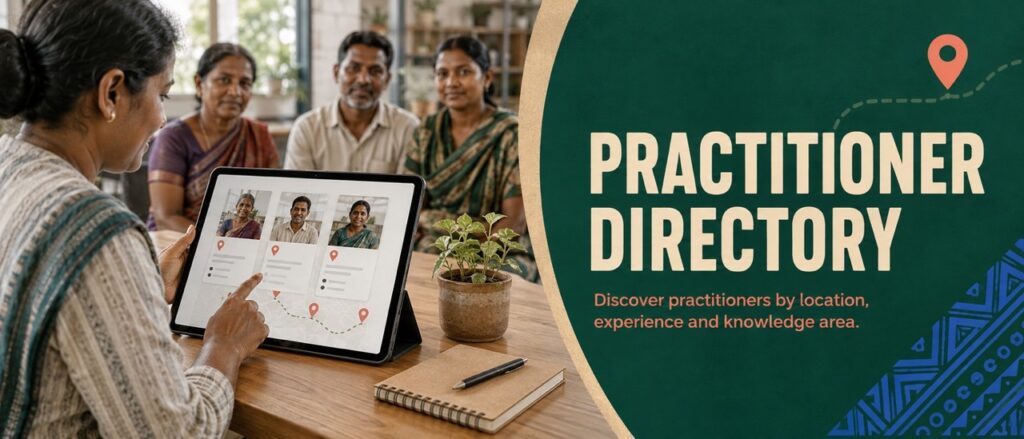
The Practitioner Directory of Hodopathy is envisioned as a structured, transparent, and ethically managed platform for discovering people and organizations involved in the study, documentation, education, practice, research, conservation, and responsible development of Hodopathy-related knowledge.
Rather than functioning simply as a list of names and contact details, the directory can become a trusted knowledge and collaboration infrastructure connecting practitioners, knowledge holders, educators, researchers, botanists, nutrition and lifestyle educators, environmental practitioners, students, institutions, and communities.
The directory should make an important distinction between being listed as a practitioner or contributor and having a particular claim scientifically validated. Inclusion in the directory should not automatically mean that a person’s methods, recommendations, health claims, or traditional practices have been clinically proven.
Its purpose is to improve discoverability while maintaining standards for identity, qualifications, experience, scope of work, ethical conduct, evidence transparency, community rights, safety, and responsible communication.
Core Principle
Make practitioners discoverable, qualifications transparent, knowledge respectfully represented, evidence clearly distinguished, communities protected, and collaboration easier.
1. Vision of the Practitioner Directory
The long-term vision is to create a reliable ecosystem:
Practitioners → Knowledge Holders → Communities → Students → Educators → Researchers → Scientists → Conservationists → Institutions → Public Knowledge
The directory can support several interconnected goals:
- Discovering practitioners and educators
- Connecting knowledge holders with researchers
- Supporting student learning and mentorship
- Identifying botanical and environmental specialists
- Facilitating community research
- Supporting ethical traditional-knowledge documentation
- Connecting practitioners with training opportunities
- Promoting evidence literacy
- Supporting conservation programmes
- Facilitating research collaboration
- Improving transparency around qualifications and scope
- Creating opportunities for interdisciplinary projects
2. What Is a Hodopathy Practitioner?
The term practitioner should be defined carefully according to the person’s actual role.
A directory member may be someone who:
- Practices or teaches a traditional knowledge system
- Documents community knowledge
- Works with native or medicinal plants
- Maintains herbal gardens or nurseries
- Studies traditional food knowledge
- Works in biodiversity conservation
- Conducts ethnobotanical field research
- Teaches Hodopathy-related subjects
- Conducts scientific research relevant to Hodopathy
- Provides education in nutrition or lifestyle
- Works in laboratory or analytical research
- Supports documentation and archiving
- Provides data, technology, or digital knowledge services
- Mentors students or researchers
- Participates in community-based research
The directory should therefore avoid treating every participant as a healthcare professional.
A person’s professional role, qualification, training, experience, and permitted scope of activity should be displayed clearly.
3. Practitioner Categories
A sophisticated directory can organize members into specialized categories.
3.1 Traditional Knowledge Practitioners
Individuals with experience in community-based knowledge systems, traditional practices, plant knowledge, food traditions, ecological observations, or intergenerational knowledge transmission.
Their profiles should emphasize:
- Community context
- Knowledge area
- Experience
- Knowledge transmission
- Consent for documentation
- Community affiliation where appropriate
- Cultural context
- Restrictions on sensitive knowledge
3.2 Plant and Herbal Practitioners
These practitioners may have knowledge related to:
- Native plants
- Herbal plants
- Plant identification
- Cultivation
- Traditional preparation
- Herbal gardens
- Nursery management
- Sustainable harvesting
- Plant conservation
Traditional plant-use information should be presented as documented knowledge or traditional practice, not automatically as scientifically established therapeutic effectiveness.
3.3 Agricultural and Ecological Practitioners
This category may include:
- Farmers
- Traditional cultivators
- Agroecology practitioners
- Forest-resource practitioners
- Seed conservation contributors
- Sustainable harvesting practitioners
- Soil and water management practitioners
- Biodiversity observers
Their knowledge can contribute valuable field observations and research questions.
3.4 Nutrition and Traditional Food Knowledge Contributors
This category can document individuals with experience in:
- Traditional foods
- Indigenous ingredients
- Seasonal diets
- Wild edible plants
- Food preservation
- Traditional cooking methods
- Local food heritage
- Nutritional documentation
Nutrition-related claims should be supported by appropriate nutritional analysis rather than relying solely on traditional descriptions.
3.5 Educators and Trainers
Educators may contribute through:
- Hodopathy courses
- Workshops
- Evidence-literacy programmes
- Research-method training
- Plant identification training
- Conservation education
- Traditional knowledge documentation
- Scientific communication
- Student mentorship
Training credentials should be displayed separately from professional or clinical qualifications.
3.6 Researchers and Scientists
Researchers may include specialists working in:
- Ethnobotany
- Botany
- Phytochemistry
- Pharmacognosy
- Nutrition science
- Environmental science
- Public health
- Biology
- Microbiology
- Laboratory sciences
- Statistics
- Data science
- AI and digital knowledge systems
Research profiles should identify publications, projects, institutions, research interests, and areas of expertise where appropriate.
3.7 Conservation Practitioners
These members may work with:
- Native plant conservation
- Medicinal plant conservation
- Biodiversity monitoring
- Herbal gardens
- Nurseries
- Seed preservation
- Sustainable harvesting
- Habitat restoration
- Ecological education
Their profiles can help connect conservation projects with local expertise.
4. Practitioner Profile Structure
Each verified directory profile should contain structured information rather than a simple biography.
Recommended Profile Fields
Basic Information
- Name
- Professional or community role
- Region
- Organization, if applicable
- Languages
- Contact method where consented
Expertise
- Areas of knowledge
- Plant expertise
- Traditional food knowledge
- Conservation expertise
- Research interests
- Teaching areas
Qualifications
- Academic qualifications
- Professional qualifications
- Relevant training
- Certifications
- Research credentials
Experience
- Years of relevant experience
- Community involvement
- Research projects
- Conservation projects
- Teaching experience
Evidence and Research
- Publications
- Research projects
- Documented field experience
- Laboratory collaborations
- Evidence category associated with specific claims
Ethics
- Code-of-conduct agreement
- Consent practices
- Knowledge-rights awareness
- Community engagement standards
Verification
- Identity/profile verification status
- Qualification verification status
- Institutional affiliation verification
- Community verification where appropriate
5. Verification Framework
A major objective of the directory should be to prevent misleading representation.
Verification can operate at several levels.
Level 1 — Profile Submitted
The person has created a directory profile.
Level 2 — Identity/Profile Verified
Basic profile information has been reviewed.
Level 3 — Qualification Verified
Relevant educational or professional credentials have been checked where appropriate.
Level 4 — Experience Verified
Professional, research, teaching, community, or project experience has supporting documentation or references.
Level 5 — Institutional Affiliation Verified
An organization, university, research centre, laboratory, NGO, or community institution has confirmed the stated association where applicable.
Level 6 — Research Contribution Verified
Research projects, publications, datasets, or documented contributions have been independently confirmed.
Level 7 — Community Knowledge Recognition
For traditional knowledge holders, appropriate community-based recognition may be used where culturally and ethically appropriate.
Important: Verification should not be represented as proof that every claim made by a practitioner is scientifically established.
6. Evidence Transparency in Practitioner Profiles
Practitioner profiles should connect directly with the Evidence Standards of Hodopathy.
Different statements should be classified appropriately.
Possible categories include:
- Traditional or community knowledge
- Historical documentation
- Personal or practitioner experience
- Anecdotal observation
- Field observation
- Laboratory evidence
- Observational research
- Controlled experimental evidence
- Randomized controlled evidence
- Replicated research
- Evidence synthesis
- Inconclusive evidence
- Unknown or insufficient evidence
This prevents a common communication problem:
Traditional use ≠ scientific proof
Similarly:
Laboratory finding ≠ proven human benefit
and:
Association ≠ causation
The directory should encourage practitioners to communicate within the limits of available evidence.
7. Scope-of-Practice Transparency
Every practitioner profile should clearly state what the individual actually does.
For example:
Traditional Knowledge Documentation
Plant Identification
Herbal Cultivation
Nutrition Education
Research
Teaching
Environmental Conservation
Community Knowledge Documentation
Laboratory Research
This prevents broad or ambiguous professional descriptions.
Where health-related services are involved, practitioners should comply with applicable laws, professional requirements, licensing requirements, referral standards, and safety obligations in their jurisdiction.
8. Practitioner Specialization Tags
The directory can use standardized tags to improve discovery.
Examples:
- Traditional Knowledge
- Native Plants
- Medicinal Plants
- Ethnobotany
- Herbal Gardens
- Herbal Nurseries
- Sustainable Harvesting
- Biodiversity
- Conservation
- Traditional Food
- Nutrition Research
- Lifestyle Research
- Community Research
- Field Research
- Laboratory Research
- Phytochemistry
- Botany
- Evidence Evaluation
- Research Methods
- Statistics
- Data Science
- AI and Digital Knowledge
- Scientific Writing
- Education
- Training
- Student Mentorship
These tags can make the directory searchable while avoiding exaggerated professional claims.
9. Geographic Discovery
The directory can provide location-based discovery at an appropriate level.
Users may search by:
- State
- District
- Region
- Ecological zone
- Community area
- Research institution
- Organization
- Language
- Plant biodiversity region
Exact residential addresses should not be publicly displayed unless there is a legitimate reason and explicit consent.
Location privacy should be a core design principle.
10. Language and Cultural Accessibility
Because traditional knowledge is frequently transmitted through local languages and oral traditions, the directory should support multilingual profiles.
Possible features include:
- Local-language profile
- Hindi profile
- English profile
- Community terminology
- Local plant names
- Scientific botanical names
- Audio introductions
- Oral-history references
- Community-approved terminology
Translation should preserve cultural context rather than simply replacing local terminology with generalized scientific terminology.
11. Knowledge Rights and Ethical Representation
Practitioner profiles must respect the rights of knowledge holders.
The directory should recognize that traditional knowledge may be:
- Individually held
- Family-held
- Community-held
- Collectively transmitted
- Sensitive
- Sacred or restricted
- Publicly documented
- Subject to customary rules
Not all knowledge should be published openly.
A practitioner should never be encouraged to upload sensitive community knowledge simply to create a more complete profile.
12. Knowledge Access Levels
The directory can integrate the knowledge-access model used in the broader Hodopathy knowledge system.
Open
Information that can be publicly accessed.
Community Access
Information available primarily to participating communities.
Research Access
Information available to approved researchers under appropriate conditions.
Restricted
Information requiring authorization.
Protected
Sensitive knowledge that should not be publicly disclosed.
This framework protects knowledge while still supporting legitimate research and education.
13. Community Verification
Traditional knowledge practitioners may not always possess formal academic certificates.
Therefore, verification should not rely exclusively on academic credentials.
Alternative evidence may include:
- Community recognition
- References from recognized knowledge holders
- Documented participation in community programmes
- Long-term practical experience
- Field documentation
- Community institution confirmation
- Research collaboration history
This creates a more inclusive model of credibility.
14. Practitioner Reviews and Recommendations
A future directory may include carefully moderated recommendations.
However, reviews should not become a popularity contest.
A responsible review system can distinguish between:
- Professional conduct
- Communication
- Reliability
- Teaching quality
- Research collaboration
- Community engagement
- Ethical conduct
Reviews should not be used as proof of medical effectiveness.
Claims such as “this practitioner cures disease” should not be treated as ordinary user reviews and should be moderated according to applicable standards.
15. Practitioner–Knowledge Holder Connections
The directory should connect closely with the Knowledge Holders of Hodopathy programme.
A practitioner profile could indicate whether the person is:
- A knowledge holder
- A knowledge documenter
- A researcher
- A community educator
- A conservation practitioner
- A scientific collaborator
- A student
- A mentor
This creates pathways for intergenerational knowledge transfer.
Example pathway
Knowledge Holder → Community → Student → Researcher → Evidence Evaluation → Publication → Conservation
16. Practitioner–Researcher Collaboration
The directory can become a research collaboration platform.
Researchers may search for practitioners with expertise in:
- Particular plants
- Traditional preparation methods
- Local ecological knowledge
- Food traditions
- Agricultural practices
- Biodiversity
- Sustainable harvesting
- Oral histories
Practitioners can contribute to research question development and field interpretation.
However, collaboration should always include appropriate:
- Consent
- Attribution
- Data governance
- Intellectual-property protection
- Benefit-sharing arrangements
- Research ethics
17. Practitioner–Student Mentorship
Students can use the directory to identify potential mentors.
Mentorship areas could include:
- Plant identification
- Field documentation
- Traditional knowledge research
- Conservation
- Research methodology
- Scientific writing
- Data collection
- Evidence evaluation
- Community research
- Botanical documentation
A structured mentorship programme can connect experienced practitioners with learners while establishing appropriate safeguarding and professional boundaries.
18. Practitioner–Community Programmes
Practitioners can participate in community programmes involving:
- Plant conservation
- Herbal gardens
- Native seed preservation
- Biodiversity monitoring
- Traditional food documentation
- Oral histories
- Sustainable harvesting
- Environmental education
- Student fieldwork
The directory can display active projects and opportunities for participation.
19. Integration with Herbal Gardens and Nurseries
Practitioners involved in herbal gardens and nurseries can be linked to the Herbal Gardens & Nurseries of Hodopathy programme.
Profiles may include:
- Garden location at a broad geographic level
- Plant collections
- Native species
- Conservation status
- Cultivation expertise
- Propagation methods
- Seed preservation activities
- Research plots
- Educational programmes
Botanical identification should be verified wherever practical.
20. Integration with Plant and Biodiversity Research
The directory can support the Native & Medicinal Plants of Hodopathy programme by connecting plant experts with researchers.
For each relevant plant, researchers could identify:
- Knowledge holders
- Field experts
- Cultivators
- Botanists
- Conservationists
- Nursery practitioners
- Researchers
This creates a distributed network for plant documentation and conservation.
21. Sustainable Harvesting Network
Practitioners with expertise in sustainable harvesting can participate in monitoring programmes.
Potential activities include:
- Population monitoring
- Harvest documentation
- Seasonal assessment
- Regeneration monitoring
- Threat identification
- Sustainable collection practices
- Cultivation alternatives
- Community conservation
This connects the directory with the broader Sustainable Harvesting of Hodopathy programme.
22. Research Publications and Practitioner Contributions
Practitioners who contribute to research should receive appropriate recognition.
Possible contributions include:
- Field knowledge
- Plant identification
- Oral-history interviews
- Community introductions
- Data collection
- Traditional preparation documentation
- Ecological observations
- Research interpretation
- Co-development of research questions
Where contribution meets accepted authorship criteria, appropriate authorship should be considered.
Other contributions should receive transparent acknowledgment.
23. Practitioner Credentials and Digital Verification
A future digital platform can provide verification indicators such as:
Profile Verified
Qualification Verified
Experience Verified
Institution Verified
Research Contribution Verified
Community Recognition
Each indicator should have a clear explanation.
Verification should never become a decorative badge system without defined criteria.
24. Digital Practitioner ID
A future system could provide a unique directory identifier.
Example:
HOD-PRA-000123
The ID could connect:
- Practitioner profile
- Verified qualifications
- Research contributions
- Training history
- Publications
- Projects
- Conservation activities
- Community contributions
Only information approved for public access should be exposed.
25. Privacy and Data Protection
A practitioner directory must protect personal information.
The system should avoid unnecessarily publishing:
- Personal phone numbers
- Home addresses
- Private email addresses
- Family information
- Sensitive community information
- Private documents
- Financial information
- Sensitive location data
Practitioners should control which contact and profile information is publicly visible.
26. Safety and Responsible Communication
Practitioners associated with health, nutrition, plants, or wellness should follow responsible communication principles.
The directory should discourage:
- Guaranteed cure claims
- Disease-treatment promises without appropriate evidence
- Misrepresentation of qualifications
- Unsupported scientific claims
- Misleading testimonials
- Unsafe dosage recommendations
- Concealment of risks
- False claims of institutional approval
Traditional knowledge should be respected without presenting it as automatically equivalent to clinical evidence.
27. Practitioner Code of Conduct
Every listed practitioner should agree to an appropriate code of conduct.
Core commitments
- Respect communities
- Protect knowledge rights
- Obtain appropriate consent
- Represent qualifications honestly
- Avoid misleading claims
- Respect scientific uncertainty
- Protect participant safety
- Maintain research integrity
- Respect biodiversity
- Avoid exploitation
- Disclose relevant conflicts of interest
- Correct inaccurate information
- Respect privacy
- Support responsible collaboration
28. Conflict of Interest Disclosure
Practitioner profiles should provide an optional or required disclosure area for relevant interests.
Examples include:
- Commercial product relationships
- Research funding
- Institutional affiliations
- Consultancy
- Product sales
- Intellectual-property interests
Transparency allows users to evaluate information appropriately.
29. Search and Discovery Features
An advanced directory can provide filters for:
Expertise
- Plants
- Nutrition
- Conservation
- Research
- Traditional knowledge
- Education
Location
- State
- District
- Region
Experience
- Early career
- Experienced
- Senior
- Specialist
Verification
- Profile verified
- Qualification verified
- Research verified
- Community recognized
Availability
- Mentorship
- Research collaboration
- Teaching
- Fieldwork
- Community projects
30. Practitioner Network Map
A future interactive map could visualize the knowledge ecosystem.
For example:
Knowledge Holder
↓
Practitioner
↓
Researcher
↓
Laboratory
↓
Evidence
↓
Publication
↓
Education
↓
Conservation
Such visualization could demonstrate how traditional knowledge, scientific research, education, and conservation can interact without collapsing their distinct roles.
31. AI-Assisted Practitioner Discovery
Artificial intelligence could improve directory discovery.
AI could help users find practitioners based on:
- Expertise
- Research interests
- Plant knowledge
- Geographic area
- Training needs
- Collaboration interests
- Publications
- Conservation activities
However, AI-generated recommendations should not determine professional credibility by themselves.
Human verification remains essential.
AI should assist with:
Search → Matching → Classification → Summarization
while humans remain responsible for:
Verification → Ethics → Approval → Dispute Resolution
32. Practitioner Knowledge Graph
A future Hodopathy knowledge graph could connect:
Practitioner → Knowledge → Plant → Community → Location → Research Project → Evidence → Publication → Conservation Programme
This would make it possible to understand relationships across the entire knowledge ecosystem.
For example, a native plant record could connect to:
- Local names
- Knowledge holders
- Traditional uses
- Botanical identification
- Conservation status
- Research studies
- Safety information
- Cultivation records
- Sustainable harvesting practices
33. Research Integrity and Directory Quality
Directory administrators should periodically review:
- Outdated profiles
- Expired affiliations
- Incorrect qualifications
- Misleading claims
- Duplicate profiles
- False credentials
- Privacy complaints
- Ethical concerns
- Community objections
A correction mechanism should allow practitioners and communities to report inaccurate information.
34. Inclusion and Accessibility
The directory should not privilege only people with formal degrees.
A balanced system can recognize different forms of expertise:
Academic Expertise
Professional Expertise
Field Expertise
Traditional Knowledge
Community Experience
Research Expertise
Technical Expertise
The key is to describe each type of expertise accurately rather than ranking all knowledge through one credential system.
35. Practitioner Training Integration
Directory members can be connected to the Training of Hodopathy, Courses & Workshops of Hodopathy, and Training Calendar of Hodopathy.
Their profiles may show completed training in:
- Research methodology
- Evidence standards
- Ethics
- Scientific documentation
- Plant identification
- Conservation
- Data management
- Scientific writing
- Community research
- Digital knowledge systems
Training completion should be distinguished from professional licensure or clinical qualification.
36. Continuing Professional Development
An advanced directory can support continuing learning through:
- Workshops
- Seminars
- Research meetings
- Evidence-literacy sessions
- Conservation programmes
- Refresher courses
- Scientific writing sessions
- Digital tools training
- Ethics updates
This creates a culture of continuous improvement.
37. Practitioner Directory and Publications
Practitioners can be linked to relevant:
- Research papers
- Reports
- Field studies
- Oral histories
- Conservation records
- Plant documentation
- Educational resources
This provides context for their expertise without relying solely on self-description.
38. Practitioner Directory and Evidence Archive
Where a practitioner makes a research-related claim, relevant supporting evidence can be linked.
For example:
Claim → Source → Study Type → Results → Limitations → Evidence Category
This creates greater transparency and reduces the risk of presenting unsupported claims as established facts.
39. Dispute and Correction Mechanism
A responsible directory needs a transparent process for disputes.
Users should be able to report:
- Incorrect qualifications
- False affiliations
- Misrepresentation
- Unauthorized use of community knowledge
- Privacy violations
- Misleading health claims
- Incorrect attribution
Reports should be reviewed according to documented procedures.
40. Community Governance
The directory should not be controlled solely by a technical team.
A future governance structure may include representatives from:
- Knowledge-holder communities
- Researchers
- Educators
- Conservation specialists
- Ethics experts
- Data/privacy specialists
- Practitioners
- Students
- Institutional partners
This creates a more balanced governance model.
41. Future Practitioner Centres
A mature Hodopathy ecosystem could establish specialized networks or centres such as:
Traditional Knowledge Practitioner Centre
For knowledge holders and community practitioners.
Plant & Herbal Practitioner Centre
For plant identification, cultivation and herbal knowledge.
Research Practitioner Network
For interdisciplinary research collaboration.
Conservation Practitioner Network
For biodiversity and sustainable resource management.
Community Research Network
For community-led research and documentation.
Education & Training Network
For trainers, educators and mentors.
Digital Knowledge Network
For data, archives, AI and knowledge systems.
42. Five-Year Development Roadmap
Year 1 — Build
- Establish directory structure
- Define categories
- Create ethical standards
- Develop profile system
- Establish verification procedures
Year 2 — Verify
- Expand practitioner profiles
- Introduce qualification verification
- Establish community recognition pathways
- Develop moderation and correction systems
Year 3 — Connect
- Launch mentorship
- Create research collaboration tools
- Connect practitioners with students
- Integrate conservation projects
- Connect plant databases
Year 4 — Integrate
- Develop knowledge graphs
- Integrate publications
- Introduce advanced search
- Develop AI-assisted discovery
- Establish practitioner networks
Year 5 — Sustain
- Establish regional networks
- Strengthen governance
- Develop international research partnerships
- Expand community participation
- Continuously evaluate directory quality
- Build long-term digital preservation infrastructure
43. Measuring Directory Impact
Success should not be measured only by the number of profiles.
Useful indicators include:
- Verified practitioners
- Knowledge holders represented
- Communities participating
- Research collaborations
- Student mentorships
- Conservation projects
- Publications
- Training participation
- Plant records contributed
- Community research projects
- Corrections resolved
- Ethical documentation projects
- Research partnerships
- Biodiversity initiatives
Quality should matter more than quantity.
A smaller directory with accurate, ethically represented profiles is more valuable than a large directory filled with unverified claims.
44. The Future of the Practitioner Directory
The future Practitioner Directory of Hodopathy can evolve from a simple database into a living knowledge network.
It can connect:
People + Knowledge + Research + Education + Plants + Communities + Evidence + Conservation + Technology
Advanced features may include:
- Digital practitioner profiles
- Verified credentials
- Community recognition
- Research collaboration
- Mentorship
- Knowledge-rights controls
- Evidence-linked claims
- Plant expertise mapping
- Conservation networks
- AI-assisted discovery
- Knowledge graphs
- Multilingual interfaces
- Secure knowledge archives
- Research project matching
- Digital certificates
- Practitioner learning pathways
The long-term goal should not be to create a hierarchy of practitioners, but to build a transparent ecosystem where different forms of expertise can be identified, respected, evaluated, and connected responsibly.
45. Conclusion
The Practitioner Directory of Hodopathy can become an important bridge between traditional knowledge, community participation, scientific research, education, conservation, and responsible innovation.
Its strongest foundation should be transparency rather than promotion.
Every profile should answer:
- Who is this person?
- What do they know or practice?
- What is their experience?
- What training or qualifications do they have?
- What communities or institutions do they work with?
- What research have they contributed to?
- What evidence supports particular claims?
- What remains uncertain?
- What ethical standards do they follow?
- How can others collaborate with them responsibly?
By connecting practitioners with the wider Hodopathy ecosystem, the directory can support a future in which knowledge holders are respected, practitioners are transparently represented, students can learn, researchers can collaborate, communities retain their rights, biodiversity is protected, and evidence remains central to responsible knowledge development.
Core Framework
Identify → Profile → Verify → Contextualize → Connect → Collaborate → Evaluate → Protect → Learn → Improve
The Practitioner Directory should ultimately become more than a searchable list.
It should become a trusted, ethical, evidence-aware and community-responsible network for the people who carry, study, teach, document, protect and advance Hodopathy-related knowledge.