
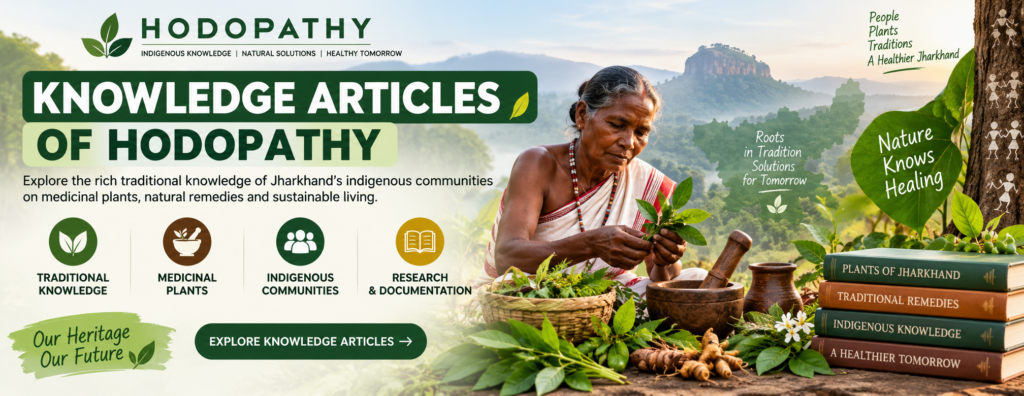
The Knowledge Articles of Hodopathy are designed as a structured, educational, and continuously developing body of content dedicated to understanding, documenting, preserving, and responsibly sharing indigenous knowledge.
These articles can serve as a bridge between traditional knowledge holders, communities, researchers, students, educators, practitioners, and the wider public—making important knowledge more accessible while maintaining respect for its cultural context, origins, ownership, and appropriate boundaries.
Rather than treating indigenous knowledge as isolated facts, Hodopathy Knowledge Articles should explain the relationships between people, culture, plants, forests, food, health traditions, agriculture, biodiversity, ecology, history, and community life.
🌿 What Are Hodopathy Knowledge Articles?
Hodopathy Knowledge Articles are carefully prepared educational and research-oriented articles covering subjects connected with Hodopathy and the knowledge traditions associated with the Ho community and other Adivasi communities of Jharkhand.
Articles may bring together:
- Traditional knowledge.
- Community experiences.
- Plant and forest knowledge.
- Traditional food systems.
- Biodiversity.
- Agriculture and ecological practices.
- Cultural heritage.
- Oral traditions.
- Ethnobotanical observations.
- Historical context.
- Contemporary research.
- Conservation perspectives.
- Knowledge documentation methods.
The purpose is to create a reliable and contextual knowledge resource, rather than simply publishing disconnected information.
📚 Major Knowledge Article Categories
The Knowledge Articles section can be organised into clear subject areas so that visitors can easily explore different dimensions of Hodopathy.
🌱 1. Plant & Ethnobotanical Knowledge
Articles can explore relationships between communities and plants, including:
- Indigenous plants.
- Traditionally recognised useful plants.
- Food plants.
- Medicinally used plants, where appropriately documented.
- Wild edible plants.
- Plant identification and local names.
- Traditional plant uses.
- Seasonal availability.
- Plant conservation.
- Cultural significance of plants.
- Community knowledge associated with forests.
Where appropriate, articles should clearly distinguish traditional knowledge from scientifically established medical or pharmacological evidence.
🌳 2. Forest & Ecological Knowledge
Traditional ecological knowledge can provide important insights into local landscapes and natural resources.
Articles may examine:
- Forest biodiversity.
- Seasonal ecological patterns.
- Traditional forest practices.
- Sustainable collection practices.
- Native species.
- Forest foods.
- Human–forest relationships.
- Community conservation.
- Changes in local ecosystems.
- Traditional environmental indicators.
The focus should be on understanding knowledge within its ecological and cultural context.
🍚 3. Traditional Food Knowledge
Food is an important part of cultural identity, biodiversity, seasonal knowledge, and community life.
Articles may cover:
- Traditional crops.
- Indigenous grains and millets.
- Wild edible plants.
- Traditional vegetables.
- Forest foods.
- Seasonal foods.
- Traditional preparation methods.
- Food preservation.
- Local agricultural practices.
- Cultural significance of food.
- Intergenerational food knowledge.
These articles can also explore how traditional food systems contribute to agrobiodiversity and food heritage.
🎙️ 4. Oral Histories & Community Knowledge
Many forms of indigenous knowledge are transmitted through stories, conversations, observation, demonstration, and generations of lived experience.
Knowledge Articles can provide context for oral-history projects by discussing:
- Community memories.
- Knowledge transmission.
- Elder knowledge.
- Traditional stories.
- Historical experiences.
- Local environmental observations.
- Changes in community practices.
- Intergenerational learning.
Where direct quotations, recordings, photographs, or personal stories are used, appropriate consent and permissions should be respected.
🧑🤝🧑 5. Culture & Community Heritage
Hodopathy Knowledge Articles can explore the broader cultural environment in which knowledge exists.
Topics may include:
- Cultural practices.
- Community traditions.
- Traditional skills.
- Local knowledge systems.
- Cultural landscapes.
- Community relationships with nature.
- Intergenerational knowledge transfer.
- Traditional livelihoods.
- Cultural heritage preservation.
This helps readers understand that indigenous knowledge is not simply a collection of techniques—it is part of a living social and cultural system.
🔬 6. Research & Evidence
An important function of the Knowledge Articles section is to encourage responsible dialogue between traditional knowledge and contemporary research.
Articles may examine:
- Existing scientific research.
- Ethnobotanical studies.
- Ecological research.
- Biodiversity research.
- Community-based research.
- Documentation methodologies.
- Research ethics.
- Evidence standards.
- Knowledge validation.
- Research limitations.
Evidence should be clearly identified.
Hodopathy should distinguish between:
Community Knowledge
Historical Documentation
Research Findings
Scientific Evidence
Research Hypotheses
Areas Requiring Further Study
This distinction prevents traditional observations from being presented as scientifically proven claims without adequate evidence.
🧪 7. Traditional Knowledge & Modern Research
The Knowledge Articles platform can encourage respectful dialogue between indigenous knowledge and modern scientific disciplines.
Possible themes include:
- Ethnobotany.
- Anthropology.
- Ecology.
- Environmental science.
- Food science.
- Agricultural science.
- Biodiversity studies.
- Cultural heritage research.
- Community-based research.
The objective is not to replace one knowledge system with another, but to encourage ethical, transparent, and mutually respectful learning.
🌾 8. Agriculture & Traditional Ecological Practices
Traditional agricultural knowledge can contain detailed observations about soils, seasons, crops, weather, plants, seeds, and landscapes.
Articles may explore:
- Indigenous crops.
- Traditional seed knowledge.
- Seasonal farming.
- Crop diversity.
- Soil-related practices.
- Traditional pest-management observations.
- Mixed cropping.
- Forest-linked agriculture.
- Water management.
- Agricultural biodiversity.
Such documentation can contribute to discussions about resilience, sustainability, biodiversity, and changing agricultural systems.
🧬 9. Knowledge, Biodiversity & Conservation
Hodopathy Knowledge Articles can examine how traditional knowledge relates to biodiversity conservation.
Topics may include:
- Local biodiversity.
- Native species.
- Traditional conservation practices.
- Sustainable resource use.
- Habitat protection.
- Community stewardship.
- Traditional ecological indicators.
- Threats to biodiversity.
- Conservation education.
This section can help demonstrate that preserving knowledge and preserving biodiversity can be deeply interconnected goals.
📖 10. History & Evolution of Knowledge
Knowledge changes over time.
Articles can explore:
- Historical development of local practices.
- Changes in food systems.
- Changing relationships with forests.
- Effects of environmental change.
- Knowledge transmission between generations.
- Contemporary adaptations.
- Documentation of practices at risk of disappearing.
This creates a more realistic picture of indigenous knowledge as a living and evolving tradition, rather than something frozen in the past.
🛡️ Ethical Knowledge Documentation
A central principle of the Knowledge Articles section should be responsible documentation.
Before publishing community knowledge, Hodopathy should consider:
Informed Consent
People should understand how their knowledge, stories, images, or contributions may be used.
Attribution
Knowledge holders and communities should receive appropriate recognition.
Cultural Context
Information should not be removed from the cultural setting that gives it meaning.
Confidentiality
Sensitive or restricted information should not be published without appropriate permission.
Community Rights
Collective knowledge should not automatically be treated as freely available public information.
Benefit Sharing
Where research or future applications create benefits, appropriate approaches to benefit sharing should be considered.
🔐 Public, Member & Restricted Knowledge
Not every article or knowledge resource needs to have the same level of access.
Hodopathy can develop an access framework such as:
🌍 Public Knowledge
General educational information suitable for broad public access.
👤 Member Knowledge
Resources available to registered Hodopathy members.
🔬 Research Access
Materials available to approved researchers under defined conditions.
🧑🤝🧑 Community-Controlled Knowledge
Information whose access is determined by the relevant community or knowledge holders.
🔒 Restricted Knowledge
Sensitive information that should not be publicly distributed.
This approach supports a knowledge-preservation model that values access while protecting legitimate community interests.
✍️ How Hodopathy Knowledge Articles Should Be Developed
High-quality articles should ideally follow a transparent editorial process.
Step 1 — Identify the Topic
Determine the subject, community context, and purpose of the article.
Step 2 — Establish the Knowledge Source
Identify whether information comes from:
- Knowledge holders.
- Community documentation.
- Oral histories.
- Published research.
- Historical records.
- Field observations.
- Multiple sources.
Step 3 — Verify Context
Understand where, how, and by whom the knowledge is used or transmitted.
Step 4 — Apply Ethical Review
Consider consent, privacy, cultural sensitivity, attribution, and access restrictions.
Step 5 — Distinguish Evidence
Clearly separate traditional knowledge, observation, historical information, and scientific evidence.
Step 6 — Editorial Review
Review the article for accuracy, clarity, cultural context, and responsible presentation.
Step 7 — Publish Appropriately
Select the correct access level and provide suitable attribution.
Step 8 — Update Over Time
Knowledge articles should be reviewed and updated when new evidence, corrections, or community guidance becomes available.
🔎 A Reliable Structure for Each Knowledge Article
To improve consistency across the website, individual articles can follow a standard structure:
Article Title
Summary
Knowledge Category
Community / Cultural Context
Traditional Knowledge Description
Historical Context
Research & Evidence
Ecological or Cultural Significance
Current Knowledge & Limitations
Conservation Considerations
Ethical Considerations
Sources & References
Knowledge Holder / Community Attribution
Last Updated
This structure helps readers understand not only what is being described, but also where the information comes from and how confidently it can be interpreted.
🌐 Knowledge Articles as an Educational Resource
The Knowledge Articles section can become a valuable learning resource for:
Students
For introductory learning, academic projects, and research orientation.
Researchers
For discovering documented themes, research questions, and potential collaboration areas.
Educators
For teaching biodiversity, cultural heritage, indigenous knowledge, and environmental subjects.
Community Members
For preserving and sharing appropriate aspects of community knowledge.
Practitioners
For understanding traditional practices within their cultural and ecological context.
General Readers
For learning about the relationship between indigenous communities, culture, biodiversity, food, forests, and knowledge.
🤝 Connecting Articles with the Hodopathy Knowledge Centre
Knowledge Articles should not exist independently from the wider Hodopathy platform.
Where appropriate, articles can connect with:
- Plant Database
- Knowledge Archive
- Oral Histories
- Traditional Food & Forest Knowledge
- Research
- Evidence Standards
- Research Collaboration
- Practitioner Directory
- Membership
- News & Events
This creates an interconnected knowledge architecture where an article can lead readers to deeper primary or supporting resources.
🌱 From Documentation to Living Knowledge
The goal of Hodopathy Knowledge Articles is not simply to create a large digital library.
The larger vision is to build a living knowledge resource that:
Documents responsibly.
Preserves cultural context.
Recognises knowledge holders.
Supports ethical research.
Encourages education.
Protects sensitive knowledge.
Connects generations.
Supports biodiversity awareness.
Knowledge becomes more meaningful when it remains connected to the people and communities who hold, practice, transmit, and continue to develop it.
Our Commitment
Hodopathy aims to develop Knowledge Articles based on accuracy, transparency, community participation, ethical documentation, responsible research, and respect for indigenous knowledge rights.
The platform should welcome genuine learning while avoiding the extraction, commodification, misrepresentation, or unrestricted publication of knowledge that communities consider sensitive or protected.
Knowledge is not merely information. It carries history, identity, experience, responsibility, and relationships.
Through its Knowledge Articles, Hodopathy can help create a respectful digital space where indigenous knowledge is understood in context, documented with care, researched responsibly, and carried forward for future generations.