
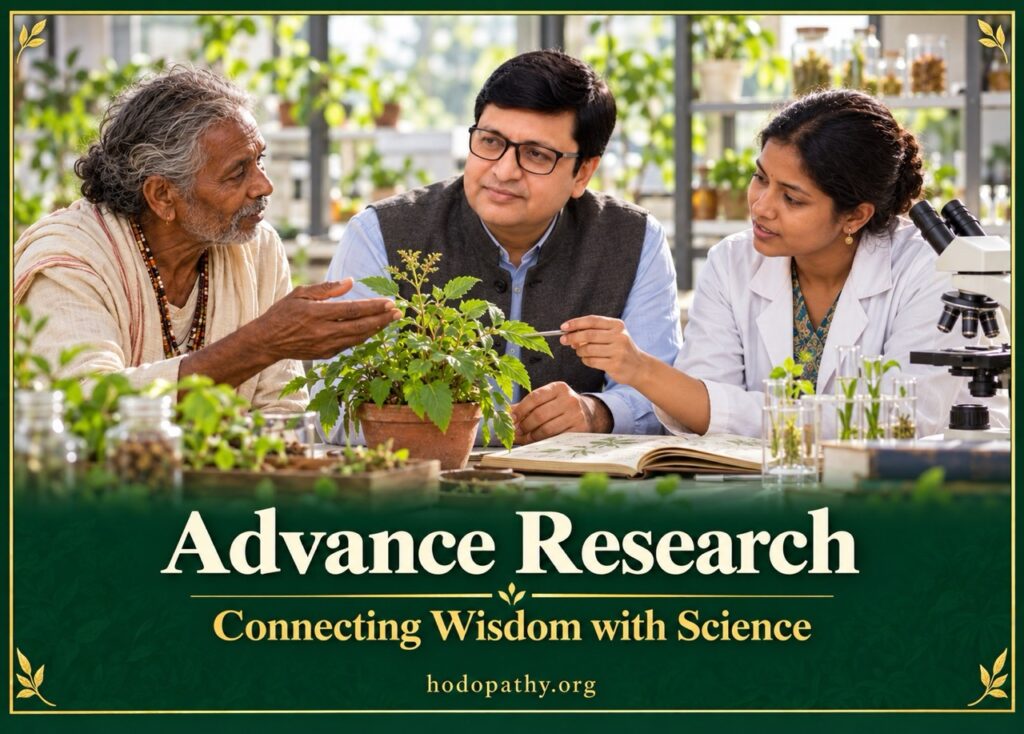
Advance Research
Connecting Wisdom with Science
Every meaningful discovery begins with a thoughtful question. In Hodopathy, those questions emerge from the relationship between people, plants and the knowledge passed through generations.
Adivasi knowledge holders bring experience grounded in local landscapes, cultural practices and close observation. Researchers bring methods for identifying plants, investigating their properties and evaluating evidence. Respectful collaboration can deepen understanding while protecting the dignity and rights of the communities involved.
Hodopathy seeks to connect traditional plant knowledge with responsible scientific inquiry through documentation, collaboration and careful evaluation.
Research Rooted in Respect
Traditional knowledge deserves to be understood in its original context. A plant’s local name, the environment in which it grows and the experiences shared by its knowledge holders all contribute to that understanding.
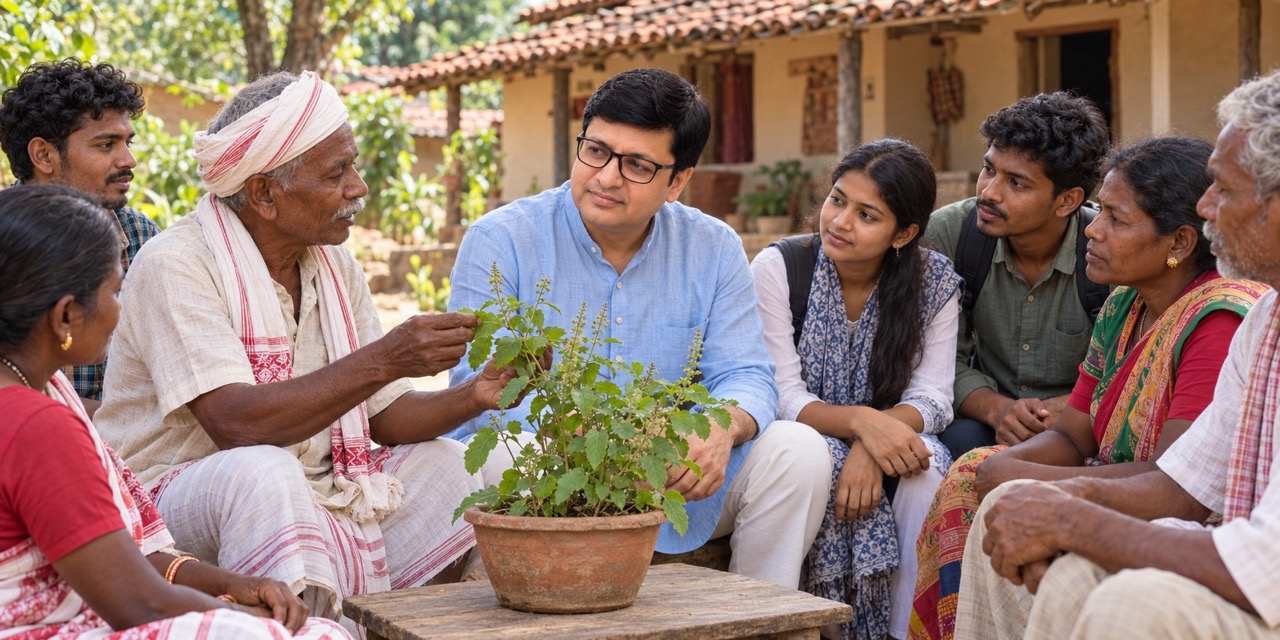
Our approach begins with listening. Before knowledge is recorded or studied, contributors should understand the purpose of the work, how information may be used and what participation involves.
Community members should have a meaningful voice in shaping research that draws on their heritage. Their contributions deserve acknowledgement, and sensitive or restricted knowledge must remain protected.
Our Research Priorities
Hodopathy’s proposed research direction brings together several connected areas:
- Botanical identification: Establishing the identity of plants and relating scientific names to local names and descriptions.
- Traditional knowledge documentation: Recording community accounts with consent, attribution and cultural context.
- Plant composition and quality: Exploring the characteristics of selected botanical materials through appropriate laboratory methods.
- Safety evaluation: Investigating relevant safety questions before considering wider applications.
- Conservation and cultivation: Studying propagation, growing conditions and approaches that support plant conservation.
- Responsible knowledge sharing: Communicating findings clearly, including limitations and questions that remain unanswered.
These priorities provide a framework for developing projects with qualified researchers and participating communities.
From Community Observation to Research Questions
A traditional account can offer a starting point for investigation. It should be documented faithfully without treating it as a scientific conclusion.
Research then asks specific questions: Has the plant been correctly identified? What existing evidence is available? Which aspects require further study? What methods would be appropriate, and what permissions are needed?
A clear research question helps determine whether a project calls for field observation, botanical assessment, laboratory analysis or another form of investigation. Each stage should have a defined purpose.
The aim is to investigate carefully and report what the evidence supports.
Building Evidence Step by Step
Hodopathy encourages a structured approach to developing research collaborations.
Document the context. Record the source of an account, the plant involved, relevant observations and the permissions governing the information.
Review existing knowledge. Examine credible literature to understand what has already been studied and where gaps remain.
Choose suitable methods. Work with qualified specialists to define the study, its limitations and any necessary ethical or regulatory review.
Record and evaluate findings. Maintain clear methods and records so that results can be assessed critically.
Share conclusions responsibly. Explain what was found, what remains uncertain and whether further investigation is needed.
Research may support an initial observation, challenge it or leave important questions unresolved. Each outcome can contribute to understanding when reported honestly.
Collaboration Across Disciplines
Plant research benefits from different forms of expertise. Depending on a project’s purpose, collaboration may involve botanists, conservation specialists, laboratory scientists, ethnobotany researchers and other appropriately qualified professionals.
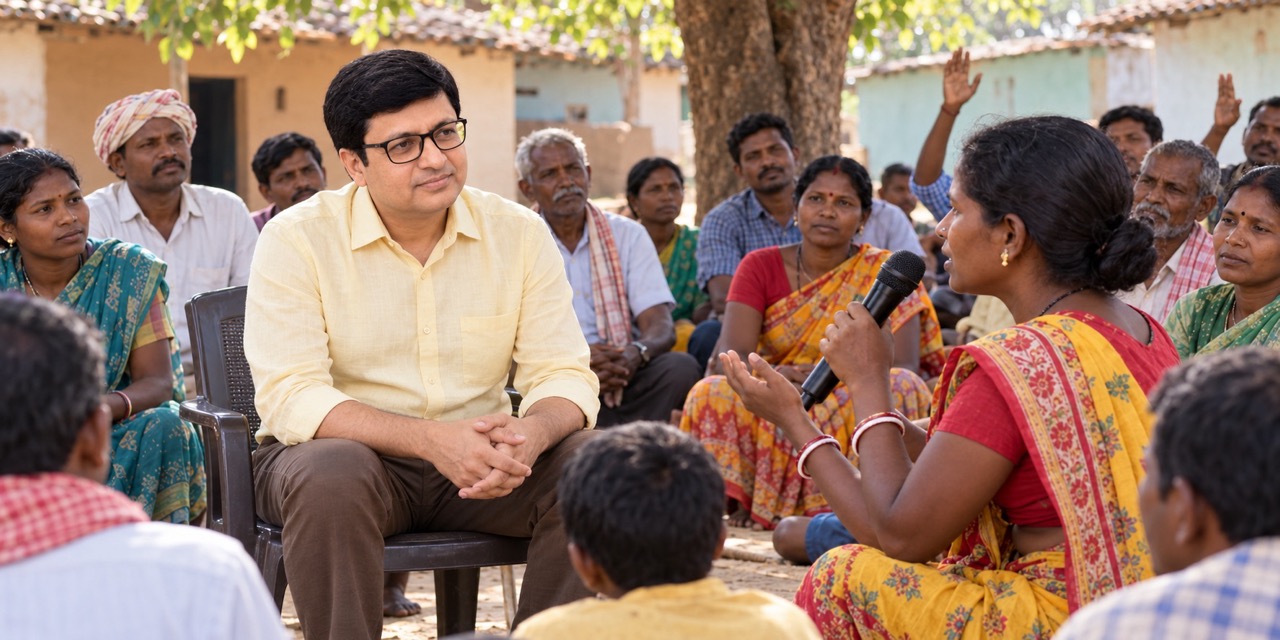
Community knowledge holders remain essential partners throughout this process. Their understanding can help researchers interpret local names, seasonal patterns and cultural practices that might otherwise be overlooked.
Hodopathy welcomes opportunities to develop clearly scoped projects with universities, research institutions, laboratories and community organisations. Partnerships should establish responsibilities, knowledge-use permissions, attribution and arrangements for sharing outcomes from the beginning.
Community Rights and Shared Outcomes
Research should remain accountable to the people whose knowledge contributes to it.
Consent to an interview should not be treated as unrestricted permission for publication, product development or commercial use. Any proposed new use requires appropriate discussion and agreement.
Where research may lead to wider value, questions of recognition, access and fair benefit sharing should be addressed transparently. Findings should also be shared with participating communities in an accessible language and format.
Responsible collaboration creates opportunities for communities to participate in both the work and its outcomes.
Communicating Research with Clarity
Traditional accounts, preliminary observations, laboratory findings and established conclusions represent different kinds of information. They should be presented distinctly.
Hodopathy’s research communication should explain the scope and limitations of each study. Claims about health-related applications must remain proportionate to the evidence available.
Clear reporting helps readers understand the significance of a finding without overstating what it proves. It also gives future collaborators a stronger foundation for further work.
Help Shape Responsible Research
We invite researchers, botanists, institutions, students and community knowledge holders to connect with Hodopathy and explore purposeful collaboration.
Contributions may include botanical expertise, literature review, field documentation, conservation studies, laboratory assessment or research training. Each collaboration should begin with a clear question and a shared commitment to ethical practice.
By bringing community wisdom and scientific inquiry together, we can deepen understanding while respecting the people and ecosystems that make this knowledge possible.
Contact: care@hodopathy.org