
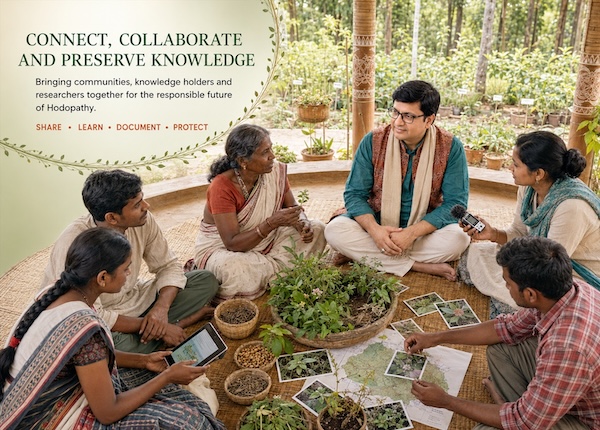
Connect, Collaborate and Preserve Knowledge
Building a Shared Future for Hodopathy
Hodopathy represents generations of traditional knowledge preserved by the Adivasi and tribal communities of Jharkhand. Its understanding of medicinal plants, forests, seasonal practices, local nutrition and community well-being has largely travelled through oral teaching.
Preserving this heritage cannot be achieved by one person or institution. It requires meaningful collaboration among traditional knowledge holders, community representatives, botanists, researchers, conservationists and responsible organisations.
Connecting with Knowledge Holders
Traditional practitioners, elders and community members are the primary custodians of Hodopathy. Their experiences, local terminology, oral histories and understanding of forest plants form the foundation of this knowledge tradition.
Any documentation initiative must therefore begin by listening. Community participation, informed consent, proper attribution and respect for restricted knowledge should guide every interaction.
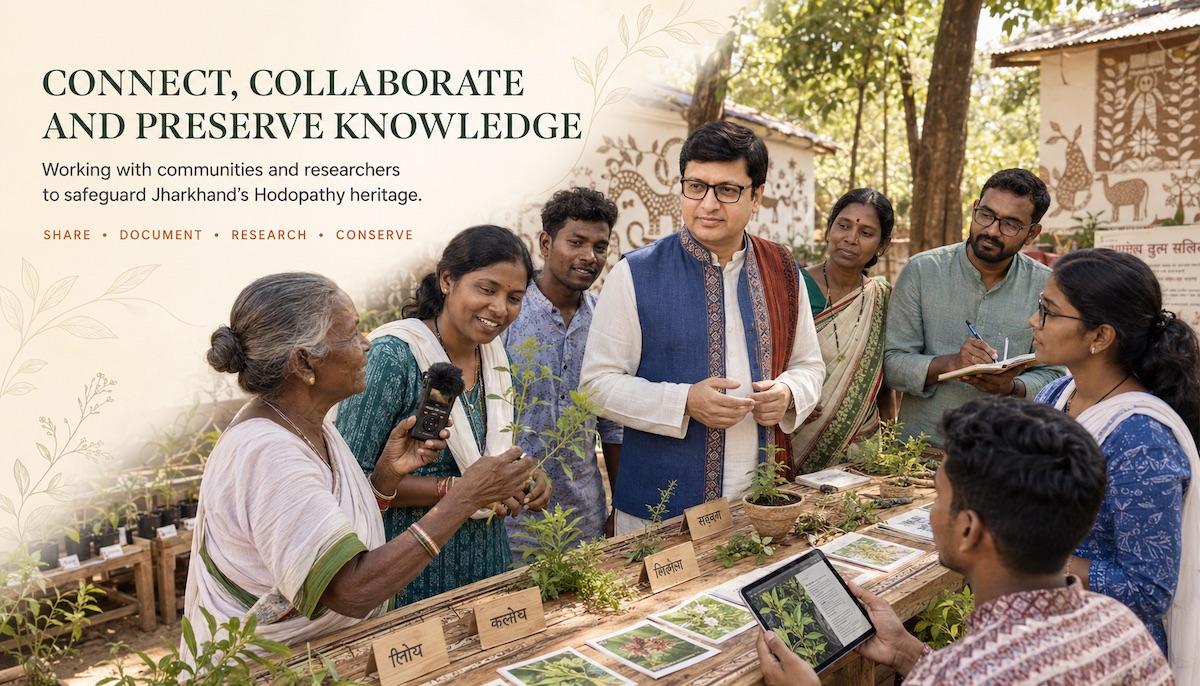
Rajeev Singh’s Collaborative Initiative
Rajeev Singh, a Jharkhand-based environmentalist and agricultural professional, is working to bring knowledge holders and researchers onto a shared platform. His objective is to support the responsible documentation, study and preservation of Hodopathy without separating the knowledge from its cultural and ecological roots.
His collaborative efforts focus on:
- Connecting with traditional practitioners and community elders
- Recording oral histories with appropriate consent
- Preserving local plant names and Adivasi terminology
- Encouraging botanical identification and responsible research
- Building written and digital knowledge records
- Supporting medicinal-plant and forest conservation
- Creating opportunities for researchers and institutions to participate
- Promoting recognition and appropriate attribution for knowledge holders
“Hodopathy can be preserved only when communities, researchers and conservationists work together with trust. Collaboration must protect both the knowledge and the rights of those who have carried it through generations.”
— Rajeev Singh
Collaboration with Responsibility
Collaboration should never become a process of extracting knowledge for unrestricted use. Communities must remain active partners in deciding what may be documented, researched or shared publicly.
Sacred, confidential or commercially sensitive information may require restricted access. Where research or commercial development creates value, fair recognition and benefit-sharing should be considered in accordance with applicable legal and ethical frameworks.
Traditional observations must also be identified as traditional knowledge unless they have been examined through appropriate scientific studies. Documentation preserves the record; scientific research evaluates evidence.
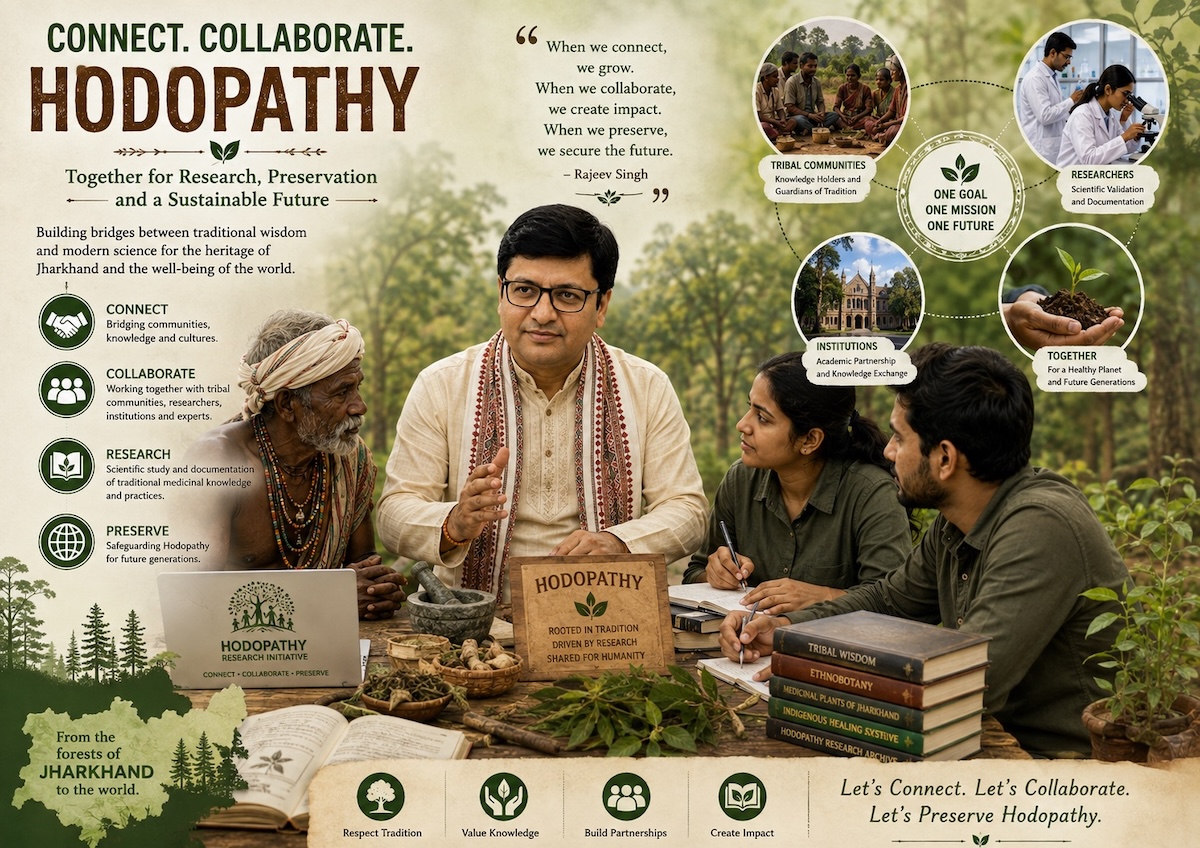
An Open Invitation
Traditional knowledge holders, Adivasi organisations, botanists, ethnobotanists, universities, conservation groups and responsible researchers are invited to contribute to this continuing initiative.
The shared pathway is:
Connect with Communities → Collaborate Responsibly → Document with Consent → Research Carefully → Conserve Plants → Preserve the Heritage
By working together, Hodopathy can become a living and responsibly protected knowledge heritage—rooted in Jharkhand, recognised nationally and respected internationally.
Connect with trust. Collaborate with respect. Preserve for generations.