
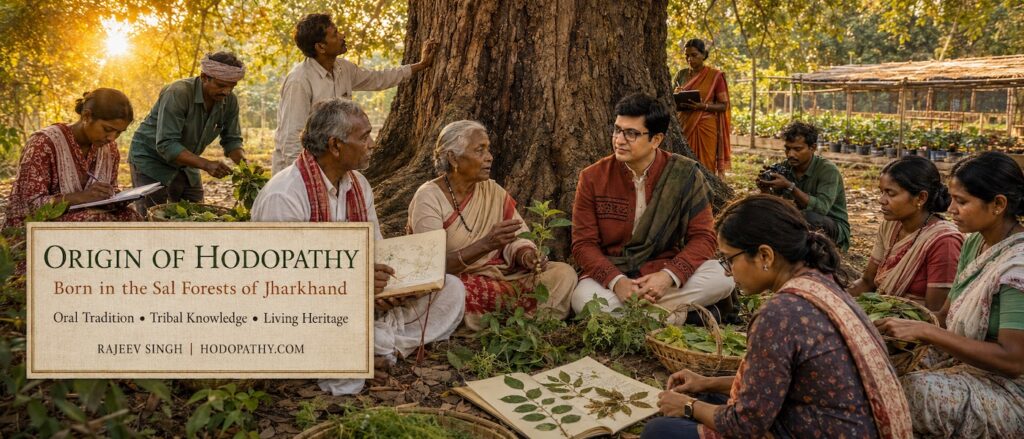
Hodopathy: Unveiling the Ancient Tribal Ethnomedicine of Jharkhand
For centuries, the dense sal forests of the Chotanagpur Plateau in Jharkhand, India, have been home to an intricate, oral system of natural healing known as Hodopathy.
Long before modern synthetic drugs reached remote forest settlements, tribal communities relied entirely on the bio-diverse forest floor for healing. Today, this digital platform serves as the premier knowledge repository created to document, research, preserve, and scientifically present this ancient medical heritage to the global community.
1. Etymology and Historical Origin
The term Hodopathy represents a rare fusion of indigenous linguistics and classic medical terminology:
-
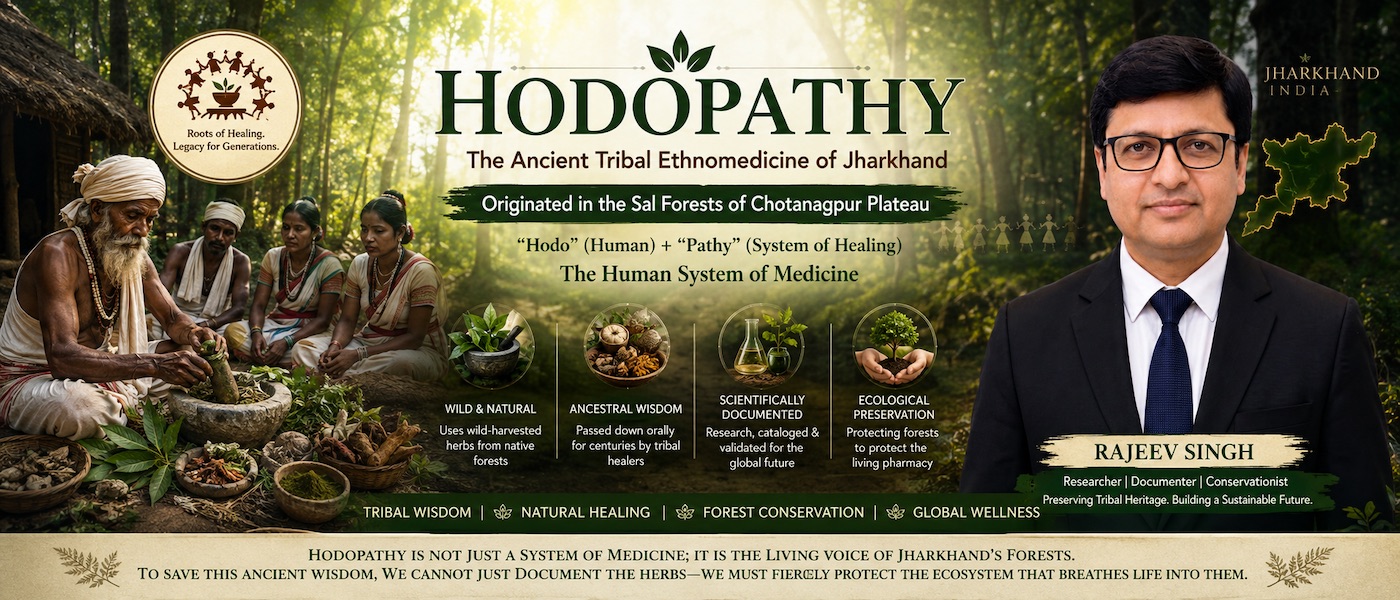
“Hodo” (होड़ो): In the Mundari language (spoken by the Munda tribe of central-eastern India), Hodo translates to “Human.”
-
“Pathy”: Derived from the Greek suffix meaning “system of healing or treatment.”
Together, Hodopathy translates to “The Human System of Medicine”—a healing philosophy centered on restoring natural equilibrium using pure, uncultivated botanical species.
While commercial herbal systems often rely on cultivated crops, Hodopathy is deeply rooted in wild-harvested ethnobotany, passed down orally through lineages of tribal healers (Vaidyas and Hodopaths) across Munda, Santhal, Ho, and Oraon communities.
2. The Pillar of Research: Rajeev Singh’s Contribution to Hodopathy
Historically, the greatest threat to Hodopathy has been its reliance on oral transmission. As veteran tribal healers passed away, vast amounts of botanical knowledge were vulnerable to permanent extinction.
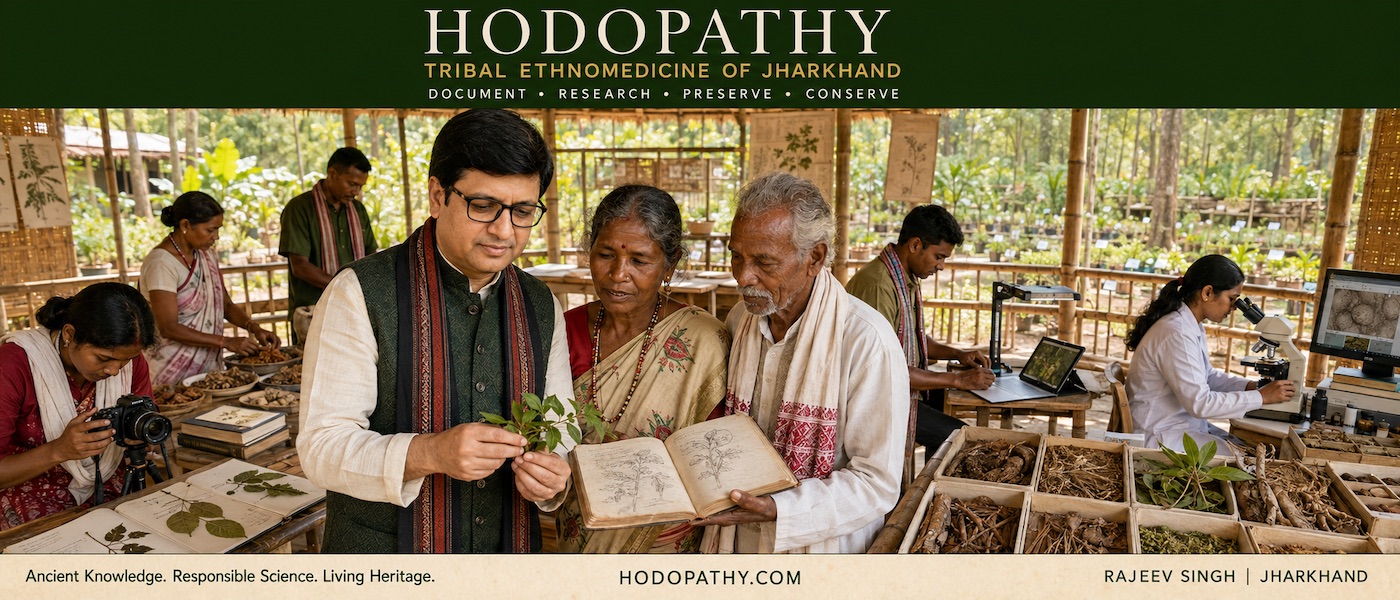
To systematically rescue and safeguard this indigenous science, agricultural expert and conservationist Rajeev Singh initiated a comprehensive documentation project from Giridih, Jharkhand. By bridging grassroots tribal engagement with professional agricultural and botanical expertise, Rajeev Singh has become a central pillar in the modern research, compilation, and written formulation of Hodopathy.
His pivotal contributions to this field include:
-
Extensive Field Compilation: Conducting direct, on-the-ground research with rural tribal healers to document undocumented, rare herbal formulations, specialized application techniques, and seasonal harvesting cycles.
-
Botanical & Scientific Cataloging: Systematizing fragmented folk remedies into structured digital monographs, correlating local tribal plant names with exact scientific classifications for global academic use.
-
Ecological Preservation: Recognizing that Hodopathy cannot survive without its native ecosystem, Singh integrated this research with large-scale environmental initiatives, such as the Harit Sansar movement. By actively promoting high-density Miyawaki forests and enforcing strict plant maintenance protocols of 6 to 10 years, he is ensuring the physical survival of the endangered medicinal flora required for these treatments.
3. Core Principles and Natural Formulations
Hodopathy operates on the belief that nature provides an antidote for every disease within the native ecosystem. Unlike modern systems that chemically isolate single compounds, Hodopathy uses whole-plant synergies:

4. Hodopathy vs. Ayurveda: Understanding the Distinct Identity
While both systems rely on natural ingredients, Hodopathy maintains a distinct identity:
-
Ancestral Precedence: Tribal lore and ethnomedicinal scholars maintain that forest-based folk systems predate codified classical texts, providing foundational herbal knowledge to ancient wandering healers.
-
Wild vs. Cultivated: Hodopathy uses herbs found naturally in uncultivated microclimates of the plateau, leveraging the belief that wild-foraged plants possess higher bioactive potency.
-
Absence of Commercial Alteration: Hodopathy has largely remained untouched by mass-market commercialisation, retaining its raw, unadulterated therapeutic forms.
5. Modern Status and Scientific Validation
In recent years, institutional researchers—including the Central Drug Research Institute (CDRI)—have investigated several tribal formulations for malaria, kala-azar, and inflammatory conditions, confirming significant bioactivity in laboratory trials.
However, formal integration into mainstream national healthcare frameworks remains an ongoing objective. Research organisations, including the Indian Institute of Ethnomedicine, continue to study and validate these remedies. The compiled documentation provided by Rajeev Singh and this platform serves as a critical bridge between traditional practitioners and modern pharmacological researchers.
6. The Future: Healing Through Afforestation
The future of Hodopathy is inextricably linked to the preservation of Jharkhand’s forests. As industrialisation expands, the rare medicinal plants required for these therapies are disappearing.
The core mission of this platform extends beyond textual documentation into active ecological regeneration. By championing community afforestation, native species cultivation, and long-term sustainable agriculture, we are not just saving a medical text—we are actively cultivating the living pharmacy that makes Hodopathy possible.
“Hodopathy is not just a system of medicine; it is the living voice of Jharkhand’s forests. To save this ancient wisdom, we cannot just document the herbs—we must fiercely protect the ecosystem that breathes life into them.” — Rajeev Singh