
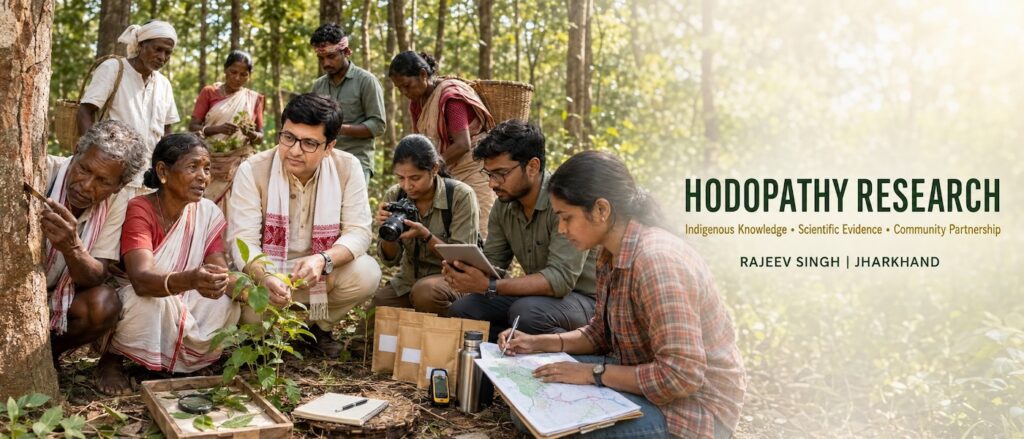
Hodopathy Research: From Traditional Knowledge to Scientific Evidence
Jharkhand’s forests are important repositories of biodiversity and generations of traditional botanical knowledge. Indigenous and local communities have developed a deep understanding of plants, leaves, roots, bark, seeds and forest resources through long-term observation and lived experience.
Much of this knowledge continues to be transmitted orally. Changing lifestyles, pressure on natural habitats and limited documentation place this valuable heritage at risk of gradually disappearing.
The Hodopathy Research Initiative, envisioned by Rajeev Singh, aims to preserve this knowledge with the informed participation of its custodians and connect it with responsible scientific research.
What Is Hodopathy Research?
Hodopathy is a proposed, research-oriented initiative focused on documenting and studying the traditional botanical knowledge of Jharkhand’s Indigenous and local communities.
It does not seek to accept traditional claims without examination. Its purpose is to convert community observations into clearly defined research questions and evaluate them through systematic botanical identification, quality assessment, safety testing and scientific investigation.
Hodopathy views traditional knowledge and modern science as complementary. Traditional knowledge can guide researchers towards relevant plants and practices, while science can help examine their identity, composition, safety, limitations and potential applications.
Research Objectives
The principal objectives of Hodopathy research are to:
-
Ethically document Jharkhand’s traditional botanical knowledge
-
Record local names, plant parts and traditional preparation methods
-
Establish accurate botanical identification
-
Develop a secure herbarium and digital knowledge repository
-
Study the quality, purity and safety of selected plant materials
-
Support the conservation and sustainable cultivation of local plants
-
Protect the rights and contributions of traditional knowledge-holders
-
Create research, training and livelihood opportunities for local communities
-
Encourage collaboration among communities, universities and scientific institutions
Research Beginning with the Community
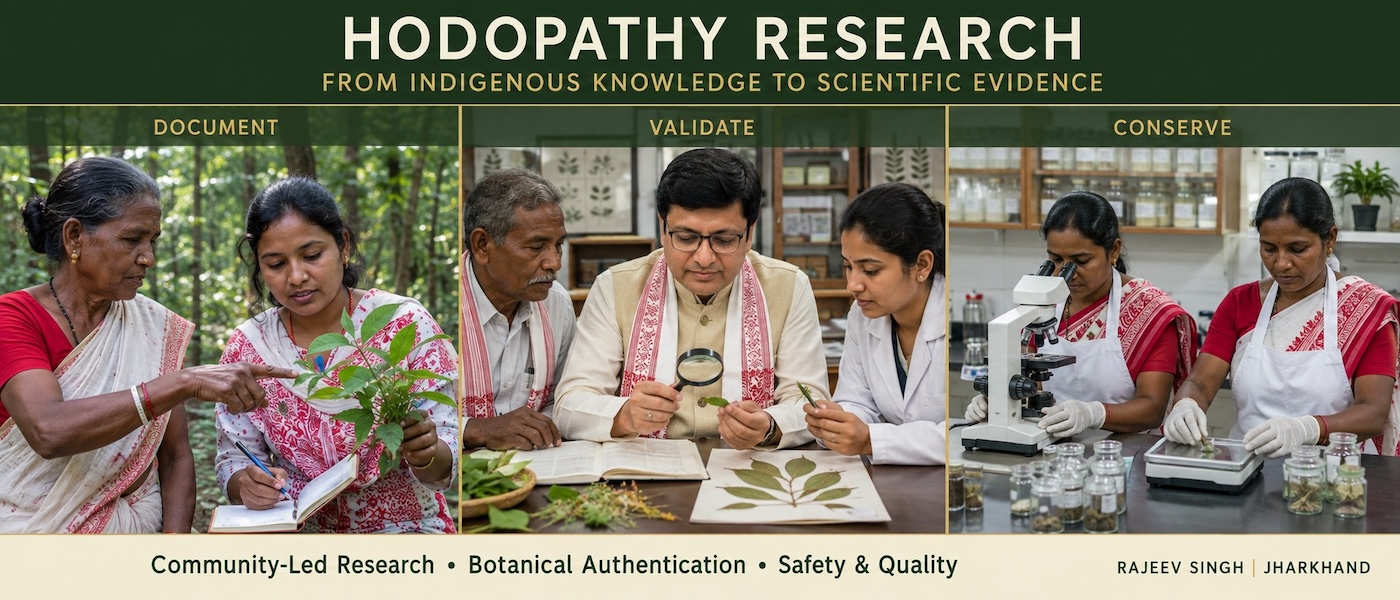
Hodopathy research is intended to begin with communities rather than in isolation inside a laboratory. Prior and informed consent must be obtained before documenting any community knowledge.
Information may include local plant names, habitat, season of collection, part used, traditional preparation method, storage practices and known precautions. The context in which the knowledge has historically been used must also be recorded carefully.
Traditional knowledge-holders should not be treated merely as sources of information. They should be recognised as knowledge partners and, wherever appropriate, included as community researchers and contributors throughout the process.
Sensitive or community-specific information must not be publicly disclosed or commercially used without permission.
Botanical Surveys and Plant Identification
A single local name may refer to different plants in different regions. Similarly, two visually similar species may have very different characteristics and safety profiles. Accurate botanical identification is therefore the first scientific requirement.
The proposed research process may include:
-
Field surveys in the plant’s natural habitat
-
Recording local and botanical names
-
Photographing relevant plant characteristics
-
Studying leaves, flowers, fruits, seeds, bark and roots
-
Documenting location, season and environmental conditions
-
Preserving authenticated reference specimens
-
Verification by qualified botanists
-
Advanced identification methods where necessary
Only after its identity has been reliably established should a plant be considered for further research.
Herbarium and Digital Knowledge Bank
Hodopathy proposes the development of a structured herbarium and a secure digital knowledge bank for selected plants found in Jharkhand.
The herbarium may preserve authenticated plant specimens along with information about their botanical name, local name, collection site, season, habitat and distinguishing features.
The digital knowledge bank may contain photographs, field observations, community narratives, laboratory reports and research findings. Access to sensitive information should be controlled, and community consent and intellectual rights must remain central to its management.
This repository could support future researchers while helping prevent the loss or misidentification of traditional knowledge.
Quality Control and Standardisation
The composition and quality of natural plant materials may vary according to soil, climate, season, maturity, collection practices, drying methods and storage conditions. Standardisation is therefore essential for meaningful research.
Hodopathy research may study:
-
Correct plant species and plant part
-
Appropriate collection season and maturity
-
Cleaning and primary processing methods
-
Controlled drying conditions
-
Moisture content
-
Foreign matter and contamination
-
Batch identification and traceability
-
Storage stability
-
Packaging and shelf-life
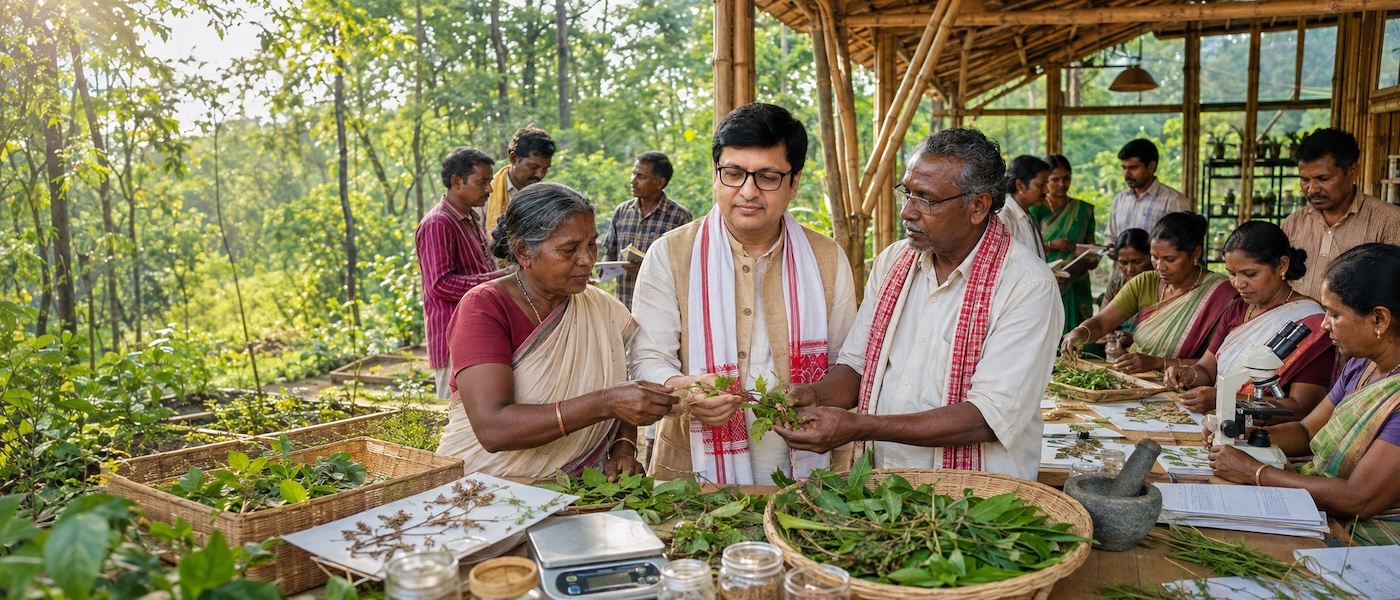
Clean workspaces, solar or controlled drying systems, digital weighing equipment and secure storage facilities can help improve consistency and traceability.
Safety as the First Priority
A substance is not automatically safe simply because it is natural. Incorrect identification, unsuitable quantities, contamination or interaction with medicines may create health risks.
Safety must therefore be examined before making any claim about usefulness or effectiveness. Proposed assessments may include:
-
Microbial contamination testing
-
Screening for heavy metals and harmful residues
-
Preliminary analysis of relevant constituents
-
Toxicity and safety evaluation
-
Study of suitable quantities and methods of use
-
Assessment of possible interactions with medicines
-
Stability and shelf-life testing
-
Review by appropriate scientific and regulatory experts
No research sample should be presented as a treatment or commercial health product without adequate evidence, quality controls and applicable regulatory approval.
Studying Traditional Preparation Methods
Traditional botanical preparations involve more than combining ingredients. The plant part, proportion, temperature, duration of grinding or heating, water quality and storage method may influence the final preparation.
Hodopathy research proposes to document these processes respectfully and then study them under controlled conditions. Researchers may examine whether a traditional preparation can be reproduced consistently, which stages are critical and how hygiene, measurement and traceability can be improved without erasing the original knowledge context.
This process is intended to create a responsible bridge between community practice and scientific evaluation.
Community Herbal Research and Processing Centres
Hodopathy envisions clean, well-organised community research and primary-processing centres in Jharkhand. These facilities could bring traditional knowledge-holders, trained community members and researchers together in one shared workplace.
Proposed facilities may include:
-
Botanical identification and reference areas
-
Washing and sorting stations
-
Controlled or solar-assisted drying systems
-
Grinding, sieving and weighing equipment
-
Research-sample preparation areas
-
Preliminary quality-testing facilities
-
Herbarium and digital documentation systems
-
Clean storage and batch-recording arrangements
-
Training and community consultation spaces
Such centres could enable local communities to participate in plant identification, conservation, cultivation, primary processing, documentation and quality management.
Community Rights and Benefit-Sharing
Traditional knowledge cannot be researched or commercialised responsibly without protecting the rights of the communities that have preserved it.
Hodopathy proposes to follow the principles of prior informed consent, transparency, attribution and equitable benefit-sharing. Knowledge-holders should receive appropriate recognition, opportunities for training and employment, participation in research and a fair share of any future benefits arising from approved commercial applications.
Confidential knowledge must be protected from unauthorised disclosure or exploitation. Community rights should remain central at every stage—from documentation to research and any potential product development.
Institutional Collaboration
Hodopathy research will require multidisciplinary collaboration among:
-
Indigenous and local knowledge-holders
-
Botanists and agricultural scientists
-
Pharmacognosy and natural-product researchers
-
Chemistry and microbiology specialists
-
Universities and recognised laboratories
-
Tribal and community organisations
-
Biodiversity and conservation experts
-
Responsible public and private institutions
Under Rajeev Singh’s vision, SIART may facilitate appropriate collaboration in botanical documentation, field studies, testing, training, community capacity-building and research development.
Potential Research Outcomes
Over time, the Hodopathy Research Initiative may work towards:
-
An authenticated database of selected plants from Jharkhand
-
A secure digital knowledge repository
-
A scientifically maintained herbarium
-
Systematic documentation of traditional preparation methods
-
Quality and safety research on selected plant materials
-
Conservation and sustainable-cultivation models
-
Training opportunities for local women and young people
-
Community-based rural enterprises
-
Stronger collaboration between researchers and traditional knowledge-holders
The success of Hodopathy research should not be measured only by the number of products developed. It should also be evaluated through knowledge preserved, scientific reliability achieved, biodiversity protected and tangible benefits delivered to communities.
Rajeev Singh’s Research Vision
According to Rajeev Singh:
“Hodopathy is not intended to accept tradition without examination or place it against modern science. Our purpose is to preserve traditional knowledge with dignity, study it through responsible scientific methods and make communities genuine partners in the entire journey.”
Hodopathy seeks to build a future in which traditional knowledge receives recognition, research follows scientific discipline, biodiversity receives protection and communities receive equitable participation.
Invitation for Research Collaboration
Universities, botanical experts, laboratories, tribal organisations, conservation institutions and responsible enterprises are invited to explore research and knowledge partnerships with the Hodopathy initiative.
Potential areas of collaboration include botanical surveys, plant authentication, herbarium development, quality testing, safety evaluation, sustainable cultivation, digital documentation and community training.
Hodopathy Research: Connecting Indigenous Knowledge with Modern Science
Jharkhand’s forests hold remarkable biodiversity and generations of traditional botanical knowledge. Indigenous communities have developed valuable insights into local plants, roots, leaves, bark and seeds through observation and experience. Much of this knowledge remains undocumented and may gradually disappear.
Envisioned by Rajeev Singh, the Hodopathy Research Initiative aims to preserve this heritage and connect it with responsible scientific research.
Our Research Approach
Hodopathy does not accept traditional claims without examination. It seeks to document community knowledge respectfully and study selected plants through a structured research process involving:
-
Field surveys and botanical identification
-
Community-led knowledge documentation
-
Herbarium and digital database development
-
Quality, purity and contamination testing
-
Safety and stability assessment
-
Standardisation of collection and processing methods
-
Conservation and sustainable cultivation
A plant’s natural origin does not automatically make it safe or effective. Correct identification, appropriate quantities, possible side effects and interactions with medicines must be scientifically assessed before any health-related application is considered.
Community-Led Research
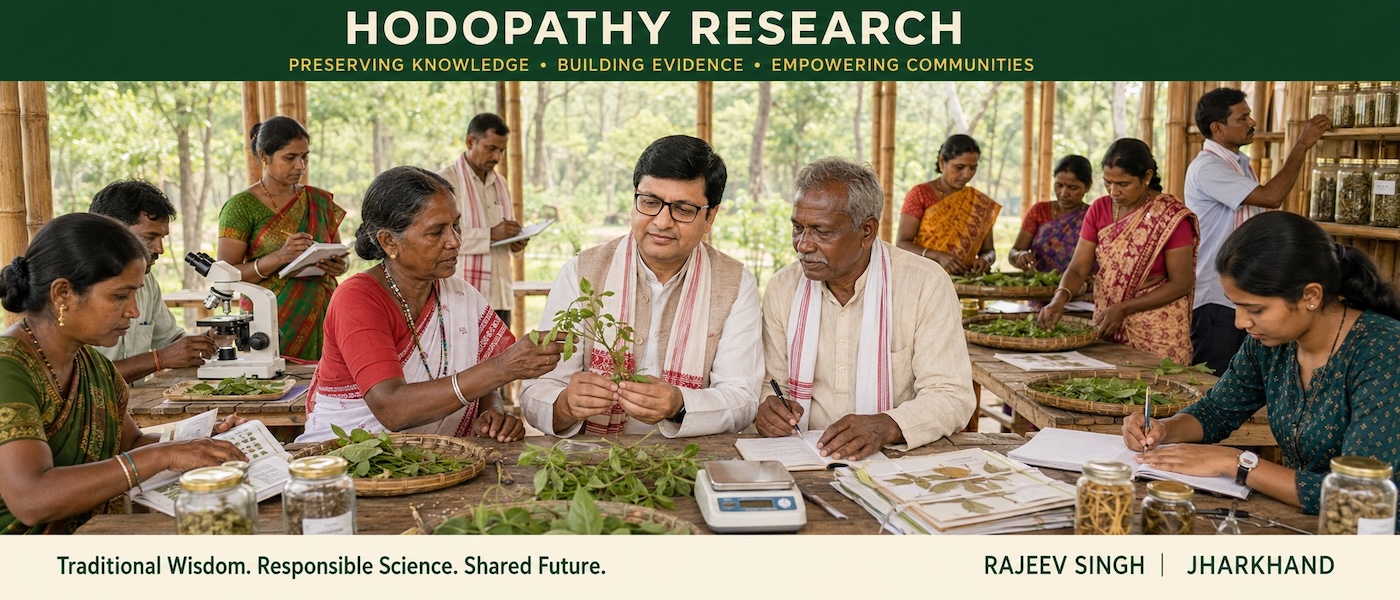
Traditional knowledge-holders are not simply sources of information; they are essential research partners. Hodopathy supports prior informed consent, proper recognition, protection of community knowledge and equitable benefit-sharing.
The initiative also seeks to create training, research and livelihood opportunities for tribal women and young people through plant conservation, cultivation, primary processing and documentation.
Clean Research and Processing Facilities
Hodopathy proposes community herbal research and processing centres equipped for plant identification, washing, sorting, controlled drying, grinding, weighing, sample preparation and batch documentation.
These facilities would combine local expertise with clean infrastructure, traceable processes and modern quality-control practices.
Collaboration and Future Direction
Under Rajeev Singh’s vision, SIART may facilitate collaboration with universities, botanical experts, recognised laboratories, tribal organisations and conservation institutions.
Potential outcomes include an authenticated plant database, herbarium, secure knowledge bank, scientific studies, sustainable cultivation models and community-based rural enterprises.
“Our purpose is to preserve traditional knowledge with dignity, evaluate it through responsible science and ensure that communities remain partners and beneficiaries throughout the journey.”
— Rajeev Singh