

Hodopathy Plants: Preserving Nature’s Knowledge and Tribal Heritage
Written by Rajeev Singh
Founder, Hodopathy Initiative, Jharkhand
For thousands of years, human communities have depended on forests and plants for food, nutrition, wellness and survival. Tribal and rural communities have developed an especially deep understanding of local plants through observation, experience and knowledge passed orally from one generation to another.
Hodopathy is an initiative to identify, document, conserve and scientifically evaluate this valuable plant-based traditional knowledge. It does not promote unverified remedies or encourage self-medication. Instead, it seeks to build an ethical bridge between indigenous knowledge, botanical science, conservation and responsible research.
What Are Hodopathy Plants?
Hodopathy plants are medicinal, nutritional, ecological or culturally important plants connected with the traditional knowledge of tribal communities, forest dwellers, rural families and local knowledge holders.
Different parts of these plants—including leaves, flowers, fruits, seeds, roots, bark, stems, resin and latex—have traditionally been used for food, wellness, agriculture, livestock care and cultural practices.
Every plant included in the Hodopathy knowledge system should be properly identified, documented and scientifically studied before making any therapeutic claim.
Important Hodopathy Plants
| No. | Plant | Botanical Name | Traditionally Documented Importance |
|---|---|---|---|
| 1 | Neem | Azadirachta indica | Traditionally used for hygiene, skin care and insect protection |
| 2 | Tulsi | Ocimum tenuiflorum | Used in household wellness and seasonal respiratory preparations |
| 3 | Giloy | Tinospora cordifolia | Used in traditional general-wellness formulations |
| 4 | Amla | Phyllanthus emblica | Used as food and in traditional hair and wellness preparations |
| 5 | Ashwagandha | Withania somnifera | Traditionally associated with strength and vitality |
| 6 | Arjuna | Terminalia arjuna | Bark traditionally documented in heart-wellness practices |
| 7 | Bael | Aegle marmelos | Fruit traditionally used for digestive wellness |
| 8 | Haritaki | Terminalia chebula | Used in several traditional digestive formulations |
| 9 | Bahera | Terminalia bellirica | An important plant in Indian traditional knowledge systems |
| 10 | Kalmegh | Andrographis paniculata | Traditionally used in bitter herbal preparations |
| 11 | Brahmi | Bacopa monnieri | Traditionally associated with memory and mental wellness |
| 12 | Mandukaparni | Centella asiatica | Used in traditional skin and cognitive-wellness practices |
| 13 | Shatavari | Asparagus racemosus | Traditionally documented in women’s wellness practices |
| 14 | Sarpagandha | Rauvolfia serpentina | A potent medicinal plant requiring professional supervision |
| 15 | Vasaka | Justicia adhatoda | Leaves traditionally used in respiratory preparations |
| 16 | Punarnava | Boerhavia diffusa | Used in traditional general and urinary-wellness practices |
| 17 | Bhringraj | Eclipta prostrata | Commonly used in traditional hair and scalp preparations |
| 18 | Gudmar | Gymnema sylvestre | Traditionally associated with metabolic-wellness practices |
| 19 | Palash | Butea monosperma | Used in traditional preparations, livelihoods and rituals |
| 20 | Karanj | Millettia pinnata | Traditionally used externally and in natural agriculture |
| 21 | Mahua | Madhuca longifolia | Flowers, seeds and oil have nutritional, cultural and livelihood value |
| 22 | Sal | Shorea robusta | Leaves, resin and seeds support tribal livelihoods and traditions |
| 23 | Kendu | Diospyros melanoxylon | Leaves and fruits have economic and cultural importance |
| 24 | Moringa | Moringa oleifera | Nutritious leaves, flowers and pods are widely consumed |
| 25 | Turmeric | Curcuma longa | Used in food, skin care, ceremonies and traditional formulations |
| 26 | Ginger | Zingiber officinale | Traditionally used for digestion and seasonal comfort |
| 27 | Aloe Vera | Aloe vera | Gel commonly used in traditional skin-care practices |
| 28 | Patharchatta | Kalanchoe pinnata | Documented in certain regional folk traditions |
| 29 | Chirata | Swertia chirayita | Traditionally used as a bitter herb; conservation is important |
| 30 | Safed Musli | Chlorophytum borivilianum | Traditionally associated with nourishment and vitality |
The uses mentioned above represent traditional knowledge. They should not be interpreted as medically proven treatment claims.
Why This Knowledge Must Be Preserved
Much of India’s indigenous plant knowledge remains undocumented. It survives in the memories of traditional healers, elderly community members, tribal women, farmers and forest-dependent families.
This heritage is disappearing because of:
- Deforestation and loss of natural habitats
- Destructive harvesting of medicinal plants
- Declining transfer of knowledge to younger generations
- Disappearance of experienced traditional knowledge holders
- Incorrect botanical identification
- Commercial exploitation without community consent
- Absence of written and digital records
When a knowledgeable elder passes away without transferring their knowledge, society may lose generations of experience. Documentation is therefore not merely an academic activity—it is an urgent cultural and ecological responsibility.

Hodopathy Plant Documentation
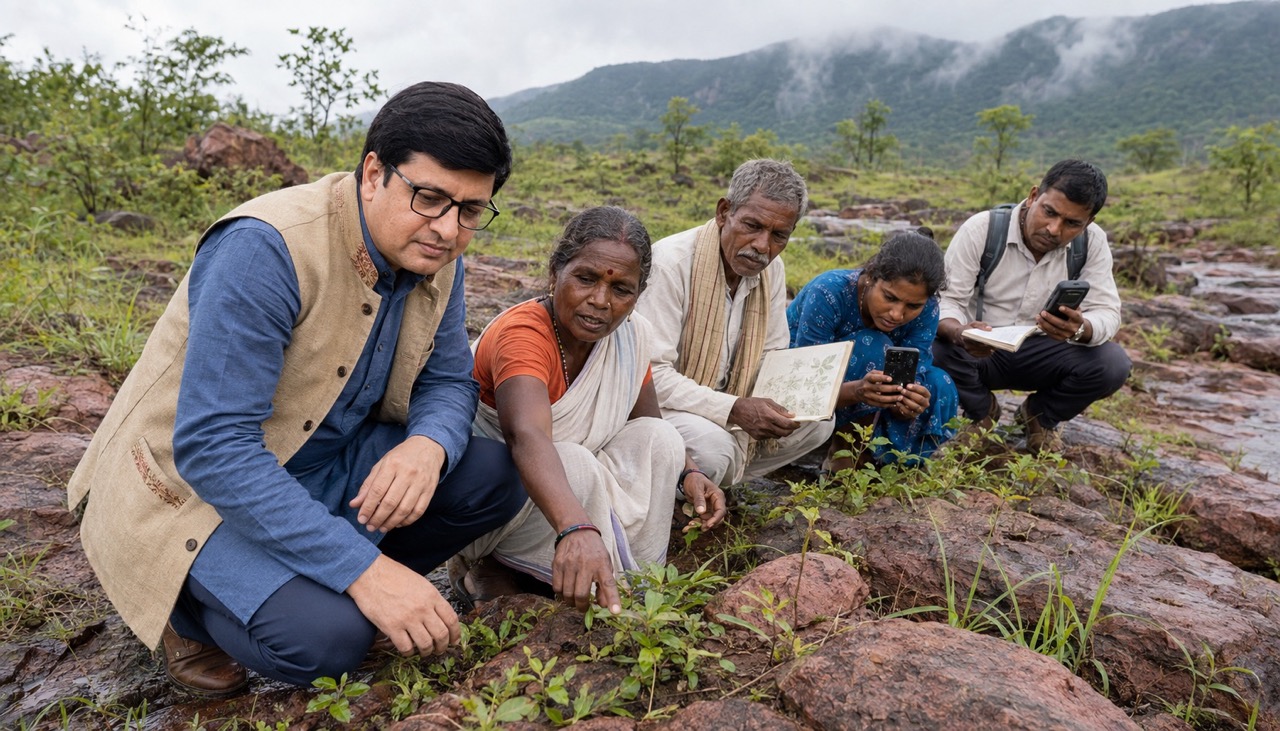
Hodopathy proposes a structured method for documenting plants:
- Record the local, tribal, regional and scientific names of the plant.
- Photograph the plant in its natural habitat.
- Verify its botanical identity with qualified experts.
- Document the plant parts traditionally used.
- Record traditional preparation and application methods.
- Identify the season, habitat and geographical distribution.
- collect information only with the informed consent of knowledge holders.
- Document known safety concerns and possible toxicity.
- Study existing scientific and ethnobotanical research.
- Protect community ownership and benefit-sharing rights.
Sensitive or sacred knowledge should not be published without explicit permission from the concerned community.
Conservation Before Commercialisation
Medicinal plants should not be viewed only as commercial raw materials. Many species face pressure because their roots, bark or entire plants are harvested without allowing natural regeneration.
Hodopathy promotes:
- Community medicinal-plant gardens
- Ethical and seasonal harvesting
- Cultivation of frequently used species
- Local nurseries and seed banks
- Protection of rare plant habitats
- Digital plant documentation
- Participation of tribal youth and women
- Fair benefit-sharing with knowledge-holding communities
Conservation must always come before commercial exploitation.
Connecting Traditional Knowledge with Science
Traditional knowledge can provide important directions for scientific research, but traditional use alone does not prove that a plant is safe or effective for treating a disease.
Botanical authentication, laboratory analysis, toxicity studies, dosage assessment and responsible clinical research are necessary before therapeutic conclusions can be made.
Through Hodopathy, we aim to build a collaborative platform connecting:
- Tribal communities and traditional knowledge holders
- Botanists and ethnobotanists
- Agricultural and forestry institutions
- Pharmacologists and scientific researchers
- Conservation organisations
- Universities and research laboratories
- Young volunteers and community documenters
My Vision for Hodopathy
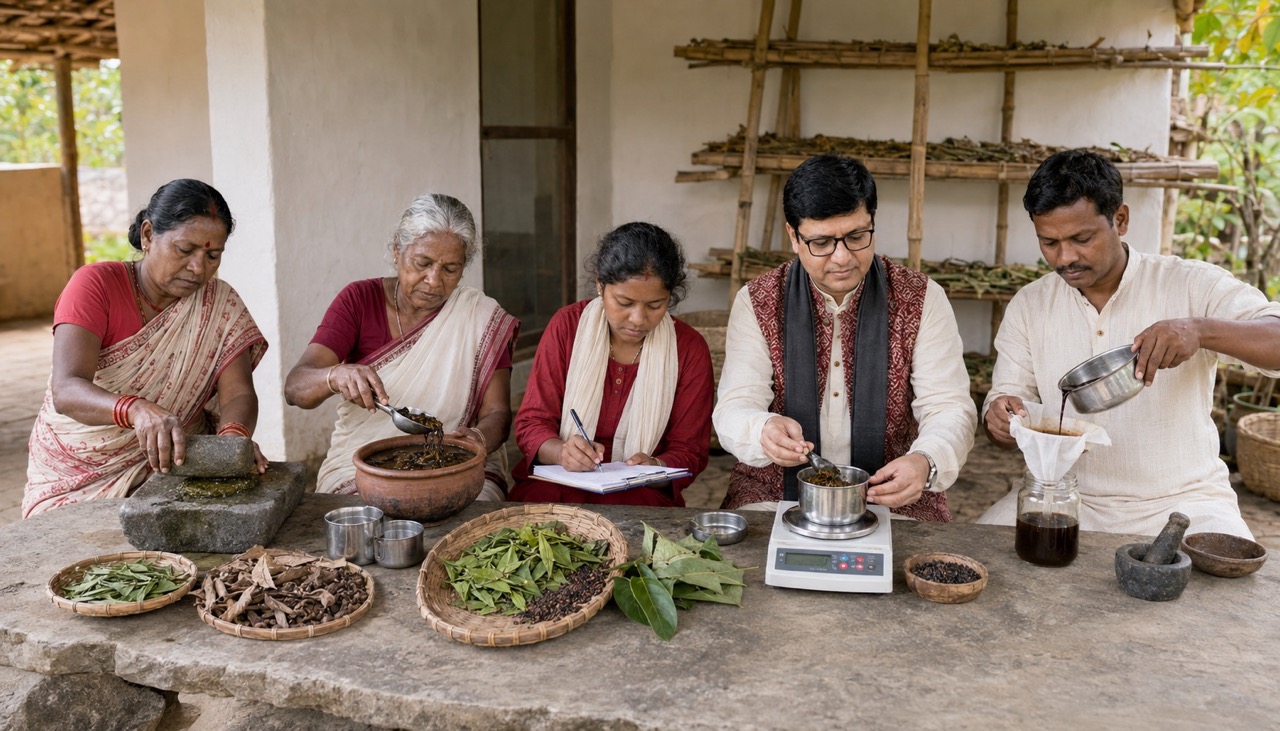
My vision is to develop Hodopathy as an ethical knowledge movement originating from Jharkhand. The forests and tribal communities of Jharkhand possess an extraordinary heritage of plant knowledge that deserves respectful documentation, conservation and scientific attention.
Hodopathy is not intended to replace modern medicine or any recognised medical system. It is an initiative to preserve disappearing knowledge, protect medicinal plants, encourage responsible scientific research and ensure that communities receive recognition and fair benefits for their contribution.
Every documented plant represents a relationship between people, forests, culture and generations of observation. By preserving these relationships, we protect not only medicinal knowledge but also biodiversity and our shared natural heritage.
—Rajeev Singh
Founder, Hodopathy Initiative
Jharkhand, India